



Carrying the joke too far, again
“The four stages of acceptance: i) This is worthless nonsense. ii) This is an interesting, but perverse, point of view. iii) This is true, but quite unimportant. iv) I always said so.”
(Review of The Truth About Death, in: Journal of Genetics 1963, Vol 58, p464) - JBS Haldane
COMMENT Readers of Malaysiakini , friends, friends on the opposite side of the political divide, and the usual trolls have been emailing, asking me about my opinion on the recent proposal of a grand alliance to oust Prime Minister Najib Abdul Razak from his office in Putrajaya.
Terms like political opportunism and “desperate allies” are bandied about.
I would just like to remind everyone that politicians always make for desperate allies and that the biggest corruption scandal this country has witnessed, the further erosion of our limited rights, as well as the compromised security and judicial apparatuses, trumps political opportunism any day of the week and twice on Sundays.
“The four stages of acceptance: i) This is worthless nonsense. ii) This is an interesting, but perverse, point of view. iii) This is true, but quite unimportant. iv) I always said so.”
(Review of The Truth About Death, in: Journal of Genetics 1963, Vol 58, p464) - JBS Haldane
COMMENT Readers of Malaysiakini , friends, friends on the opposite side of the political divide, and the usual trolls have been emailing, asking me about my opinion on the recent proposal of a grand alliance to oust Prime Minister Najib Abdul Razak from his office in Putrajaya.
Terms like political opportunism and “desperate allies” are bandied about.
I would just like to remind everyone that politicians always make for desperate allies and that the biggest corruption scandal this country has witnessed, the further erosion of our limited rights, as well as the compromised security and judicial apparatuses, trumps political opportunism any day of the week and twice on Sundays.
I have become numb to the political situation in this country. Asking me this question a couple of years ago would have elicited a passionate polemic, or maybe a long rant on the ignorance of history and failure of imagination.
I was reading through the press release of the incarcerated former opposition leader, Anwar Ibrahim, regarding the proposed grand alliance. What struck me was the total absence of historical context.
It was a press release of predictable political bromides and in the usual opposition manner, spinning - albeit intelligently - and selling a compromise devoid of any real principle or aims with lip service to “reforming the system”.
Bigger picture
Sometimes we need to hone in on a detail to appreciate the bigger picture. What struck me was this passage: “This can only happen when power is centered in one individual such as the PM, as well as the failure of key financial, judicial and enforcement institutes to perform their tasks independently without fear or favour.”
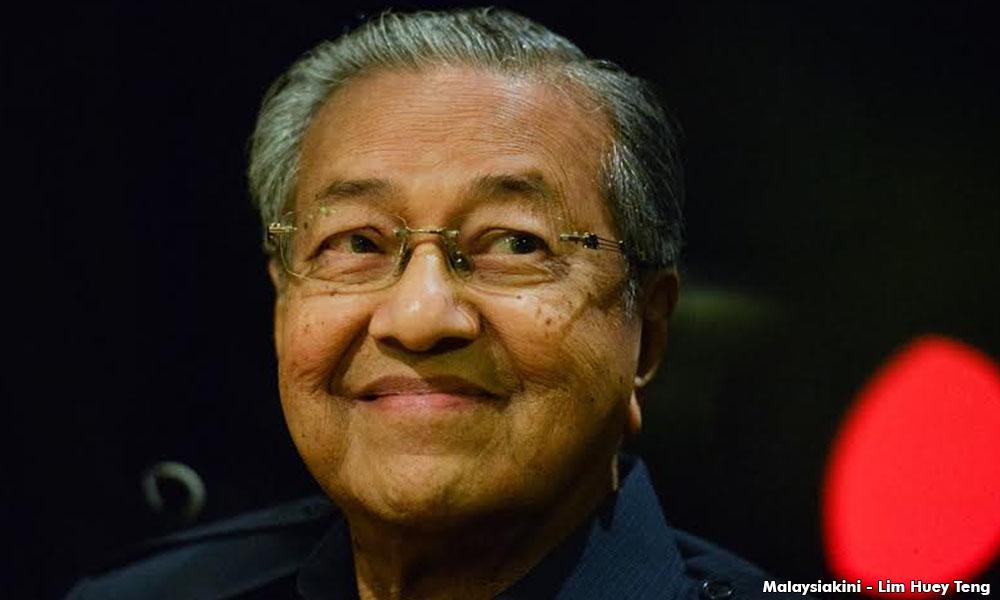
This passage should be read together with what DAP supremo Lim Kit Siang is reported to have said when he met with his former nemesis, ex-premier Dr Mahathir Mohamad on Tuesday: “According to Lim, the grand coalition idea was mooted to defend the constitution and rule of law with a new prime minister.”
I have often argued that the rule of law and the judiciary is the first and last line of defence against the excess of the state. Our compromised judiciary is perhaps the best example of what is wrong with Malaysia.
When we look at the history of our failures, we often discover that beneath the political corruption there is the undeniable stamp of legitimacy - or maybe a fig leaf of respectability - that a compromised judiciary bestows upon the politically corrupt and their actions.
Of Mahathir, I once wrote: “The genius of Mahathir is that he understood the limitations of the ‘power sharing’ formula, which is the distribution aspect of the equation.
“He realised that if each community was constantly questioning the size of its share of the pie, Umno could easily appear to be magnanimous in its distributions so long as there were easily identifiable variables for each community which were defined by Umno.”
But Mahathir was never interested in the “Malay dilemma” - or rather, he was more interested in the false dilemma that he set up. Umno Baru was the expression of that dilemma.
The late Tunku Abdul Rahman said it best in an article published in Aliran titled, ‘Carrying The Joke Too Far’, writing: “The present Umno of Mahathir was formed through his own connivance to take over power after he had been discredited as Umno leader at the general assembly 1987."
To understand the depth of the political damage done by Mahathir to the judicial system, we have to revert to the book, ‘May Day For Justice’ by former lord president Salleh Abas with veteran journalist K Das.
The book is a masterful presentation of history as a political thriller, and in quoting a passage from an interview Mahathir gave to Time magazine in 1986, we begin to see the corrosive agenda at play.
We understand what Mahathir thinks of the rule of law and the judiciary, with this quote: “... The judiciary says [to us], 'Although you passed a law with a certain thing in mind, we think your mind is wrong, and we want to give our interpretation.'
If we disagree, the courts will say, 'We will interpret your disagreement.'
If we go along, we are going to lose our power of legislation. We know exactly what we want to do, but once we do it, it is interpreted in a different way, and we have no means to reinterpret it our way.
If we find out that a court always throws us out on its own interpretation, if it interprets contrary to why we made the law, then we will have to find a way of producing a law that will have to be interpreted according to our wish."
Shrewd political mind
Writing about Mahathir, I sometimes forget what a shrewd political mind he had and his startling ability to articulate his amoral ideas with an intellectual clarity that is absent from Umno politicians these days.
No doubt, his words had appealed to a certain segment of the “conservative”, Asian values (sic) crowd, that placed economic progress and “social contract” stability over any democratic ideals.
However, what is amazing about this interview was that it did not go unanswered. As related in the book: “Because of these remarks, Mahathir was taken to court by Lim for alleged contempt of court. The High Court cleared him of the charge. Lim then took the case to the Supreme Court, which also cleared the then-PM of the charge.
In his judgment, Justice Harun Hashim had made certain comments which were reported in The Star on Nov 29, 1986 under the headline, ‘Mahathir's Dilemma’.
The High Court judge had dismissed the application, because the remarks "viewed objectively and as a whole, reflected a complaint against Parliament for passing laws full of loopholes."
This sort of action, is what makes Lim the only supremo in my book. At a time when the opposition was not “mainstream” - ignored and mocked by an apathetic public, and struggling to fight the system with the compromised tools at their disposal - there was a moral clarity that is absent in oppositional politics today.
Perhaps it was different those days. PAS was propagating the ‘Great Pharaoh’ narrative and DAP had been sniping at Umno and PAS at the time. Then again, maybe it was not so different after all.
I honestly have no idea if this grand coalition is a good thing or not, but I know it is a pity that this is the best we have to offer. Old foes becoming strange bedfellows is not something that much hope should be placed in.
I just can’t help but feel that - as usual - the average Malaysian is the punchline to the joke, that he or she is unaware of.
S THAYAPARAN is Commander (Rtd) of the Royal Malaysian Navy.


Report this comment
Are you sure you want to delete this comment?
This action cannot be undone.