


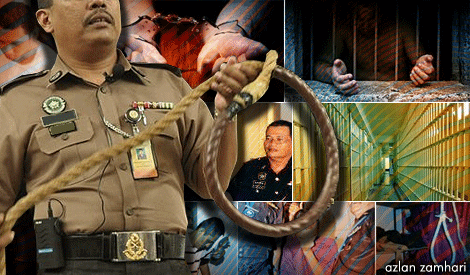

Save brothers from gallows, says Amnesty after royal pardons
Amnesty International Malaysia is urging the government to pardon two brothers, Suthar B and B Ramesh Batumalai, who are on death row for a murder conviction, citing recent pardons granted in two similar cases recently.
It noted that in February, the Selangor sultan pardoned Shahrul Izani Suparman of his death sentence, reducing it to life imprisonment.
Also last month, the Agong pardoned Nigerian native Osariakhi Ernest Obayangbon of a death sentence.
Amnesty International Malaysia is urging the government to pardon two brothers, Suthar B and B Ramesh Batumalai, who are on death row for a murder conviction, citing recent pardons granted in two similar cases recently.
It noted that in February, the Selangor sultan pardoned Shahrul Izani Suparman of his death sentence, reducing it to life imprisonment.
Also last month, the Agong pardoned Nigerian native Osariakhi Ernest Obayangbon of a death sentence.
The Batumalai brothers were given the mandatory death sentence in April 2010 after they were found guilty of murder committed on Feb 4, 2006.
After exhausting all legal avenues for clemency, they submitted a last-minute plea for pardon to the Yang Di-Pertuan Besar of Negeri Sembilan, one day before their scheduled execution.
They were supposed to be executed on Feb 24 but their execution has been put on hold, though it has since been rescheduled.
The brothers claimed that they had only intervened to stop two other men from killing the deceased, but the High Court rejected this claim and instead imposed a mandatory death sentence on both brothers, Amnesty said.
Amnesty claimed that the brothers were “convicted on the basis of circumstantial evidence alone” and were not asked to provide the police with fingerprints or blood samples.
It also claimed prosecutors failed to call the deceased’s wife, a key witness whose testimony might corroborate their claims, to testify.
Amnesty criticised the Malaysian criminal justice system for not being able “to consider the circumstances of the crime of the defendants as mitigating factors before imposing the ultimate sentence of death”.
The NGO cites the 1984 UN Safeguards Guaranteeing Protection Of The Rights of Those Facing the Death Penalty that states the death sentence should only be imposed when there is “clear and convincing evidence leaving no room for alternative explanation of facts”.
In addition to the pardoning of the Batumalai brothers, the NGO calls the Malaysian government to reform the capital punishment law towards a point where they are no longer needed.
There are over 1,000 inmates on death row in Malaysia, according to Death Penalty Worldwide.
Crimes punishable by death in Malaysia include murder, drug trafficking, treason, terrorism, kidnapping or abducting in order to murder, waging war against the king, possession of firearms, abetting mutiny and hostage taking.


Report this comment
Are you sure you want to delete this comment?
This action cannot be undone.