




Ikim DG: Muslims, not Islam, under threat
exclusive If non-Muslims are worried over 'creeping Islamisation', it is the fault of some of the Muslims for failing to allay their fears, said the head of a government think-tank.
exclusive If non-Muslims are worried over 'creeping Islamisation', it is the fault of some of the Muslims for failing to allay their fears, said the head of a government think-tank.
"This is because when Muslims are confused, the non-Muslims also become confused," said Institute of Islamic Understanding Malaysia director-general Dr Syed Ali Tawfik Al-Attas.
"And some Muslims are not telling them what it is."
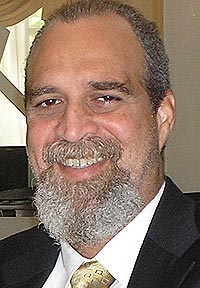 He said Muslims should be giving reassurances to the non-Muslims whose confusion is mainly manifest by fear of the unknown.
These, he said, include things like fair treatment, equal rights and the Muslim perspective of original sin.
"I always believe that when there is a confusion among the Muslims, the non-Muslims will also suffer. Whether you like hearing it or not, the fact is the non-Muslim looks to the Muslim for guidance because Islam is the complete religion."
Syed Ali, who took office at Ikim 14 months ago, was not too pleased with the way non-Muslims are pointing out the weaknesses in Islamic administration.
"If the conduct of the officers is unbecoming, that should not reflect on Islam. My question here is, how are non-Muslims being affected by Islamic administrative law?
Attributing possible weaknesses to human flaws, he said that didn't give non-Muslims the right to tell Muslims to put their house in order.
Human failings
"We should do it ourselves because first of all, the non-Muslim does not know Islam so how can he talk about anything related to Islam?"
Presently, Muslim community leaders and human rights advocates are at loggerheads over child custody and conversion issues illustrated in the case of S Shamala and religious conversion (M Moorthy).
The human tragedies in the two cases prompted a coalition of 13 human rights advocacy groups called Article 11, after the clause guaranteeing freedom of religion, to organise a roadshow to raise public awareness on their constitutional rights of citizens.
Muslim non-governmental organisations, irked by what they felt was a move to reduce Islam's importance in the constitution, have since launched their own series of talks as a counter-measure.
"Both the Shamala and Moorthy cases are not about apostasy, neither are they about Islam nor the administration," said Syed Ali, blaming human failings for the suffering of the families.
"I think it's the conduct of the people involved."
Both sides wrong
Referring to the Moorthy case, he said both the non-governmental organisations who stood by the family and the Islamic religious authorities' high-handedness should bear the blame.
"It's obviously a horrible time for the family where the wife and daughter had a terrible time trying to adjust, it's not right to go there and just rampas (snatch) the body. It's not good to do that.
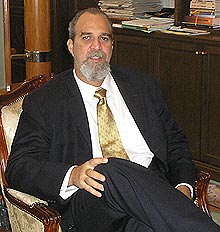 "At the same time, these NGO groups who started jumping on the case immediately didn't have any compassion for her either," he said, adding that the groups were trying to highlight their own interests.
"As a result, the poor wife of Moorthy suffers on both accounts."
He said he would support non-Muslims where injustices are perpetuated on them like in the Moorthy case.
"I empathise with the poor wife and the daughter, and the family as well. If I could speak on their behalf, I would apologise and ask for forgiveness from them for treating them in such a manner. That's what I would do."
Explaining Islamic family law briefly in relation to inheritance, he said Muslims believed that all children are born Muslims regardless of their parents' faith until the age of maturity.
"She had just lost her husband and the girl just lost her father. Don't you tell her you are a non-Muslim and have no right to anything, don't have any inheritance. This girl is below age."
Flawed policy
Noting a stage in policy-making, Syed Ali said he had disagreed with the automatic conversion of children below age when a parent converts to Islam.
"I've made this correction before with the Attorney-General's Chambers. I made this observation when I saw the enactment that said when a parent converts the children below age are automatically converted.
"I had a problem with that automatic part because it assumes that a person is not a Muslim and therefore subscribing to the idea of original sin, that you are born sinful, which Muslims do not believe in."
Syed Ali also said that it was not Islam that is under threat but Muslims the world over.
Global threat
"On the one hand, it is by the enemies of the Muslims which in this case would be ignorance, confusion, evil-mindedness, arrogance, jealousy, greed. There are those who misrepresent Islam and actively seek to destroy the Muslims.
"On the other hand, there are also some Muslims from within, who, because of their confusion, ignorance, arrogance, greed and all kinds of elements, are themselves misrepresenting Islam."
He also denied that religion in Malaysia was a numbers game in Malaysia.
"If I ask the Buddhist do they have problems in this country with the Muslims, no they say. If I ask the Hindus I also get no for an answer. If I ask the Christians, the individual, no they say.
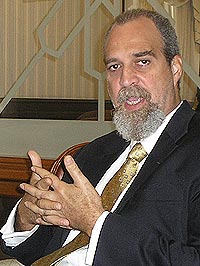 "Therefore what is the problem? Instead of trying to brand you as a religious person, a kafir (infidel) or whatever, (the fact is) you all believe. It's just that method of belief which is different."
Citing the Quran, he said Muslims are required to be tolerant to people of different faiths.
"(This means) you forgive them and treat them with respect and magnanimity. That's what you should be doing and not speak on others as if they are second-class citizens."
Syed Ali also firmly opposes any constitutional changes on grounds that Islam's special position was intended to provide a comprehensive administrative framework for the country, something he believed no other religion is capable of due to their incompleteness.
"They look at the constitution and say it guarantees (religious freedom) but (that) it's not being done. So, is there something that we need to do to amend or augment the constitution?"
Since the real problem is always individual behaviour, he said that criticisms should be levelled against the individual and not the religion or law when a certain thing is not done.
Part 1 yesterday:


Report this comment
Are you sure you want to delete this comment?
This action cannot be undone.