




The politics of rice in Malaysia
analysis The rising price of rice in the country is just the tip of an iceberg. It is part of a larger food inflation crisis that economists are warning governments which could escalate in coming days.
A special report in the Economist warned that “ the era for cheap food” is over and communities around the world ought to prepare for inflated food prices as the new “normal” condition of the day.
analysis The rising price of rice in the country is just the tip of an iceberg. It is part of a larger food inflation crisis that economists are warning governments which could escalate in coming days.
A special report in the Economist warned that “ the era for cheap food” is over and communities around the world ought to prepare for inflated food prices as the new “normal” condition of the day.
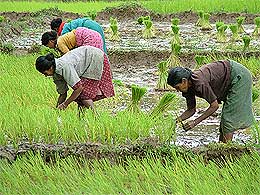 “This is a silent tsunami,” says Josette Sheeran of the World Food Programme, a United Nations agency.
“A wave of food-price inflation is moving through the world, leaving riots and shaken governments in its wake. For the first time in 30 years, food protests are erupting in many places all at once. Bangladesh is in turmoil; even China is worried,” warned the Economist in its special 2008 April issue.
Why the food crisis?
Decades of growth in developing countries have given rise to a new middle class; such as those in India and China; who now eat more grain as well more meat (which takes a lot of grain to produce).
Voracious appetites of western biofuels programmes, which convert cereals into fuel in America and in Europe; and there are other factors such as export quotas by large grain producers, rumours of panic-buying by grain importers, money from hedge funds looking for new markets, all added to the upsurge in demand for grain and other commodities.
Such shifts have not been matched by comparable changes on the farm, a sector much neglected in the last 15 years while the world focused its attention on industries, information technology and other more glamorous growth sectors.
The Economist said, “The food scare of 2008, severe as it is, is only a symptom of a broader problem. The surge in food prices has ended 30 years in which food was cheap, farming was subsidised in rich countries and international food markets were wildly distorted.”
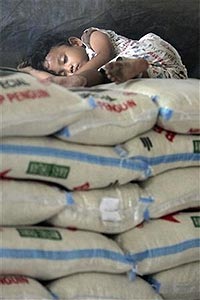 The new reality is the era of cheap food is over. “The transition to a new equilibrium is proving costlier, more prolonged and much more painful than anyone had expected.”
Yes, inflation in food prices are not going to fade with the next harvesting season. The world has to start getting used to higher prices. The writing is now on the wall - that we need to adjust quickly to these uncontrollable external conditions and we need a new paradigm to approach this ‘new situation’.
Indeed Malaysia is no exception. Going forward, we need to explore possible future ways to overcome the new phenomenon.
A poll with viewers on RTM TV2’s ‘What Say You’ programme on Sunday night suggests that Malaysians find the 10% increase in rice prices as unreasonable. This opinion, if it indeed reflects the overall national consensus, suggests how protected Malaysians are, and that we have taken a lot of the conveniences and necessities for granted.
Each and every time when inflation affecting critical items arose, the government steps in by declaring the affected items as a controlled item, and imposes a ceiling price on it. The country is blessed with an abundant endowment of natural wealth; we were able to weather many of these past crises pretty well. Most of the time, the government intervened to provide an emergency lifeline of cash in the form of subsidy.
If the problem is temporary; this is well and good. However, the current inflation in food prices are here to stay; and to a very large extent these problems would be beyond the powers of any government alone; it is a function of a convergence of international conditions.
The ‘protected’ Malaysians must start to get used to a “different” world and begin to adjust to it. Our country’s ruling and opposition political parties need to work out a bipartisan solution, and learn to work together on matters of critical national interest.
Don’t just favour Sarawak
Someone suggested that the Barisan National federal government would have no interest to work with the Pakatan Rakyat-controlled state governments of rice-producing states to increase productivity; but instead would channel federal fund to opening up Limbang in Sarawak for example, to secure Sarawak’s political alignment with BN.
While the political motives of strengthening a political ally is critical and understandable, I would argue that there is a lot more reasons for the BN government to work with rice farmers in these Pakatan-controlled states.
 First of all, let’s make it very clear - rice self-sufficiency is a national matter; we want food security for all Malaysians. Supporting the four states is the quickest way to assure national food security.
Opening up vast tracks of new land in Limbang would be good for Sarawak and for Malaysia. However, the BN government must not blind itself to its political needs of the day as to ignore the political importance of the traditional rice-producing states.
Sarawak has a total of 66 parliamentary seats, while Kedah, Perak, Selangor, Kelantan combined have a total of 156 seats.
In terms of weightage; it is very clear where the priorities should be. By favouring Sarawak; BN immediately mortgages all its goodwill with the people of Malaysia and give the opposition tremendous firepower against the ruling government.
This act does not only alienate the voters in the rice-producing states, it alienates all the voters in the country. Why put BN’s immediate political future in severe jeopardy where there can be more than one way to keep the Sarawak MPs happy, short of turning the rice fields into battlefields.
Food is a bipartisan issue
Working with the Pakatan state governments in all the four rice-producing states is a prudent approach for BN to win back the country’s voters. First of all, inflation of rice prices is a national issue affecting all people; it should be treated in a bipartisan way.
Malaysia’s political parties are new to this concept of working in a “bipartisan” way; the political players may not know how to do that because they had never done this before, but we must begin today. The poor people will be held ransom if the political parties continue to bicker amidst a brewing national crisis. This is an opportunity for the country’s political system to move towards greater maturity; when there is a food crisis it affects all families; whether they support BN or Pakatan.
Food is a basic issue that should not be turned into a political battle. Nothing is more critical than to put aside narrow partisan interest to tackle a national issue.
The Agriculture Ministry would do well to direct all its state offices to work with the rice-producing states to repair infrastructure and work to increase productivity; open up more suitable land to see what can be possibly done quickly to increase production.
The state governments, on the other hand, must give its fullest cooperation to work hand in hand with the federal government, make their own estimates of funding and support needed, and use this opportunity to mobilise and launch a re-education of farmers on the benefits of modern agri-business and help them become productive farmers.
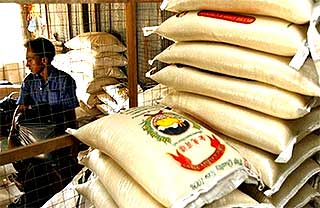 Let the states begin a contest towards self-sufficiency. When the large number of farmers truly understands the worth of their job and how they can benefit and become respectable by becoming productive and self-reliant, that would be the start of a new chapter for the rural farming community.
Introduce and support ‘agri-business’ service companies; those who provide seeds, fertilisers, machineries and other services to the field; make them as agents of change to genuinely help the farmers move forward. In many agri-business advanced countries; such agri-business service companies proved to be more effective agents of change on the ground than government officers. Increasing the yield of our rice fields is the easiest route to securing self-sufficiency for the country.
Thai Rice Exporters' Association secretary-general Vichai Sriprasert warned, “This is a crucial time, it will tell the story of who will survive and who will not survive.” Let me add that this is also true of the political fortune of any government or political party; only governments that can protect and keep people fed will stay in power.
FOONG WAI FONG is director of Megatrends Asia and best selling author of Megatrends Asia (with John Naisbitt), We have to talk Mr Prime Minister, The New Asian Way , and Culture i s Good Business . Email: waifonog@get-ed.com.
Previous articles
Malaysia can achieve self-sufficiency in rice if only...


Report this comment
Are you sure you want to delete this comment?
This action cannot be undone.