




IPPs: Parliament given wrong profit figures
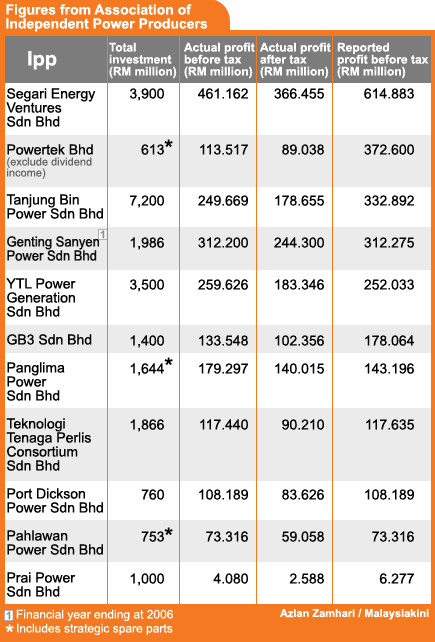
There has been an overstatement of RM499.316 million pre-tax profits figured provided by Deputy Minister in the Prime Minister’s Department SK Devamany in Parliament recently.
There has been an overstatement of RM499.316 million pre-tax profits figured provided by Deputy Minister in the Prime Minister’s Department SK Devamany in Parliament recently.
In a letter to Malaysiakini, the Association of Independent Power Producers Malaysia (Penjanabebas) reiterated that the profits are not “extreme” as described by the MPs.
“We would also like to put on record that given the scale of investments put into such projects, the returns are consistent with other major infrastructure industries in Malaysia and internationally and are not ‘extreme’ as described in the House,” it read.
In his reply to Lim Guan Eng (DAP-Bagan) on July 8, Devamany revealed that 13 independent power producers (IPPs) together made a profit of RM3.37 billion last year for the financial year 2006/2007.
The huge sum fell subject to scrutiny by members of parliament on both sides of the House who called for a review of the power purchase agreements (PPA) between the IPPs and utility firm Tenaga Nasional Bhd (TNB).
According to Penjanabebas, all the figures provided by the ministry - save for TNB Janamanjung and Kapar Energy Ventures - were incorrect.
Its president Philip Tan opines that the difference in figures could be due to double counting (profits of operating companies and holding companies were recognised on a group basis) and varying accounting periods for the figures announced (16-month period and 12-month period).
Shielded from rising fuel cost
The difference in figures was largely seen the numbers provided for Powertek and Segari Energy Ventures where the overstatement was RM259 million and RM153.7 million respectively.
Currently under PPA signed between Tenaga Nasional Berhad (TNB) and the IPPs, TNB is purportedly obliged to purchase all the power produced by the IPPs even if the national grid does not need the power.
The controversy surrounding the PPA is that the IPPs are allegedly shielded from the rising cost of fuel while charging TNB exorbitantly high rates to produce unnecessary excess electricity.
There have been talks that the government will review the PPA but this has not materialised leading most observers to conclude that the relationship between TNB and IPP as severely strained over the years.
However, TNB chief executive officer Che Khalib Mohamad Noh said the national power supplier will initiate negotiations with IPPs to find ways to help the consumers together in light of the global energy crisis.
TNB had recently raised the electricity tariffs in Peninsula Malaysia - a move seen as necessary following the government's decision to reduce fuel subsidies which include gas, diesel and petrol.
The government has also imposed a windfall tax on IPPs beginning July 1 as part of efforts to offset rising costs due to surging crude oil prices.


Report this comment
Are you sure you want to delete this comment?
This action cannot be undone.