




Online anti-tower protests: What PNB can do
I've read with fascination - just as everyone else has - that over 200,000 people have "liked" the Facebook Page opposing Warisan Merdeka.
I've read with fascination - just as everyone else has - that over 200,000 people have "liked" the Facebook Page opposing Warisan Merdeka.
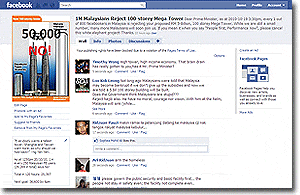 According to online reports, Permodalan Nasional Berhad (PNB) is now scrambling to find ways to deal with the growing online opposition to the RM5 billion, 100-storey skyscraper project.
Since I'm a freelance new media consultant and I normally charge for dispensing advice to companies about social media strategy, I'm not about to give a custom-tailored strategy to TNB for free.
However, I will outline 10 best practices that any company can adopt to deal with crisis situations.
Social media attacks are not uncommon. In the West, many famous brands have come under attack by cyber-activists.
These attacks can come in various forms. Even within the Facebook platform alone, there are different ways to attack a brand. One is to go to the brand's Facebook Page and post critical comments, pictures and videos.
Another is to create Facebook Page dedicated to opposing the brand. The latter is the phenomenon we are seeing happening with the anti-tower Facebook Page .
Here are 10 things companies can do to be ready for crisis management using new/social media:
1. Have an official presence on new media and social media channels. That means having an official website, a blog, a YouTube channel, a Facebook Page and a Twitter page, at the very least. Otherwise, you would have no official online channels to let your side of the story be heard. Besides, it's much easier to deal with a crisis that's spreading online if you have a presence in that very space.
 2. Have an online crisis strategy in place. Don't just build the various channels with no plan on how to populate them with the right type of content. Having a blog means nothing if the content is wanting.
Similarly with Facebook and Twitter . Content truly is king here. But good content costs money. So budget the right amount of resources to sustain this initiative.
3. Have dedicated staff managing these various channels. They don't have to necessarily do it full time but they should be assigned to it. Asking volunteers to update these various channels is a recipe for disaster. So, is asking junior staff to handle them just because they are young and therefore should be web-savvy. You need a mixture of web-savvy people and experienced hands for crisis management.
4. Invest in the appropriate software to help you monitor online chatter about your brand. The telcos are already doing this very well. Try typing "Maxis sucks" on Twitter and see. You will get an immediate response offering to resolve your problem.
5. Foster and nurture relationships with the "super-nodes", the people who are really influential and have a strong following on Facebook , Twitter , blogs and so on. They can be instrumental in helping you in times of crisis.
6. When a crisis erupts, set up a "war room" and bring in a broad group of people (the so-called "stakeholders") to brainstorm and execute the appropriate cyber responses to the various attacks. There should be representatives from each key department in the company, ready to provide information for an appropriate response if their area is affected.
 7. In responding to the critical comments don't be negative or defensive, even if they are unfair. Instead, post timely and rational responses to the issues raised. Be factual and objective. Don't get personal. And never belittle or demean your critics. As a brand, you would be seen as the big bully if you do so.
8. Engage. That means continuing the conversation. Don't just post one response and let that be the final word from your company. This is not a press release but a dialogue. Whatever response you post will probably generate more responses from the critics. Continue to engage them in a positive way. It will require a lot of skill, diplomacy and patience to keep this up.
9. Proactively post, through your various channels, relevant, useful and insightful information about your brand and the issue at hand. Don't always be reactive. Push information that you want out there. There may be things about the situation that can turn the tide in your favour. But that won't happen unless the general public knows about these things.
10. Even after the crisis has passed, continue to engage your audience. Ask them for ideas and feedback. Solicit criticism. Be genuine about it and if some ideas are adopted, make sure you shout out loud about them. You want the public to know that their opinions matter.
Not many companies will face the kinds of crisis that PNB is facing with Warisan Merdeka but every company will now and again face difficult situations when something goes wrong with the products or services they are offering.
Social media is a good way to cope with these situations and to let the general public know you are concerned and are taking steps to address the issues that they care about.
OON YEOH's new social media book 'Like Me, Follow Me' is published by MPH. You can connect with him via Facebook and Twitter .


Are you sure you want to delete this comment?
This action cannot be undone.