




Android rising!
Two years ago, if you told anyone you were considering getting an Android phone, people would have given you blank stares. One year ago, you would have still draw a mix of blank stares and "why in the world would you want such an obscure phone?" reaction.
Two years ago, if you told anyone you were considering getting an Android phone, people would have given you blank stares. One year ago, you would have still draw a mix of blank stares and "why in the world would you want such an obscure phone?" reaction.
 Although Android fever has yet to reach Malaysian shores, it's already the
top smartphone platform
in both the US and UK. In the US, Blackberry comes in second and iPhone third. In the UK, iPhone is second and Blackberry third.
Although Android fever has yet to reach Malaysian shores, it's already the
top smartphone platform
in both the US and UK. In the US, Blackberry comes in second and iPhone third. In the UK, iPhone is second and Blackberry third.
I don't have any official statistics for the Malaysian market but anecdotal evidence suggests that over here iPhone and Blackberry are still more popular than Android. But probably it's just a matter of time before Android becomes the hot phone here too. The trend is obvious.
How did this geeky-sounding operating system get from nowhere to becoming the dominant mobile platform in just over two years?
A big part of it was Google's strategy of offering Android for free to any phone maker who wanted it. The free strategy is in line with Google's approach for most things it offers and it certainly did not seem like a very original idea.
 However, for the mobile phone market, no other leading operating system is available for free. In the case of Apple, it's operating system is proprietary and is not available for licensing. The same goes for Blackberry. Windows 7 is available for licensing but it requires a licensing fee.
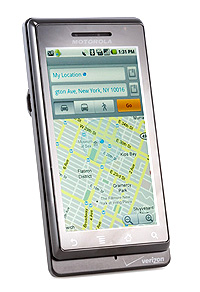
For the first year or so upon its launch, Android seemed to limp along very slowly. Some thought manufacturers would never warm up to it. Then in late 2009, Motorola became the first big player to jump on the Android bandwagon and released the "Droid".
And what a phone it was. Not only did the Droid feature a powerful ARM Cortex 550-MHz mobile CPU and a high-resolution screen, it even had a slide-away keyboard - something the iPhone lacked. The Droid also featured solid integration with Google services like Google Maps.
The trickle that eventually became a flood
It showed the world what the Android platform was capable of and
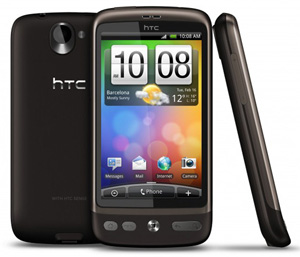 proved to be a trickle that eventually became a flood. Today, practically every major mobile phone maker (Nokia being the exception) had Android models in their line up. Some brands, like HTC, feature Android phones as their main product offering.
Most industry observers believe Android has yet to peak and one estimate has Android gaining up to 45 percent market share by 2016.
Android’s main challenge going forward will be the issue of fragmentation. The latest Android version is 2.3 but according to the latest developers’ statistics, only 2.5 percent of Android devices run on this version. About 64 percent run version 2.2, roughly 27 percent run version 2.1, and some 2.7 percent run version 1.5.
Google is addressing the fragmentation issue as it wants to avoid the fate of Symbian, a once-popular platform, whose heavy fragmentation proved to be a major problem for both application developers and hardware makers. Today, Symbian is a dying platform.
Android’s certainly has got momentum going for it although no one expects it to gain the kind of monopolistic position Microsoft achieved with Windows for PC. Mobile phone platforms have always been more diverse than that of the PC market.
Even before Apple’s iOS and Android entered the scene, there was already BlackBerry, Palm, Symbian and Windows Mobile. Today, Palm is really not much of a player and Symbian will soon exit the scene as Nokia switches to a resurgent Windows. Nevertheless, there will still be four strong players (iOS, Android and BlackBerry) and one growing contender, Windows, in the game.
Pros and cons of diversity
Such diversity has its pros and cons. The downside of course is that it’s more challenging for application developers. They have to build multiple versions of their applications, which is time-consuming and costly. That’s a reality that app developers will have to contend with going forward.
The upside is that having multiple players encourages competition. Noticed how much phones have changed in the past two years alone compared to the past 10 years in the PC market. There’s been much more innovation in the phone market because of the heavy competition amongst different platforms.
Think about it. By this time next year, most of us will probably be asking ourselves whether it’s time to upgrade the phones we just bought this year. How often do you do that with your laptop?
OON YEOH is managing editor of AsiaReach Media. You can follow him at www.twitter.com/oonyeoh .


Are you sure you want to delete this comment?
This action cannot be undone.