




Stranded Indians: A case of too many cooks
Here's the scenario.
 A total of 123 Indian nationals, who had been working in Malaysian companies in Johor Baru, have been gathering periodically outside the Indian High Commission in Kuala Lumpur since last week.
They have resorted to such action because it is the only place they feel confident enough to seek redress for what they alleged was a 'shameless crime' committed against them by foreign worker agents in India and Malaysian businessmen who hired them.
The workers arrived in Malaysia on various dates late last year with the majority landing in September 2004. They were promised jobs paying between RM700 to RM800 a month with lodging provided. They did not get even half of that.
Almost all of them secured finances to travel as well as to pay levy - close to RM10,000 - to agents by borrowing from loan sharks and selling assets. They now shudder at the thought of having to face the music when they reach home.
Arriving at the Indian High Commission to do a story on the 123 the other day, I bumped into 11 other Indian nationals who were waiting for news of their complaint - lodged six months ago at the embassy - against their previous employer (a famous roti canai eatery franchise in Subang Jaya) who allegedly had not paid them months of wages, confiscated their passports and subjected them to physical abuse.
Ask members of labour rights group Tenaganita and they too will have many stories to tell of immigrants being ill treated. Tenaganita receives daily reports of cases of migrant workers conned and abused by Malaysian employers.
Here's the scenario.
 A total of 123 Indian nationals, who had been working in Malaysian companies in Johor Baru, have been gathering periodically outside the Indian High Commission in Kuala Lumpur since last week.
They have resorted to such action because it is the only place they feel confident enough to seek redress for what they alleged was a 'shameless crime' committed against them by foreign worker agents in India and Malaysian businessmen who hired them.
The workers arrived in Malaysia on various dates late last year with the majority landing in September 2004. They were promised jobs paying between RM700 to RM800 a month with lodging provided. They did not get even half of that.
Almost all of them secured finances to travel as well as to pay levy - close to RM10,000 - to agents by borrowing from loan sharks and selling assets. They now shudder at the thought of having to face the music when they reach home.
Arriving at the Indian High Commission to do a story on the 123 the other day, I bumped into 11 other Indian nationals who were waiting for news of their complaint - lodged six months ago at the embassy - against their previous employer (a famous roti canai eatery franchise in Subang Jaya) who allegedly had not paid them months of wages, confiscated their passports and subjected them to physical abuse.
Ask members of labour rights group Tenaganita and they too will have many stories to tell of immigrants being ill treated. Tenaganita receives daily reports of cases of migrant workers conned and abused by Malaysian employers.
Although Tenaganita does not only receive complaints from Indian nationals, migrants from the second most populous nation in the world do bear the brunt for the evils that exist among inhumane and greedy employers.
"We were working on a few other cases at present - in particular the case of the Nepalese national who was mistakenly arrested for being an illegal and whipped by authorities.
"Then a representative of the 123 Indians came to our office and asked us to take up their case. We also received phone calls from their family members in India pleading us to help them.
"We felt that the rightful party (the mission) was already handling the matter but because of the request and the fact that the matter was taking a long time to be resolved, we offered our services," Tenaganita program officer Florida Sandanasamy told malaysiakini .
Too many cooks?
Now, here's what is believed to be the solution.
The predicament faced by the 123 have resulted in four different parties working to end their plight.
You have Tenaganita - approached by the workers themselves. Then there's the People's Progressive Party of Malaysia (PPP) - yes, a BN component actually to the rescue.
Next, there's a company called Zanat Power Technology Sdn Bhd - appointed by the high commission to house and feed the workers till things are settled. (They are being accommodated at the Madras Caf and Tropicana Hotel in Sentul)
 Finally, there are the lawyers of the 'former bosses' of the workers who are attempting to settle things 'amicably and fairly for both' - but which could possibly turn out to be a ploy to weasel out of paying the workers their outstanding dues.
The question is, which of these four entities are actually working towards getting the troubled employees home with money in their pockets and if the involvement of all four is only resulting in confusion and division among the marooned bunch.
First, the NGO. I personally don't believe there is true altruism in the world but there's little doubt that Tenaganita, given its track record, are working hard to help the workers just as they have on numerous occasions in the past .
Even the high commission themselves realise this and after some early stages of struggling - to cope with Tenaganita's constant harassment of the mission whenever there were cases of Indians mistreated by their employers - the mission now engages the NGO and in fact, in this present case, used Irene Fernandez's outfit to mediate with the 123 workers.
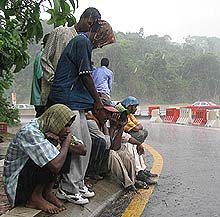
Standing in the pouring rain - since the workers refused to enter the high commission for shelter (which was offered only 15 minutes after they were drenched) - the workers huddled around two Tenaganita officers (who were soaked themselves).
 The 123 were eagerly waiting to receive update of the
hour-long meeting
that Florida Sandanasamy and Glorene Dass were engaged in with the mission's first secretary RV Ramanan.
The 123 were eagerly waiting to receive update of the
hour-long meeting
that Florida Sandanasamy and Glorene Dass were engaged in with the mission's first secretary RV Ramanan.
One can't doubt the duo and Tenaganita's commitment to the cause.
Over-eagerness or publicity ploy?
As for the PPP (Selayang Branch), they came with food, a lawyer and the intention to negotiate with the mission but were not allowed into the process. The food was not consumed either, as the workers decided to stage a hunger strike.
The PPP reps engaged the media happily and one sensed the desire to get into the news was stronger than the desire to salvage the situation. Being in the government, the politicians there seemed unable to entirely use their position to good effect.
"We are here as civil society members to ensure that the Malaysian image is not tarnished by some employers so that we are seen as a country concerned for the plight of these foreign workers," said PPP Selayang branch secretary-general G Vijayan who had provided transport for the 123 to the mission from their hotel.
PPP also seemed to give the workers conflicting advice to that of Tenaganita.
The reps encouraged the workers to stay congregated outside the mission building, in the rain. They also initially discouraged them from dispersing, viewing it as a strategic move for the workers to shame/force the mission into expediting the search for a solution.
Tenaganita gave the mission the benefit of the doubt and encouraged the workers to return to their hotel and to give the mission a few days to negotiate with the employers for their passports and their wages.
Compensation
All of this just left the workers even more confused and disoriented.
They felt the need to stick it out at the high commission premises. They expressed concern at trusting more Malaysians after the experience with their former employers. Their temporary caretaker Kamarudeen - Zanat Power's general manager- helped to make matters worse with his tyranny.
 "He scolded us, he threatened to hit us and he tried to split us up by talking some of us into returning to work for the old company," said S Mottaisamy, 30, the workers' spokesperson.
Kamarudeen did not deny the scolding bit but said he did not try to coax them into returning to their old bosses as he had "nothing to gain from doing so". The Malaysian claimed that he was merely frustrated with the workers' stubbornness and uncooperativeness.
Zanat Power is incurring RM3,000 a day on costs (lodging, transport and food) on the workers. They however will be reimbursed by the high commission for their expenditure and efforts, according to Kamarudeen.
The company apparently was given the 'babysitting' task after it had successfully done the same for 40 over Indians in a similar fix months ago. They were all returned to India safely with passports and some compensation.
The question that rages in my mind is, while it's only fair to reimburse someone for costs incurred and efforts taken, why hasn't the same courtesy been awarded to Tenaganita or any other organisation helping aggrieved and mistreated migrants?
These outfits incur costs outside their operational expenses which cannot be evaluated merely numerically.
If the high commission plans to use these grassroots organisations - who garner more trust from migrants - as mediators and tools to get through to them, then the mission should seriously consider treating the non-profit organisations with more respect and equality in dealings (both financially and ideologically).
Lets hope that the high commission will be able help congregate all parties seeking to redress the matter and engage in proper discussion and dialogue to work together - rather than in silos - for the benefit of none other than the workers.
Why take passport?
A final question, and it may be one that has been asked often already but is necessary for a revisit, is how can we allow any group to hold on to the travel documents belonging to others.
This is certainly the core reason why migrants end up stranded and eventually deemed illegals.
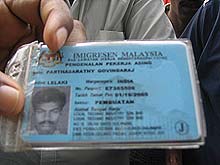 What right have employers to keep in their possession travel documents of employees - of any nationality - and use these passports as bargaining tools to negotiate terms of contract and continued employment?
If contractors are worried their workers may run away - if their personal belongings were allowed to their own care - then perhaps they should consider being fairer employers and practise good governance in order to retain their staff.
After all, no one runs away from a good job and kind, caring bosses.
ROSHAN JASON is a member of malaysiakini .


