




Hadi links CSA to 'Dajjal approach at the end of times'
PAS president Abdul Hadi Awang has linked the confidence and supply agreement (CSA) between the government and the opposition to the “Dajjal approach at the end of times”, the harshest criticism yet against the agreement.
“The CSA is a Dajjal approach at the end of times that turns power into no longer an amanah (trust) that must be fulfilled to all, but forces (people) to remain in power.
“Although it’s not pretending to be...
PAS president Abdul Hadi Awang has linked the confidence and supply agreement (CSA) between the government and the opposition to the “Dajjal approach at the end of times”, the harshest criticism yet against the agreement.
“The CSA is a Dajjal approach at the end of times that turns power into no longer an amanah (trust) that must be fulfilled to all, but forces (people) to remain in power.
“Although it’s not pretending to be God like Dajjal, it still executes the traits of Dajjal,” Hadi, who holds a master’s degree in Islamic politics from Al-Azhar University in Egypt, posted on social media.
Dajjal (the Islamic “deceiver” or “false messiah”) and the Christian Antichrist occupy a very similar structural role in both eschatologies: a supreme end-time figure of deception, chaos, and opposition to God who is ultimately defeated by Jesus upon his return.
However, the specific theological details, origins, and descriptions differ between the two.

Earlier, Hadi commented on the importance of safeguarding trust, including ensuring wealth does not circulate only among certain groups and the need to be fair in administration.
The loss of trust, he said, is a sign of the world heading towards Judgment Day and the appearance of Dajjal.
“The climax is the birth of Dajjal, who has the power to conquer the world and force the public to obey him with bribes of life’s pleasures.
“Anyone who opposes him, on the other hand, will be tortured.
“Prophet Muhammad SAW stated that before the appearance of the ultimate Dajjal, several small dajjals will appear across the world to become his army,” Hadi said.
CSA signing
So far, there is no fatwa in this country regarding the permissibility of the CSA toward the practice rooted in Britain's Westminster parliamentary system.
Last week, the government signed a CSA with six Bersatu MPs, six independent MPs, as well as Muar MP Syed Saddiq Syed Abdul Rahman.
Following the CSA, they will support Prime Minister Anwar Ibrahim’s administration until the end of this parliamentary term and Budget 2027.
They must also support the government’s efforts regarding proposals to limit the prime minister’s tenure to a maximum of two terms, as well as the separation of powers between the attorney-general and the public prosecutor.

In return, they are allocated the same amount of constituency development funds as received by government representatives.
With the success of the CSA, the government bloc in the Dewan Rakyat controls 149 out of a total of 218 seats in Parliament.
The total number of seats should be 222. However, four seats are vacant following the resignations of Bersama co-leader Rafizi Ramli and his allies.
A simple majority requires at least 110 votes, while a two-thirds majority requires 146.
READ MORE: How does Madani-Bersatu CSA benefit Anwar?
People’s right
Writing his occasional column “Minda Presiden PAS”, Hadi stressed that national revenue is the “right of all the people”.
“This tax revenue involves the usage and needs of all people, so its benefits must be returned to all citizens, regardless of whether they vote for the government party or the opposition party,” he said.
Therefore, he said, whichever party becomes the government is obliged to fulfil its trust to the people directly without needing to make a prior undertaking or aku janji (pledge).
“This is like a man who is about to become a husband who does not need to promise or sign an undertaking during the solemnisation of marriage to carry out the responsibility of providing nafkah (financial maintenance) when becoming the head of the family,” he said.
Equal allocations for MPs have long been a struggle for the opposition, since the era of Dr Mahathir Mohamad’s first administration.
Anwar said he was open to giving allocations to opposition MPs, but stipulated that negotiations must be conducted first.
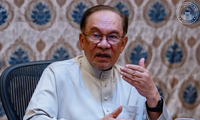
However, negotiations were frequently delayed due to the failure to reach a consensus regarding the conditions of the memorandum of understanding.
Among the reasons for rejection were claims that it contained strict conditions involving issues of asset declaration, support for government stability, and limits on 3R issues (religion, race, royalty).
In May, allegations arose that several MPs, particularly from PKR who were linked to Bersama, experienced interference or closure of access to the constituency allocation management portal system (MyKhas).
Anwar defended the move by stating that allocations are for the good of the people and not the "exclusive right" of an individual MP.
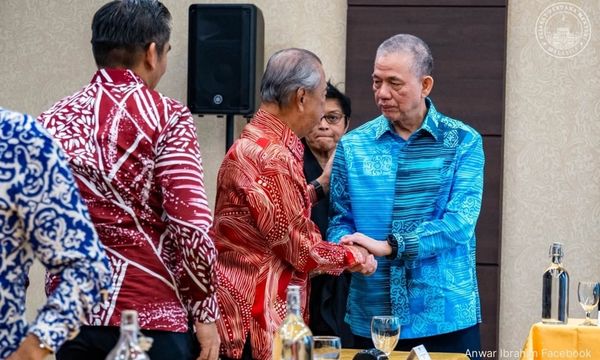
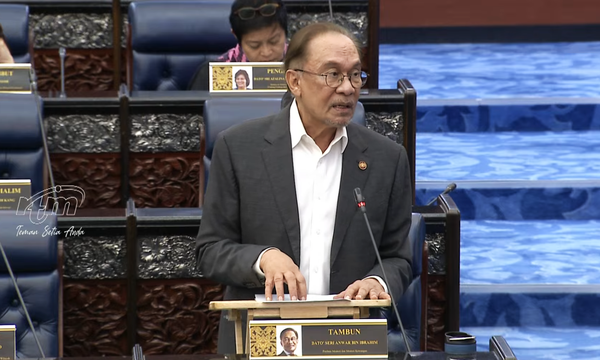
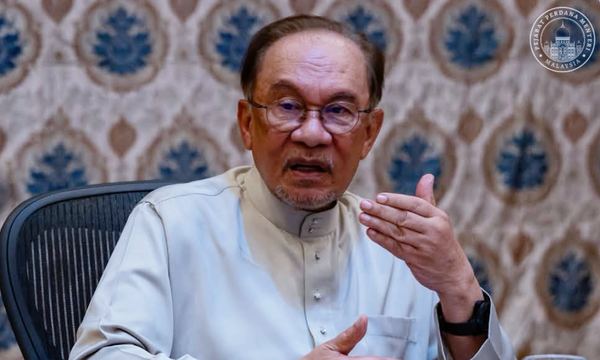


And what approach is your marriage of convenience to UMNO know as ?
Tuan Hadi, why was it 'for national stability' when PN needed to use a CSA to stay in power, but now that the Unity Government is pushing for a CSA, it suddenly becomes a 'Dajjal approach'?
We need to heed the teachings of our WINNING HADI because he understands Quran the most, therefore we need to vote for our WINNING PAS to avoid Dajjal the deceiver. I think even the most ardent PH supporters cannot deny that they were seriously being let down by Anwar and his lies. So they will do well to be submissive to our WINNING PAS and Islam to avoid being deceived by the deceiver once again.
Report this comment
Are you sure you want to delete this comment?
This action cannot be undone.