



Towards a cultural political movement
COMMENT | "I am tired of the same dismissive attitude from both sides," 27-year-old Sara (not her real name) said to me, in response to my question about voting in the next general election.
For a lot of youths on the political left, not only are they unrepresented, their politics are often dismissed as clueless, hopeless, or meaningless.
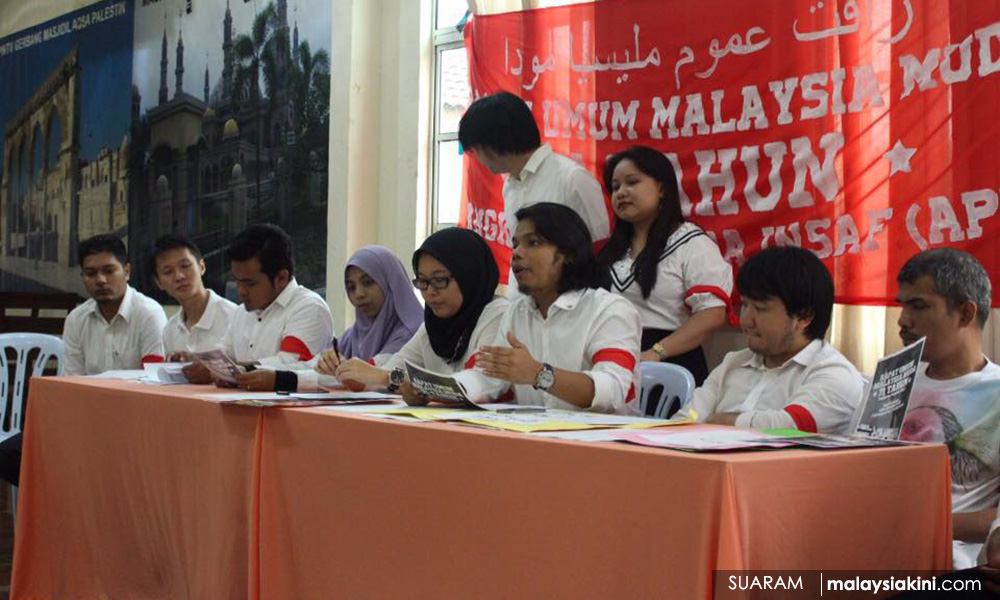
Just last week when the Malaysia Muda coalition announced their simulation of the Angkatan Pemuda Insaf (API) congress in December 1946, the press referred to them as the "youths without ‘Harapan’."
A good pun, but it nevertheless misrepresented the group at a time when they cannot afford to be, more than ever.
If anything, these are the youths that provide actual harapan (hope). Where is the harapan in voting in the different face of people with the same archaic, racist and homophobic politics as Umno or BN?
Are we to expect youths to vote for the opposition just because we don't want BN to win again? Are we to expect the youths to continue to let themselves be intellectually and culturally undermined for the sake of the "greater good"?
For the sake of the greater good, or for the sake of the opposition establishment?
If the answer to the questions raised above is a yes, do not expect to see a change in the political participation of the youth. The days of party politics are now stale. It is no longer cool or hip for young people to turn into more politicians we don't need, BN or otherwise.
‘Politik kebudayaan’
Budi (courtesy) and daya (ability), the two words that combine to become budaya, or culture in Malay.
Until today, both sides of the political establishment have neglected a vital aspect of political conscientisation: culture...
COMMENT | "I am tired of the same dismissive attitude from both sides," 27-year-old Sara (not her real name) said to me, in response to my question about voting in the next general election.
For a lot of youths on the political left, not only are they unrepresented, their politics are often dismissed as clueless, hopeless, or meaningless.
Just last week when the Malaysia Muda coalition announced their simulation of the Angkatan Pemuda Insaf (API) congress in December 1946, the press referred to them as the "youths without ‘Harapan’."
A good pun, but it nevertheless misrepresented the group at a time when they cannot afford to be, more than ever.
If anything, these are the youths that provide actual harapan (hope). Where is the harapan in voting in the different face of people with the same archaic, racist and homophobic politics as Umno or BN?
Are we to expect youths to vote for the opposition just because we don't want BN to win again? Are we to expect the youths to continue to let themselves be intellectually and culturally undermined for the sake of the "greater good"?
For the sake of the greater good, or for the sake of the opposition establishment?
If the answer to the questions raised above is a yes, do not expect to see a change in the political participation of the youth. The days of party politics are now stale. It is no longer cool or hip for young people to turn into more politicians we don't need, BN or otherwise.
‘Politik kebudayaan’
Budi (courtesy) and daya (ability), the two words that combine to become budaya, or culture in Malay.
Until today, both sides of the political establishment have neglected a vital aspect of political conscientisation: culture.
And I'm not talking about religiously wearing our traditional attire, or practicing the mak yong, or knowing how to dance the zapin. These are important, and they do make up the bulk of the visual manifestation of our culture, but this is not the stuff of a political cultural movement.
I'm talking about the building of communities through cultural work such as the arts, i.e., theatre, film, poetry or music, that are not only art for art's sake, but are deliberately crafted to send a message of social consciousness.
These works are always political, and I don't see why they shouldn't be. Today, the arts have been so far removed from politics that what we get on mainstream entertainment channels is just vacuous entertainment, socially distant from the political realities on the ground.
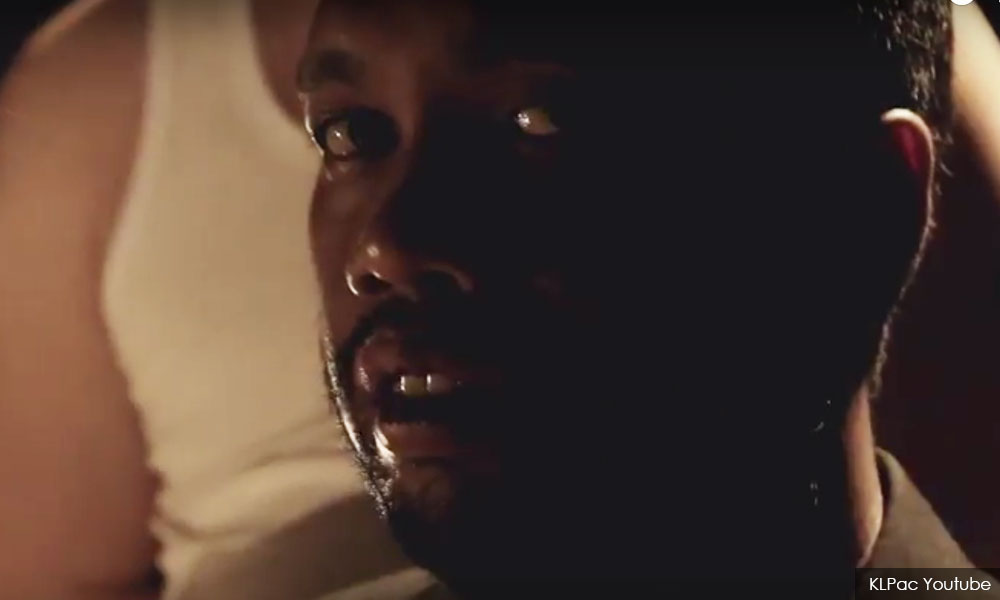
And to say that political art is not in demand is untrue. The Malay adaptation of George Orwell’s “Animal Farm” that was staged at KLPac last August, "Kandang," sold out, with many demanding a restage because they missed it.
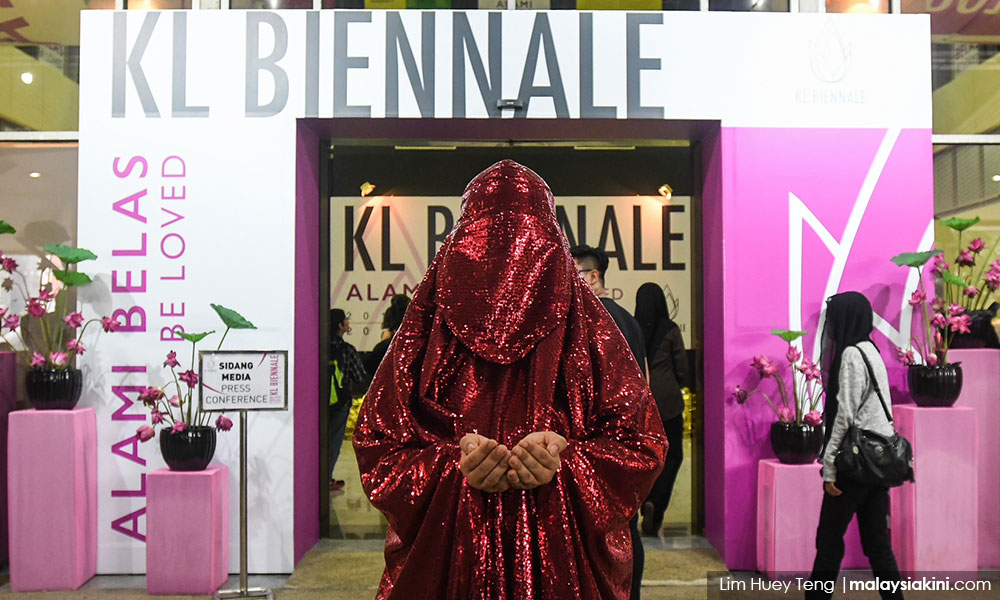
More recently, in the excitement of hosting our first Kuala Lumpur Biennale at the Balai Seni Visual Negara, I visited the artists from Pusat Sekitar Seni who were supposed to have an art exhibition at the gallery.
The title of their exhibition was "Under Construction," and I was there a week before the police paid a visit to Balai and commented that their works are too political, with "communist elements," without ever giving the artists any opportunity to respond to such allegations.
First of all, why can't art be political? Is there any art that is not political? Even the most apolitical art is a political act in itself, there is no such thing as a non-political art.
Secondly, what is up with the failure of the Balai to stand by the works of the artists? As organisers who invited these artists to install their exhibition, they are responsible to stand by the creative work of whatever is produced by the artist.
As disappointing as the lepas tangan (hands-off) attitude of the Balai was, other artists featured at the KL Biennale also offered no sense of solidarity to the artists at Pusat Sekitar Seni.
In an ideal world of a collective, or a community, when one artist is oppressed, all other artists are also oppressed. Censorship against one artist should be enough grounds for other artists to resist the censorship of art.
Since two of the seven artists for "Under Construction" are Indonesians, I saw many Indonesian artists expressing their solidarity for their fellow artists, condemning the unprofessional conduct of Balai and the censorship of the state on creatives.
I have seen one or two Malaysians doing the same, but not collectively, as our Indonesian friends did.
Truly, shame on us for tolerating this and allowing our community and street artists to suffer alone. This is further proof that the cultural political movement is a big threat to power, even bigger than opposition political parties.
As a matter of fact, political culture transcends political parties, which is why I would not be surprised if politicians in the opposition are also opposed to building a cultural movement of politics, because art goes beyond the superficial appearances of things and go to the essence of politics itself.
Reviving the cultural movement
On the 23rd of December, a group of young Malaysians who are not affiliated with any political parties, be it from the government or opposition, will take to the streets of Kuala Lumpur to remember the 1946 congress of API, the anti-colonial youth-based political party that became the first political organisation to be banned by the British.
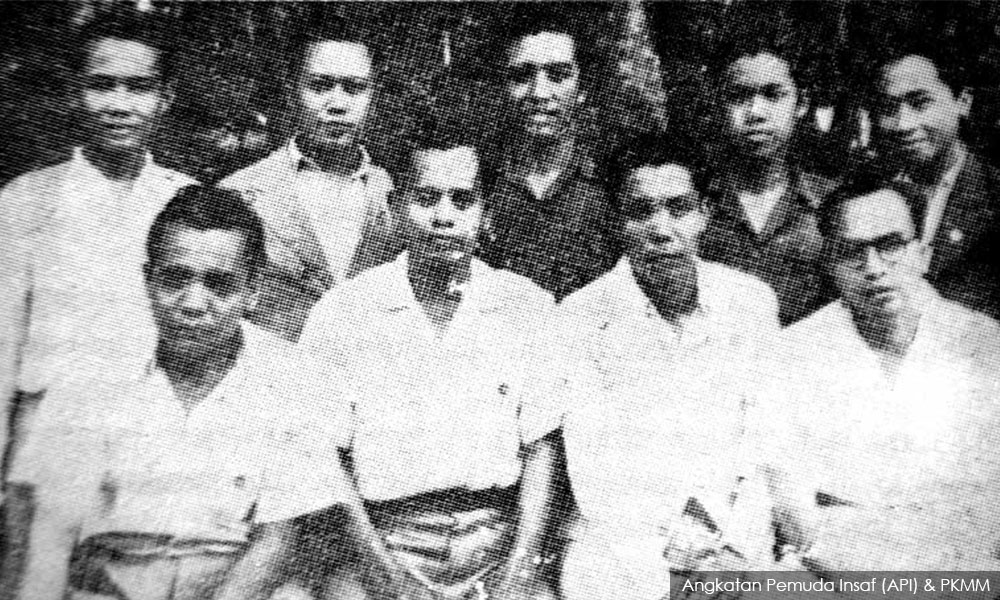
I think it is important to note here how these young Malaysians are simulating a long lost anti-colonial tradition, giving it a new outlook now that we are in a different context.
Even though today we no longer have the obvious colonial enemy, we are still very much colonised in our minds. We still believe a lot of the false and divisive myths that were created during colonial times to keep us divided based on race, to keep us from being united based on class.
And this simulation will be carried out like a theatrical performance. The youths are planning to wear traditional clothes in white, with slogans and banners not unlike the ones used by the original API members in 1946.
History-conscious youths are bringing political culture back to life, whether we realise it or not, and sending a clear message that political parties are no longer the entry point for youths to be political.
MARYAM LEE is a writer with a chronic tendency to get into trouble. What she lacks in spelling when writing in English is made up for with her many writings in Bahasa Malaysia. She believes in conversations as the most valuable yet underrated cause of social change. She wants people to recognise silences and give them a voice, as she tries to bring people together through words.
The views expressed here are those of the author/contributor and do not necessarily represent the views of Malaysiakini.


Are you sure you want to delete this comment?
This action cannot be undone.