



In M’sia, photos need to be added, not subtracted
COMMENT | Minister in the Prime Minister’s Department for religious affairs Mujahid Yusof Rawa is having the kind of week that will likely characterise his term as a minister.
Once again, he is being berated by both conservatives and progressives for not going far enough for their liking.
I recently wrote that this usually means that the person being criticised is on the right path, and while that is generally true, I suppose it may not be true 100 percent of the time.
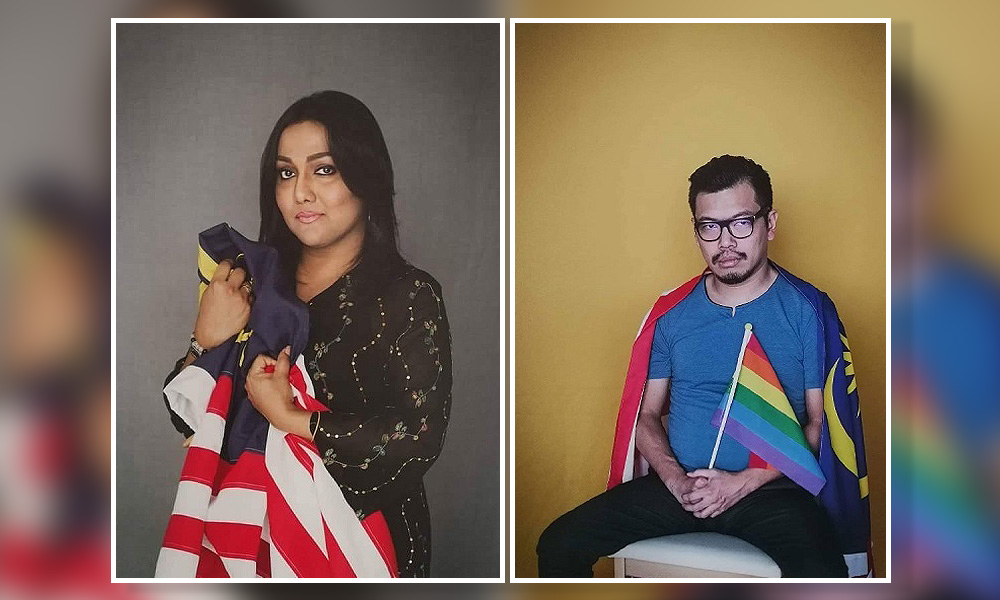
In this particular case, I do believe Mujahid’s decision to call for the taking down of the portraits of Nisha Ayub and Pang Khee Teik from Mooreyameen Mohamad’s exhibition in the Georgetown Festival is not the right one.
In keeping with the theme of finding middle ground, commenting on this issue also involves striking a balance.
On the one hand, I think there are enough people who will be expressing outrage, disappointment and anger. This is entirely within their right, but I don’t personally feel a need to add to that.
We of course understand the position that Mujahid is in, and the extreme competing pressures he is facing from multiple quarters. Given his previous, more progressive views, I suppose it’s not surprising that he felt the need to do something to give the impression of “balance”.
On the other hand however, understanding the political logic behind an act does not necessarily make it right....
COMMENT | Minister in the Prime Minister’s Department for religious affairs Mujahid Yusof Rawa is having the kind of week that will likely characterise his term as a minister.
Once again, he is being berated by both conservatives and progressives for not going far enough for their liking.
I recently wrote that this usually means that the person being criticised is on the right path, and while that is generally true, I suppose it may not be true 100 percent of the time.
In this particular case, I do believe Mujahid’s decision to call for the taking down of the portraits of Nisha Ayub and Pang Khee Teik from Mooreyameen Mohamad’s exhibition in the Georgetown Festival is not the right one.
In keeping with the theme of finding middle ground, commenting on this issue also involves striking a balance.
On the one hand, I think there are enough people who will be expressing outrage, disappointment and anger. This is entirely within their right, but I don’t personally feel a need to add to that.
We of course understand the position that Mujahid is in, and the extreme competing pressures he is facing from multiple quarters. Given his previous, more progressive views, I suppose it’s not surprising that he felt the need to do something to give the impression of “balance”.
On the other hand however, understanding the political logic behind an act does not necessarily make it right.
The good things Mujahid has done and said are not erased by this latest act, but neither do they make for a carte blanche for the future.
Echoes of Stalin’s Russia
It’s hard to miss the imagery and symbolism of the government ordering particular portraits removed from an exhibition and collection.
It practically screams: We don’t want these people to be part of the picture, they don’t have a place here.
I imagine to some, it must evoke the feeling of not being given the right to even exist. It’s as if the exhibition represented Malaysia itself, and the removal of those portraits is an expression of a desire to remove certain individuals from Malaysia entirely.
This is almost certainly not what Mujahid was consciously thinking when he gave the order.
Busy and hectic though a minister’s schedule and mindspace must be though, it is worth pondering the implications of such orders before simply issuing them willy-nilly.
I couldn’t help but think of former Soviet Union premier Josef Stalin, whose editing-out of individuals who had fallen out of political favour from historical photographs (in an era long before Photoshop, no less), had quite a chilling, eerie effect.
The last thing I’m trying to do is equate Mujahid or others to the mad mass murderers of Soviet Russia, but again, perhaps a little more reflection in lieu of knee-jerk reactions is helpful.
I had a look at Mooreyameen’s collection online, which I assume is the same as the one being exhibited (though I could not find Nurul Izzah Anwar’s portrait online).
The purported reasoning behind ordering the removal of these portraits were that they were deemed to be “promoting an LGBT lifestyle”.
This phrase has been the focus of some attention lately. I believe Pang himself recently put together some parody videos on the subject, the punchline being that an LGBT lifestyle is in more ways than not, the same lifestyle of any ordinary Malaysian.
Taken as a whole, I truly believe that no sane person would look at the exhibition and feel that an LGBT lifestyle - whatever that means - was being promoted to them. There is also another parody on Twitter by Brian Gomez worth mentioning here.
All I can imagine is that the picture of a man holding a rainbow flag and a transgender person - both of whom work hard to help their community - caused some people some serious “offence”.
Due process, clear definitions
One of the bigger statements released by civil society about this issue raises an important question: On what authority precisely did Mujahid order the taking down of the photos?
Is it written anywhere that this minister’s portfolio includes policing any type of content that is deemed objectionable by some (certainly not all) Muslims?
Indeed, if the government policy is that promoting a lifestyle is prohibited, it can only logically follow that (as for any good government policy), the government must clearly define what said promotion is or isn’t.
If not, we will be faced with quite the mess. Is it illegal for me to post a picture of myself with a rainbow flag in a public space? Are rainbow flags illegal? What about just rainbows?
One of the most important features of a truly new Malaysia would be the commitment to due process.
If the government intends to intervene in public or private spheres, it must only do so according to clear laws and established procedure, subject to judicial review.
It would not be good precedent for the authorities to take action at the whim and fancy of a given minister.
The term “government policy” implies something well thought-out, and properly codified. It should not denote “whatever is in a politician’s head at a given moment in time”.
What LGBT activists actually do
I think it is also worth reflecting on what it is exactly people like Nisha and Pang - I must testify from personal experience that the latter is one of the kindest, sweetest men you’ll meet - do as “activists”.
What is becoming the “moderate” position is that we should not discriminate against or persecute LGBT individuals, but we should not “allow” them to “promote their lifestyle” either.
I don’t think I have ever met an LGBT person who had some deep desire and drive to say, turn other people gay. I imagine the very notion of it would baffle and perplex most people who identify as such.
I have met plenty of LGBT people however who were very passionate about speaking up for oppressed individuals, and helping to create a world where people felt safe and comfortable being themselves.
How said individuals and people identified sexually seems rather secondary, as anyone furthering this cause should be lauded for their actions and commitment.
I thus think people like Mujahid, Pang and Nisha could find a whole lot of common ground and shared values, on which they could create a lot of good change for the country.
On Mujahid’s part, it may be a good idea not to start this process by taking down photos that are - if you really stop to think about it - truly harmless.
Those photos do not say these are glorified individuals whose example you must follow; they merely say these are all Malaysians who love their country.
Too few photos
If anything, the problem with the exhibition (judging merely from the online version I’ve seen) is not that it has too many photos, but rather that it has too little.
From a social standpoint, if I had one criticism, it would be that the selection of subjects suggests that the photographer invited mostly people he might have been friends with, or admired, or felt some sort of affinity with.
It is not my (or anyone’s) place to tell artists what to do. I will only say that I personally would have been even more drawn to an exhibition that also featured Malaysians on the other end of the spectrum - Islamic activists (many of whom are as equally sincere as Nisha and Pang), Umno politicians, fishermen and farmers, and so on.
In any case, we should look to the future.
Mujahid’s position is difficult, of course. If he backtracks on his order, the conservatives will have an even bigger field day with him, for “bending to the whims of the LGBT sinners” and so on.
Whatever he decides in this case, I hope that moving forward, the good minister will take a little more time to consider all available options and solutions to problems that arise, before leaping into actions that may prove difficult to leap out of.
NATHANIEL TAN thinks it is criminal to take down the picture of a man as handsome as Pang from any wall.
The views expressed here are those of the author/contributor and do not necessarily represent the views of Malaysiakini.


Are you sure you want to delete this comment?
This action cannot be undone.