




COMMENT | Doublespeak puts citizens on tenterhooks
Finas chairperson Zakaria Abdul Hamid, when contacted, confirmed that all forms of video recording must seek a licence from his agency because their job was to ensure that the material produced did not incite unrest or cause a public nuisance.
Zakaria stressed that Finas would only enforce the law against companies for now and might only be enforced on individuals on a case-by-case basis. He advised those who were unsure to seek Finas’ advice before filming.
“Usually, we are not that strict,” he added when asked if the law applied to ordinary citizens who might upload their videos.
- Malaysiakini, July 21.
COMMENT | To fully understand the issues behind the compulsory licence for videos, reading and digesting the above is of paramount importance. It is also a reflection of the mindsets of the powers-that-be. Analysis and deciphering of keywords and phrases provide plenty of different takes on the issue.
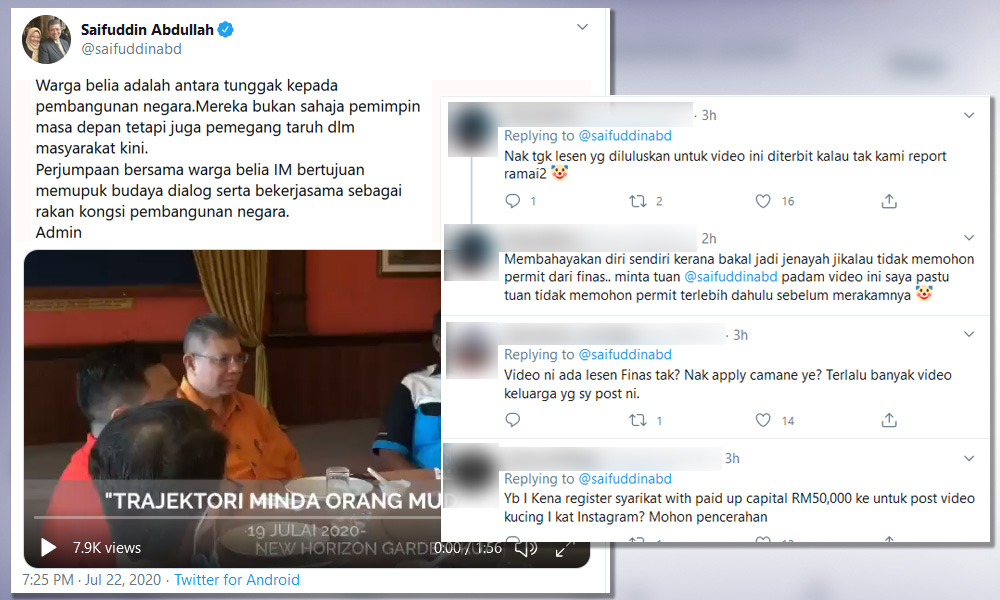
Forget the minister’s first reply in Parliament yesterday. It was like an indictment read out by the Public Prosecutor – the law says so and you have to comply. Saifuddin Abdullah (above) made it clear: “It is mandatory for film producers to apply for a film production licence and filming certification letter, regardless of whether they are mainstream media or personal media that publish their film on social media or traditional channels.”Wasn’t the minister aware that the Finas Act was promulgated for film-making and not for social media? Didn’t his officers offer their views or were their views sought before such an earth-shattering pronouncement was made in front of lawmakers?
Forget the ad-hoc, slipshod and arbitrary answers that were provided to questions raised in and outside the House – they provided little relief to concerned citizens.
Forget even his statement which came late in the day – “Finas Act is not meant to stifle personal freedom” – it was not convincing either...
Finas chairperson Zakaria Abdul Hamid, when contacted, confirmed that all forms of video recording must seek a licence from his agency because their job was to ensure that the material produced did not incite unrest or cause a public nuisance.
Zakaria stressed that Finas would only enforce the law against companies for now and might only be enforced on individuals on a case-by-case basis. He advised those who were unsure to seek Finas’ advice before filming.
“Usually, we are not that strict,” he added when asked if the law applied to ordinary citizens who might upload their videos.
- Malaysiakini, July 21.
COMMENT | To fully understand the issues behind the compulsory licence for videos, reading and digesting the above is of paramount importance. It is also a reflection of the mindsets of the powers-that-be. Analysis and deciphering of keywords and phrases provide plenty of different takes on the issue.
Forget the minister’s first reply in Parliament yesterday. It was like an indictment read out by the Public Prosecutor – the law says so and you have to comply. Saifuddin Abdullah (above) made it clear: “It is mandatory for film producers to apply for a film production licence and filming certification letter, regardless of whether they are mainstream media or personal media that publish their film on social media or traditional channels.”
Wasn’t the minister aware that the Finas Act was promulgated for film-making and not for social media? Didn’t his officers offer their views or were their views sought before such an earth-shattering pronouncement was made in front of lawmakers?
Forget the ad-hoc, slipshod and arbitrary answers that were provided to questions raised in and outside the House – they provided little relief to concerned citizens.
Forget even his statement which came late in the day – “Finas Act is not meant to stifle personal freedom” – it was not convincing either.
Caught by the onslaught and slew of criticisms, it only appeared to be a “holding statement” while the minister was trying to figure out ways to get out of the mess which was self-inflicted.
Such assurances after days of contradiction, illogicality and incongruity, can never appear as a parable in Dale Carnegie’s “How the win friends and influence friends.” Neither can they be construed as amicable, acceptable and equitable solutions for the current clutter and confusion.
Finas Act - archaic and obsolete in the digital era
It is common knowledge that the Finas Act 1981 was enacted in the celluloid era when amateur documentary makers were toying with 16mm cameras. Video cameras were the prized possessions of professionals and commercial studios. Camera phones, let alone mobile phones, were then creatures of the future. It is also common knowledge that with the advent of digital technology, that piece of legislation has become archaic and obsolete.
If the events of the past days were put together in material form, it wouldn’t warrant an application for a licence to produce a documentary, as required by the law.
It all can only end up as a wayang or a sideshow, and to even a bigger blockbuster which has been already on the cards for some time. At the most, serious re-writing could turn such a serious subject into a comedy.
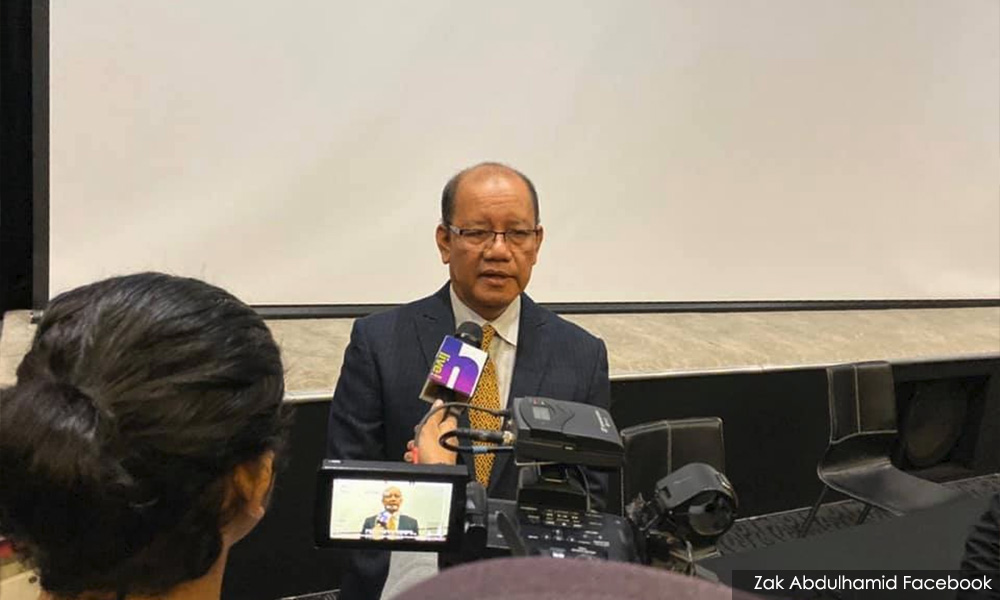
Zakaria’s (above) remarks that “the law will only be enforced on individuals on a case-by-case basis” – is telling indeed. What does this entail and how does it work? Isn’t it obvious that “case-by-case” means that “it depends on who is behind it”?
As we have seen, if a documentary does not go down well with the system, it becomes a “case for enforcement of the law.” For example, “Locked Up in Malaysia's Lockdown” produced by Al Jazeera. But it is perfectly okay to produce another that is favourable to the government, like one by YouTuber Dustin Pfundheller, countering Al Jazeera news, then it will be a case of tutup dua mata (both eyes closed).
Let us pause for a while and compare the statements of Saifuddin and Zakaria. The former was clinical in his approach: “You can’t do it!” The latter was a little condescending: “You can do it because of who you are.”
In giving away the game and the plot, Zakaria more or less exposed the ploy by saying: “Usually, we are not that strict.” What does that mean? Can it be interpreted to read: “Usually, we are not strict with our friends and party members. But if we don’t like your product, we can be strict...”?
Saifuddin’s delayed volte-face may have appeased many and placated the rising anger, but this saga is far from over.
Going on the “case-by-case” illustration, I could still be pulled up for making a video of my cricketing buddies singing bailas and rugby songs. You, the reader may end up being indicted for producing a short video of your daughter’s graduation. It is not beyond them, with such discretion being provided by the bosses.
And those in authority have an elephant’s memory. Consider this: Astro was cited for airing an Al Jazeera documentary on the murder of Mongolian national Altantuya Shaariibuu in 2015. The Malaysian Communications and Multimedia Commission (MCMC) has claimed it proposed to impose a fine to save the satellite TV provider from being prosecuted in court. (A classic instance of “case-by-case” and the discretion accorded by the law.)
It took a good five years before it resurfaced and in June a compound notice for a fine of RM4,000 was issued. Never mind that it took five years through officialdom, but it showed that the art of resurrection is not the monopoly of holy men.
But is there a bigger picture, reading from the multitude of views, statements and opinions from the government? Is there a determined effort to curb freedom of expression? You, the discerning citizen will have the answer. More need not be said.
Now, coming to think of it, after all this hullabaloo about freedom of expression, will they be (by using an obsolete law) telling us that we need to apply for a licence to think?
R NADESWARAN reckons that the “case-by-case” strategy has been and will continue to be open to abuse and misuse. Email him at citizen.nades22@gmail.com with your comments.
The views expressed here are those of the author/contributor and do not necessarily represent the views of Malaysiakini.




Are you sure you want to delete this comment?
This action cannot be undone.