



COMMENT | Navigating the language of disability
COMMENT | Orang kurang upaya (OKU), cacat, "spastic", "retarded", "handicapped", "crippled".
Do such archaic words have a place in our society that has adopted the United Nations standards in recognising the rights of persons with disabilities?
The United Nations Convention on the Rights of Persons with Disabilities (CRPD) states as one of its purposes that, “the present convention is to promote, protect and ensure the full and equal enjoyment of all human rights and fundamental freedoms by all persons with disabilities, and to promote respect for their inherent dignity”.
The CRPD further provides a broad definition as follows: “Recognising that disability is an evolving concept and that disability results from the interaction between persons with impairments and attitudinal and environmental barriers that hinders their full and effective participation in society on an equal basis with others”. This definition has been largely adopted in the Malaysian Persons with Disabilities Act 2008 (Malaysian Act). It includes persons with special needs.
The emphasis in the CRPD and the Malaysian act is on upholding the rights and dignity of persons with disabilities. So the question is, shouldn't the ...
COMMENT | Orang kurang upaya (OKU), cacat, "spastic", "retarded", "handicapped", "crippled".
Do such archaic words have a place in our society that has adopted the United Nations standards in recognising the rights of persons with disabilities?
The United Nations Convention on the Rights of Persons with Disabilities (CRPD) states as one of its purposes that, “the present convention is to promote, protect and ensure the full and equal enjoyment of all human rights and fundamental freedoms by all persons with disabilities, and to promote respect for their inherent dignity”.
The CRPD further provides a broad definition as follows: “Recognising that disability is an evolving concept and that disability results from the interaction between persons with impairments and attitudinal and environmental barriers that hinders their full and effective participation in society on an equal basis with others”. This definition has been largely adopted in the Malaysian Persons with Disabilities Act 2008 (Malaysian Act). It includes persons with special needs.
The emphasis in the CRPD and the Malaysian act is on upholding the rights and dignity of persons with disabilities. So the question is, shouldn't the language we use in relation to persons with disabilities reflect these values?
Have you ever seen someone with no arms and no legs painting a beautiful picture using only their mouth to hold a paintbrush? What is your go-to language to describe this person? Perhaps one of the words mentioned in the first paragraph? Let us pause to reflect on that. What exactly is it that makes this person less able than us when they are doing something most of us could not do with art lessons and with the use of all our limbs?
This example illustrates the danger of defining people by what they cannot do rather than by what they can do. For example, you may not have artistic talent. Would it be acceptable to describe you as having an artistic deficiency or being artistically cacat or artistically retarded? These descriptions only serve to disempower and demean.
In the Malaysian context, it must be noted that orang kurang upaya is used to encompass all those who have a disability including persons with special needs. It must also be noted that the Malaysian act uses the term "OKU" (not even orang kurang upaya) when referring to OKU cards. There are those with physical disabilities who do not really object to the use of the words orang kurang upaya because they state that it accurately describes their reality. It also means that it allows them to take ownership of their disability.
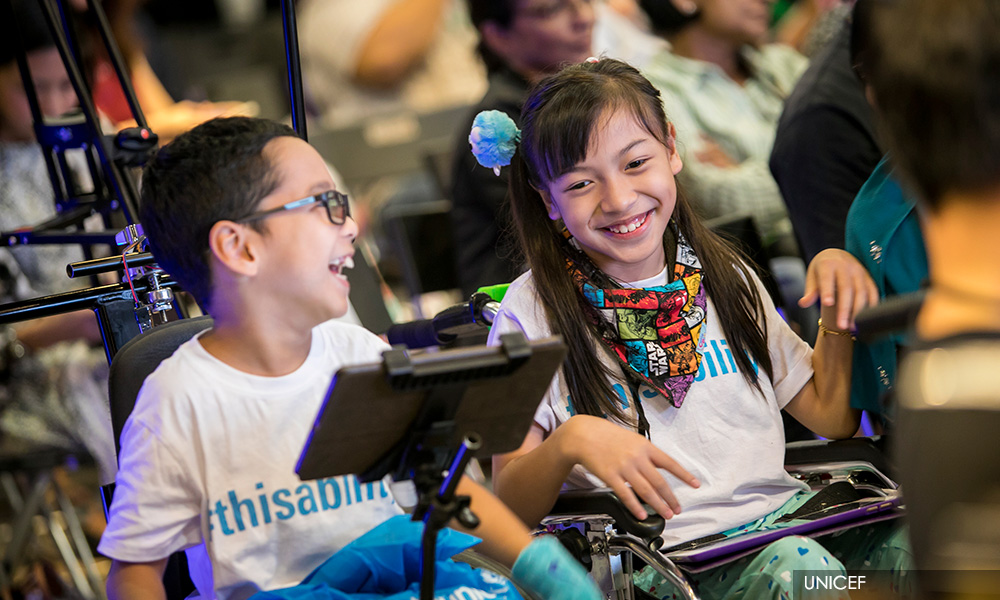
However, it is my view that the term orang kurang upaya, or worse "OKU", emphasises a lack of ability due to the word kurang and has, therefore, a negative connotation. This term, in my opinion, needs to be revisited.
There are also many misconceptions and erroneous assumptions about persons with special needs that are discriminatory and plainly wrong. For example, there are those who believe that autism is a disease. They use terms like people “suffer” from autism. Some believe it can be cured. Some refer to it as mental retardation. Some also say “afflicted with autism”. Similar misconceptions exist in relation to Down Syndrome, cerebral palsy, dyslexia, dyspraxia, Happy Puppet Syndrome, Williams Syndrome, ADHD, Aspergers, ADD and more. These misconceptions contribute to the language we use to describe persons with disability.
There is currently an ongoing discussion in many countries about the appropriate language to use in relation to persons with special needs. A friend in the UK who works with special needs children and adults informs me that there is currently a conversation about using the new term “neurodiversity” to describe those with special needs. The term is preferred because it is less discriminating and is seen as more positive and inclusive. This was a term that was created by Judy Singer, a sociologist on the autism spectrum, in the 1990s.
Singer rejected the notion that people with autism were disabled. She improved on this further by saying that people with autism are naturally diverse learners. She argued that autism, ADHD, dyslexia, dyspraxia, Aspergers, Down syndrome and others are just variations of the human brain. In short, the word neurodiversity suggests that brain differences are to be celebrated rather than seen as a deficit. This I agree with.
There are other terms that are being considered. There is "differently-abled", "handicapable", "specially-abled" and more. These terms have been derived to discourage the use of negative words such as “cripple” and “handicapped”. However, some people argue that even these new terms are demeaning stating that everyone is differently-abled, and everyone is capable of something. Even the words “special needs” has come under some criticism.
Positive affirmations
Stereotyping is another basis for discriminatory language. This is where the environment matters. If the environment is an enabling one, then it minimises the negative stereotyping. For example, if you hire someone with autism who has a sensitivity to light and the environment is adjusted to cater for this by dimming the lights or letting them wear sunglasses indoors, then you remove the negative factor where this person is concerned. You become less discriminatory.
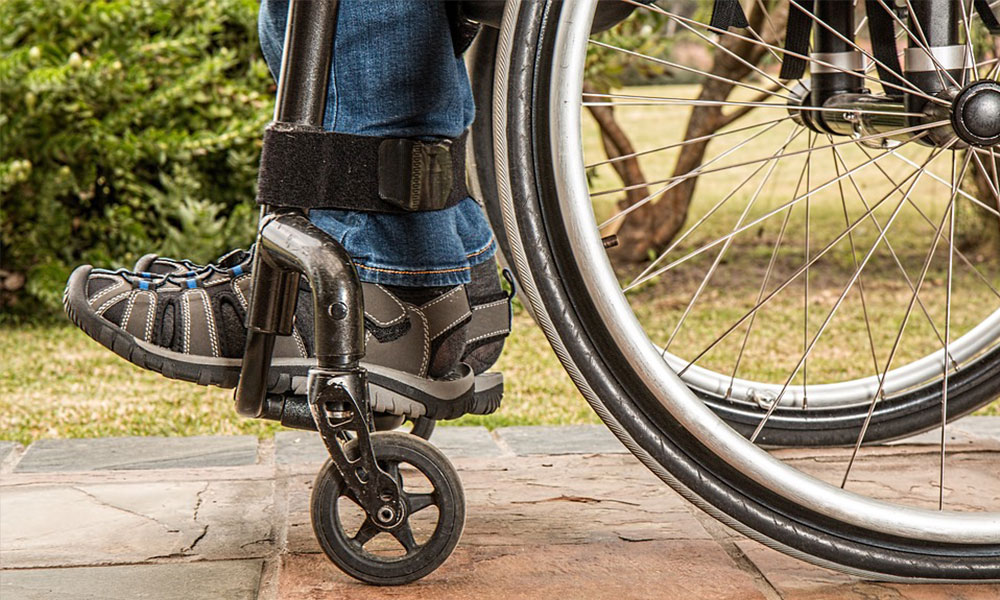
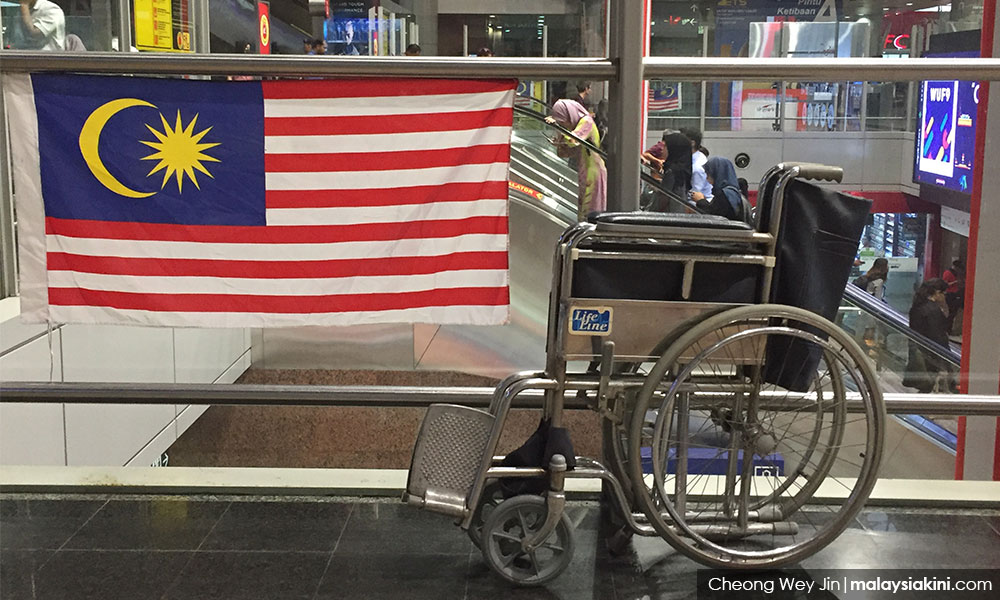
Another example is if every single place is wheelchair accessible, then the disability is no longer an issue or is minimised. The disability does not hinder accessibility to facilities that everyone enjoys. All these factors contribute to the perception of, and language we use with, persons with disabilities.
Whilst we may not agree on the best language to be used at this stage, this is an important conversation that must be had. Over time, the terms will evolve and we must adapt to include the most positive, inclusive and empowering terminology in our social and cultural context. We must strive to use terms that do not make anyone feel that they are in any way lesser than others. It is in fact about treating them with the dignity that they deserve.
So why is language important? Positive affirmations make people happier. I work with adults with special needs and as part of our programme, we conduct a session where we spend time with each student commending them on their admirable traits using positive language. We have found that it makes them happy, confident and their social skills improve. There are also discussions about the use of appropriate phrases like the following:
Does the person have autism or are they autistic? Do they have a disability or are they disabled? The preferred language is to say that the person has autism or a has a disability. What about you who have no artistic talent? Are you a creatively disabled person, or creatively cacat? What about if instead, I referred to you as creatively diverse. Is that not better? Remember, language dictates our attitudes, our perceptions and our stereotyping.
Current literature shows that these are some of the steps that we can take:
- Put people and their abilities first
- Engage persons with disability in the conversation and ask them what language they would prefer to be used
- Avoid using the word “normal” to describe yourself in contrast with someone with a disability
- Avoid using terms that define a person’s disability or as a limitation
- Avoid using terms like “victim” or “suffer” in connection with the disability
So let us now be more conscious about the language we use with persons with disability. Let us navigate the vocabulary to arrive at a solution that is respectful, empowering and inclusive.
SHARANYA RADHAKRISHNAN is co-founder of Gem & Bread Special Needs Support Group which works to uphold the dignity and rights of all persons with special needs while striving towards building an inclusive ecosystem.
The views expressed here are those of the author/contributor and do not necessarily represent the views of Malaysiakini.


Report this comment
Are you sure you want to delete this comment?
This action cannot be undone.