
COMMENT | History autopsy: How civilisations collapsed and M'sian implications
COMMENT | The prolific historian Arnold Toynbee published 12 volumes, titled A Study of History. Published between 1934-1961, this magnum opus was his life’s work. He wrote part of it in London, part of it in Princeton, and the rest of it while at sea, travelling between the two cities. It took Toynbee 27 years to complete, with a temporary hiatus during World War Two.
Toynbee was a British philosopher of history and a leading scholar of international affairs between 1918 and 1950. He is known for his ideas on how civilisations respond to challenges. He believed civilisations either thrived or disappeared, depending on their response to difficult challenges. His ideas are based on his exploration of 28 different civilisations in human history.
According to Toynbee, certain “creative minorities” provided solutions to societal challenges. They could reorient society and allow for growth and progress. However, civilisations that disappeared failed to nurture these minorities.
Toynbee strongly believed that societies “die from suicide or murder rather than from natural causes”. In other words, society will become backward and disintegrate into failed nations when leaders worship their self-centred vainglory.
For Toynbee, the growth or decline of civilisations is a...
COMMENT | The prolific historian Arnold Toynbee published 12 volumes, titled A Study of History. Published between 1934-1961, this magnum opus was his life’s work. He wrote part of it in London, part of it in Princeton, and the rest of it while at sea, travelling between the two cities. It took Toynbee 27 years to complete, with a temporary hiatus during World War Two.
Toynbee was a British philosopher of history and a leading scholar of international affairs between 1918 and 1950. He is known for his ideas on how civilisations respond to challenges. He believed civilisations either thrived or disappeared, depending on their response to difficult challenges. His ideas are based on his exploration of 28 different civilisations in human history.
According to Toynbee, certain “creative minorities” provided solutions to societal challenges. They could reorient society and allow for growth and progress. However, civilisations that disappeared failed to nurture these minorities.
Toynbee strongly believed that societies “die from suicide or murder rather than from natural causes”. In other words, society will become backward and disintegrate into failed nations when leaders worship their self-centred vainglory.
For Toynbee, the growth or decline of civilisations is a spiritual process. Mankind achieves civilisation not only because of some superior biological endowment or geographical environment.
Humans attain civilised status in response to challenges that are especially difficult. In his words, “special difficulties rouse him to make a hitherto unprecedented effort”. The concepts of struggle, sacrifice, and humility are embedded in these words.
The professor wrote of the Sumerians who transformed Neolithic man into a society that could create irrigation projects. He described the fall of the Roman Empire and how the Catholic Church managed the chaos in Europe through religion and adaptation to differences.
Toynbee drew conclusions from the consistent errors in human judgement over long periods of time. Some of these patterns were based on the gross negligence of the following:
Food security and climate change
The collapse of civilisations such as the Anasazi, Tiwanaku, Akkadians, Mayans, the Roman Empire, and many others have all coincided with abrupt climatic changes, usually droughts. All resulted in crop failure, starvation, and desertification. We can apply Toynbee’s interpretation to contemporary Malaysia.
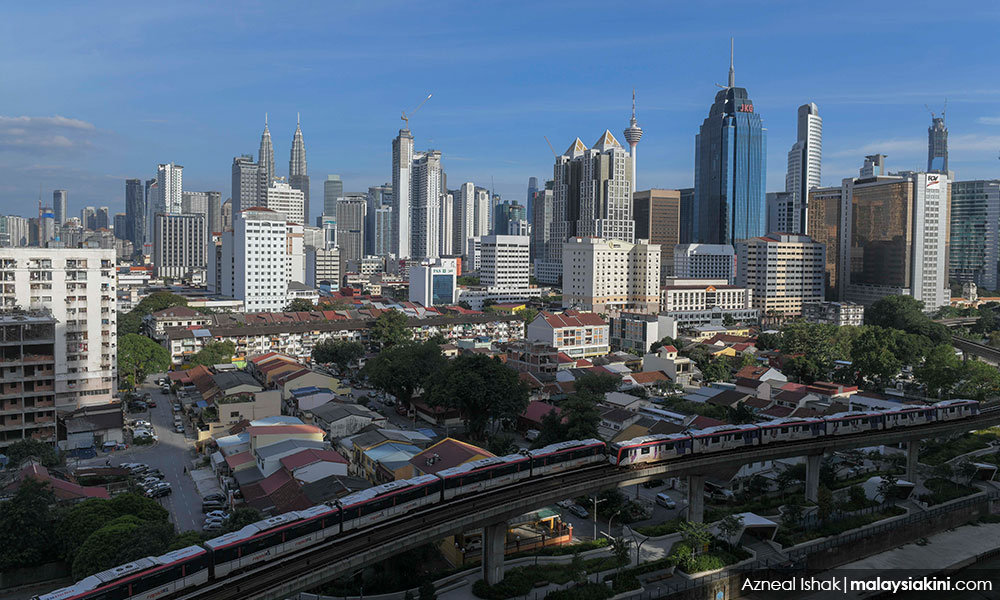
Malaysia is a net food importer, not a producer. While we are geographically positioned in a less climatically-hostile environment, we must not remain smug. At the beginning of the Covid-19 pandemic, the country’s borders were closed. Food supply chains were disrupted, and for Malaysia, this was bad news.

Between 2013 and 2018, we imported RM54 billion worth of food. No country aims to be 100 percent self-sufficient in food production. However, to be food secure means the majority of society needs to have regular access to food at an affordable price.
By January 2021, more Malaysian households in the B40 (bottom 40 percent of income-earners) have been unable to afford healthy food. Many of these families spend up to 70 percent of their income on food.
According to the Food and Agriculture Organisation, agricultural prices rose globally in January. In Malaysia, the supply of milk, meat, fresh fruit, vegetables, fish, and rice has been in serious jeopardy.
Labour scarcity in the agricultural sector is now a reality. Many foreign workers have returned to their native countries. Farmers are handicapped as the cost of production has increased. They are compelled to import seeds, breeds, fertiliser, pesticides, herbicides, livestock feed, and agricultural machines.
Another food-related statistic working against Malaysia is the rate of obesity. Malaysia has the highest rate among Asian countries, with 64 percent of males and 65 percent of females obese or overweight. A consequence of this is that about 21 percent of adult Malaysians suffer from diabetes, 30 percent from hypertension, and an even higher percentage from cardiovascular disease.
In 2017, the World Health Organisation estimated that the impact on our GDP due to absenteeism, premature death, and the burden of disease management caused about RM302 billion to be lost.
Inequality and “short-termism”
Toynbee observed that wealth and political inequality were central drivers of social disintegration. Political leaders who combine centralised power and a bloated bureaucracy, with excessive ethnocentric agendas, concoct a recipe for destruction.
This was very clear when the Roman Empire was disintegrating. When leaders prioritised religious fanaticism and irrational bigotry over justice and human dignity, they end up “murdering” society. Societies eventually collapse under the weight of their own demented complexity.
All societies are problem-solving collectives that grow in complexity, guided by ethical leadership. However, as society increases in population, the supply of labour outstrips demand. Workers become cheap, society becomes “top-heavy”. A selfish leadership with a skewed agenda will perpetuate this inequality for personal gain, ultimately undermining collective solidarity.
For Malaysia, our problems lie in a distracted leadership which is unsure of its priorities. Long-term policy goals are substituted for short-term sutures. Short-termism will never heal the deep disparities that are apparent in our multi-ethnic society. We have been in an identity crisis for decades. The result is political turbulence which is getting worse with every year that passes.
Quick-fix gimmicks are useless. Over time, many Malaysians have become increasingly extremist, due to either deliberate manipulation, or a poor understanding of religion.
Islam, for example, has been used as a political tool to divide ethnicities, rather than unite us. Nation-building discourses among politicians, on language, religion, and education expose their abject ignorance of history, sociology, and philosophy.
A big problem with them is their lack of intelligence. Many are unable to think critically and analytically about issues we face in society. Yet, these very politicians nag our school children to be critical-thinkers lest they become unemployable graduates.
There is hope yet in the prime minister’s latest National Unity Policy Blueprint. It has excellent potential to turn things around. There is hope too in the independence of our judiciary.
The latest judgement by the Kuala Lumpur High Court is a case in point. The judge recently declared the 1986 government directive to ban non-Muslims from using the words Allah, Kaabah, Baitullah, and Solat as illegal and irrational.
Toynbee observed that “our deep past has been marked by recurring failure”. Malaysia is a society defined by a civilisation with a diverse historical past, where peoples have co-existed for centuries in functional interaction.
Over the last few decades, however, our nation has been characterised by recurring failures, particularly the failure of leadership to curb corruption, the vulgar love for excessive wealth, and divisive identity politics.
Maybe our leaders could acquaint themselves more with the works of great historians who agonised over why civilisations collapse. Fair and effective politics is possible, provided we have knowledgeable, intelligent, and ethical politicians. All this is moot, of course, if leaders could care less about the collapse in the first place.
SHARIFAH MUNIRAH ALATAS is an academic with zero tolerance for corrupt, arrogant, and frivolous leadership.
The views expressed here are those of the author/contributor and do not necessarily represent the views of Malaysiakini.