


COMMENT | Total lockdown - survive to restart
COMMENT | Although the latest movement control order (MCO) with the restrictions on interstate and interdistrict travel, social activities, sports, and education has been imposed effective from May 10 to June 7, it does not appear to be slowing the spread of Covid-19 infections.
Hence, the just-announced "total lockdown" from June 1 to 14 is the right decision, though a complete lockdown of 21 days is more appropriate.
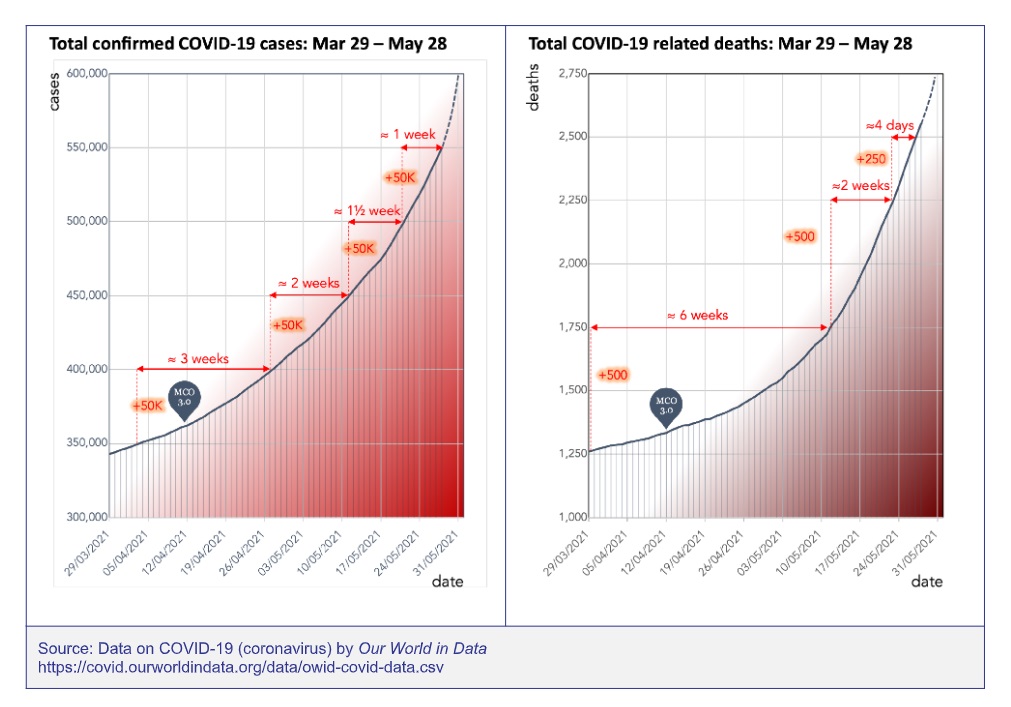
The graphs below summarises the worrying dynamic, that despite the latest MCO, daily new infections have only accelerated, currently adding approximately 50,000 new infections in a matter of just one week. Daily new deaths appear to accelerate even faster.
At the same time, we should be cognisant of the epidemiologists’ warning reiterated all the time that the number of confirmed cases is lower than the number of actual cases; the main reason for that is testing limitations. The sufficiency of testing is evaluated by the test positive rate (TPR).
Science recommends that the TPR should remain under five percent. Therefore, a TPR value that is too high might indicate either insufficiency of testing or too widespread of an infection in the community. The latter means that no matter how much you increase the number of tests, if the spread in the community is too wide, a TPR value under five percent may not be achievable...
COMMENT | Although the latest movement control order (MCO) with the restrictions on interstate and interdistrict travel, social activities, sports, and education has been imposed effective from May 10 to June 7, it does not appear to be slowing the spread of Covid-19 infections.
Hence, the just-announced "total lockdown" from June 1 to 14 is the right decision, though a complete lockdown of 21 days is more appropriate.
The graphs below summarises the worrying dynamic, that despite the latest MCO, daily new infections have only accelerated, currently adding approximately 50,000 new infections in a matter of just one week. Daily new deaths appear to accelerate even faster.
At the same time, we should be cognisant of the epidemiologists’ warning reiterated all the time that the number of confirmed cases is lower than the number of actual cases; the main reason for that is testing limitations. The sufficiency of testing is evaluated by the test positive rate (TPR).
Science recommends that the TPR should remain under five percent. Therefore, a TPR value that is too high might indicate either insufficiency of testing or too widespread of an infection in the community. The latter means that no matter how much you increase the number of tests, if the spread in the community is too wide, a TPR value under five percent may not be achievable.
According to the dataset provided by the Johns Hopkins University, the data indicated that while Malaysia has significantly increased the number of tests per day (from about 50,000 at the beginning of April to above 100,000 at the end of May) the TPR still remained above five percent since the beginning of May. This observation strongly points to the possibility of a much wider community spread than what is detected.
The daily record-breaking new cases recently, with the figure as of May 28 at 8,290 indicates an alarming trend. Given no intervention, if this momentum and trajectory continue, we might reach 10,000 new daily cases by the end of this week (and month), nearing 600,000 in total.
At the same time, we shall expect to woefully add another 200 to 250 Malaysians to the total death toll within the following three to four days.

We do not know how much more the daily death rate could accelerate, considering a completely overwhelmed medical system. The healthcare capacity is by itself another powerful indicator of worsening pandemic spread. It remains true that Malaysia's healthcare facilities have been pushed to the brink, with maximised ICU beds and more patients needing ventilator support.
We have observed reports of the deployment of military-built hospitals, the establishment of "field ICUs" in Penang, where the capacity of critical care was reported to have breached 100 percent, and the use of shipping containers to accommodate the surge of deaths in the Sungai Buloh and Selayang hospitals.
Above a certain threshold (a combination infection, death, and recovery rate, healthcare capacity, etc.), the debate of lives versus livelihoods becomes less balanced, and the issue tips considerably in favour of saving lives.
Lockdowns can be considered as a short-term "circuit-breaker". This is evident from the success of MCO 1.0; other less-stringent versions of MCOs have been accompanied by numerous cases of non-adherence to standard operating procedures (SOPs).
At Emir Research, we believe this situation requires immediate, decisive, data-science-driven, constructive, and humane intervention.
Emir Research released a press statement on May 21 titled “Suggestion for Covid-19 Pandemic Management” which included the recommendation for temporary complete lockdowns and provided suggestions to cushion the economic impacts to people and businesses, and other recommendations to battle the onslaught of the pandemic.
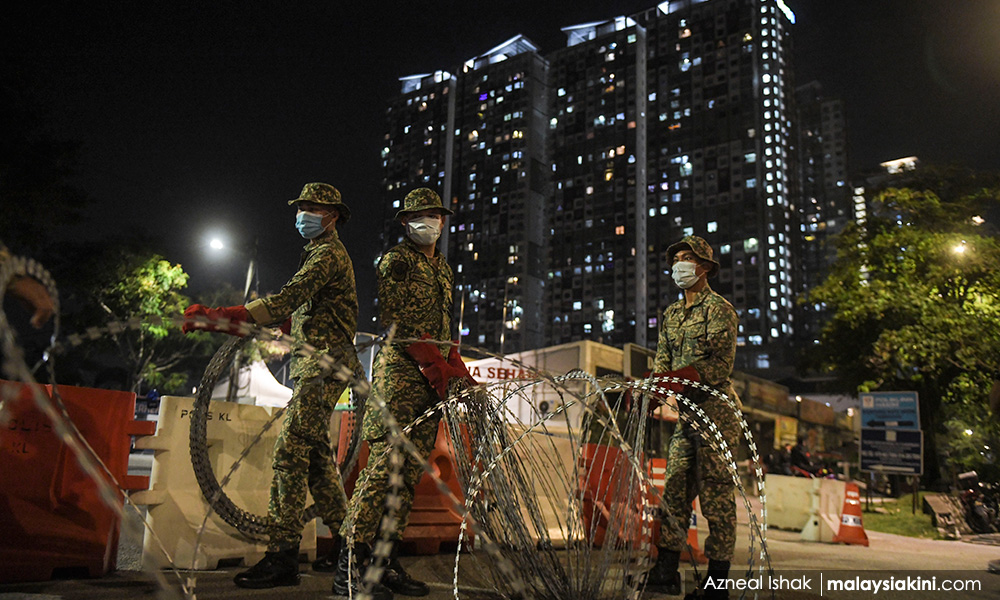
Targeted MCOs may not work when the virus is already very widespread in the community, at which point a temporary circuit breaker is needed to halt the movement of people simultaneously and therefore, the movement (and transmission) of the virus.
Thus, we thank and fully welcome the call by the government on May 28 for a total lockdown beginning June 1 to 14.
However, past experience suggests that a slightly longer duration may be needed and therefore, we want to urge policymakers to consider extending the 14-day lockdown to at least 21 days in order to break the current alarming Covid-19 spread in Malaysia.
We are aware of the potential socio-economic impacts to individuals, households, and businesses that a full-blown MCO might cause.
This is why, unlike MCO 1.0, which was roughly eight weeks before it shifted to a conditional MCO, the suggestion herein is only for 21 days, and is precisely why lockdowns must be paired with sufficient social and business safety nets, and other measures such as mass testing and an increase in vaccination pace.
The proposed 21-day lockdown must be accompanied by the following:
1. Loan moratorium for three months
The loan moratorium provided significant relief to people with disrupted incomes and allowed more cash in hand. The first six-month moratorium ended on Sept 30, 2020, and a measure that was well-received by the people was the high uptake of the subsequent six months "opt-in" moratorium.

When observing the income statements relevant during these periods (Q2-Q3 2020 and Q2-Q4 2020) for two major banks in Malaysia, Maybank and CIMB bank, although incomes were affected, both still registered significant profits.
Although there were reductions in profits, these were still cushioned by the lowering of expenses incurred, particularly for expenses that are interest-related; which could be in line with the lowering of interest rates by Bank Negara Malaysia (BNM).
As observed from income statements, the moratorium's impact appears to be more significant with Maybank than CIMB bank. Maybank observed about 40 percent in profit reduction (compared with the same period in the preceding year). This is due to lower interest income. However, interest expense has also significantly reduced resulting in only a slight net interest income reduction compared to the preceding year.
For CIMB bank, the relatively larger reduction in profits appears to be mainly attributed to lower dividends received from its subsidiaries, partially offset by less loss on net interest expense. Net interest income does not appear to be a big profit contributor to CIMB bank as it has been experiencing net interest expense (loss) since 2019.
In fact, its net interest expense was lower in 2020 (lower loss) compared to the same period in 2019. When excluding the impact of dividends, less loss was observed. The lowering of BNM interest rates results in lower interest expense borne by the bank.
When removing the impact of dividends for CIMB bank, it has actually recorded less loss compared to the same period in the preceding year.
Furthermore, we observe that once the moratorium ended, based on financial standing in Q1 2021, the ease of recovery was evident, as Q1 2021 profits for Maybank exceeded comparative periods in 2020 and 2019.
Evidently, Maybank's ability to "recover" in terms of profits, appears to be higher compared to pre-moratorium quarters for 2020 and 2019 respectively. The Q1 2021 income statement for CIMB bank has not been available at the time of writing.
While income is obviously affected, the costs for the banks have also generally reduced in line with the lower interest rates and government assistance.
Reduction in profits due to a moratorium is unfavourable from the commercial perspective, but when compared to other industries with severe losses, or with people who have lost their sources of income entirely, the relative comparison is clear - banks, subject to their investments and business profile, may have a relatively bigger capacity to weather the impact of the short-term moratorium.
If we simply observe net profits for Q1 2021 at the group level, we can observe examples of healthy profits from Maybank (RM 2.43 billion), Hong Leong Bank (RM 772 million), and RHB (RM 651 million).
Banks reviewed appear to show profits still in the hundreds of millions to billions of ringgit. In our view, this points to the banks' capacity to extend assistance for the people. Banks appear to have the capacity to weather the moratorium, with their participation directly assisting people who are in need the most.

The relative reduction in profits to the banks attributable to moratoriums is incomparable to the relative socio-economic harm to the people in the absence of a moratorium, especially during lockdowns.
2. Renter's protection for at least two months
As some people or businesses may be owing to other individuals or organisations, i.e. not directly to banks (for example, to landlords), they too should be provided with a safety net through a form of renter’s protection for a minimum of two months during the proposed temporary lockdown.
This is also in line with Emir Research's findings immediately after the first MCO. At that time, business owners reported that it is their inability to cover fixed costs due to dwindling incomes that pushed them to the brink of survival.
Unlike loan moratoriums, assistance to landlords is probably needed in the form of subsidies, ensuring they too are not pushed to the point of ruin. If data allows, targeted subsidies (for landlords whose rental income is their sole source of income) are preferred.
3. Wage subsidies for three months
This is necessary to provide “breathing space” for business owners and employers, allowing for better workforce retention. Studies on the impacts of the first MCO showed that 68 percent of businesses reported no sales/income during the period.

Due to the collective impact of this economic safety net for both businesses and individuals, wage subsidies should be considered for a minimum of three months. The public sector should be completely excluded from this intervention. Wage subsidies should be limited only to private sector daily wage earners among the B40 (bottom 40 percent of income earners).
4. Targeted direct cash transfer for two months to deserving B40s
As measured by the consumer price index (CPI) and reported by the Department of Statistics Malaysia, Malaysia's inflation rose 4.7 percent year-on-year in April 2021 - a four-year high.
We should also keep in mind that CPI being an aggregate measure does not entirely reflect each individual CPI component's price movement, thus telling nothing about the reality as the rakyat experiences it.
Since food is a necessity, the increase in prices is worrying for consumers. Emir Research's poll findings have shown there is a high degree of worry towards socio-economic matters in Q4 2020 due to the pandemic - losing jobs (81 percent), insufficient income (79 percent) - and the crisis also led to another worrying consequence like mental health (75 percent).
Labour market uncertainty remains, and the people's social safety net has also become more vulnerable. The unemployment rate went up by a 0.1 percentage point to 4.8 percent in Q4 2020, with a higher number of unemployed at 760,700. In the same quarter, skill-related underemployment also increased from 1.76 million to 1.89 million.

Studies on the impacts of the first MCO also showed nine out of 10 self-employed individuals in the B40 group, and six out of 10 households reported the inability to provide sufficient food for their families.
In tackling the cost of basic necessities for the rakyat to survive given the impact of lockdowns, additional cash aid to the needy should be considered. An expansion in coverage should be considered for eligible B40 households, especially daily wage earners and gig economy workers.
5. Revamp current process for SOPs
One of the successes of the first MCO is its stringent adherence to standard operating procedures (SOPs). There is an urgent need to tighten current SOPs and monitor adherence diligently. There is probably even a need to revamp some of the current SOPs.
One critical area that Malaysian epidemiologists and exposure science specialists must give the most scrupulous attention to is vaccination centres that must continue to operate even under the total lockdown. Given the evidence pointing to the high possibility of airborne Covid-19 transmission, current SOPs may need to be revised accordingly:
- Consider making high-efficiency masks compulsory in vaccination centres, encourage wearing other protective wear for those who are vaccinated.
- Priority should be given to outdoor settings - consider utilising highways or parking lots for organising drive-through vaccination centres.
- For vaccinations requiring indoor settings, ventilation, air filtration, and purification technologies are a must, with adequate capacity for the venue. Careful examination of the venue is required to ensure there are no cross-drafts of air as this will spread particles from one person to another.

6. Crystal clear communication
A coordinated effort to ensure clear, streamlined, and non-conflicting information is provided to the people, and whenever possible, to provide directives in advance. The messaging has to be positive in tone, by not merely outlining what can and cannot be done, but by providing the reasoning based on science and hard data, through an effective communication style suitable for the masses.
7. Increase testing through federal-state cooperation
Although lockdowns can be considered a short-term “circuit-breaker”, it is crucial to detect and isolate carriers in the community. Without a mass testing and isolation programme to match short-term lockdowns, these carriers re-join the community once movement restrictions are relaxed, sporadically igniting clusters and cumulatively triggering the next wave.
It is, therefore, crucial to increase testing capacity via updated test kits (valid for the latest variants) and the necessary infrastructure and manpower. The speed, sensitivity, accuracy, mobility, and cost of these kits are crucial for success. Isolated asymptomatic cases must be adequately quarantined and re-tested before release.
8. Data-sharing between federal and state
Current and future resources must be allocated to ensure the safety and integrity of data quality gathered by apps such as MySejahtera, and ensure transparency in data sharing among stakeholders at the federal and state levels.
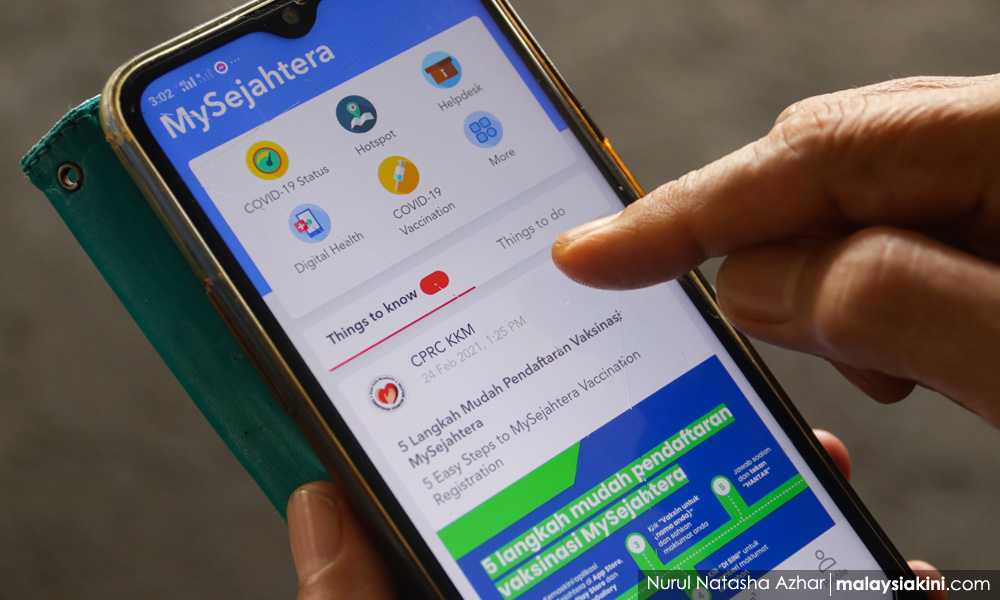
This benefits predictive technologies such as the Hotspots Identification for Dynamic Engagement (Hide). As with any system based on artificial intelligence, the quality of its output is significantly dependent on the quantity and quality of data provided.
9. Vaccinate more with first doses through federal-state collaboration
Subject to vaccine types, there have been reports suggesting single dose effectiveness in reducing infectivity. Though it has been reported that more vaccines are expected to arrive in the coming months, should there be further hiccups or delays, this strategy may be considered in light of the need to vaccinate as many people as possible.
For the vaccines already available, it is important to vaccinate registered recipients even ahead of schedule. The above-mentioned drive-through arrangements might facilitate this strategy.
10. Empower private medical practitioners
Instead of mass hiring under the Health Ministry to supplement the need for additional workers, it is worth considering empowering existing medical practitioners in the private sector and general practitioners (GPs).
According to a statement by the president of the Federation of Private Medical Practitioners Associations, there are at least 8,000 GPs in Malaysia, and assuming each GP treats 10 to 20 symptomatic patients daily, thousands of early cases of Covid-19 can be attended to.

This reverts back to the role of GPs as gatekeepers of the healthcare system before more intensive care is given at hospitals.
11. No politics, just pandemic and economic management
Malaysia has arguably reached a point where the argument tips significantly in favour of saving lives. The issue transcends all political narratives. There are no justifiable grounds to politicise any part of this pressing matter. This is a national security issue, and Malaysia is unmistakably at war.
Therefore, this calls for a political sabbatical, where all sides of the political divide must show solidarity to address this national crisis.
RAIS HUSSIN is president and CEO of think-tank Emir Research. He is also a Bersatu supreme council member.
The views expressed here are those of the author/contributor and do not necessarily represent the views of Malaysiakini.




Report this comment
Are you sure you want to delete this comment?
This action cannot be undone.