



COMMENT | Our fight against climate change
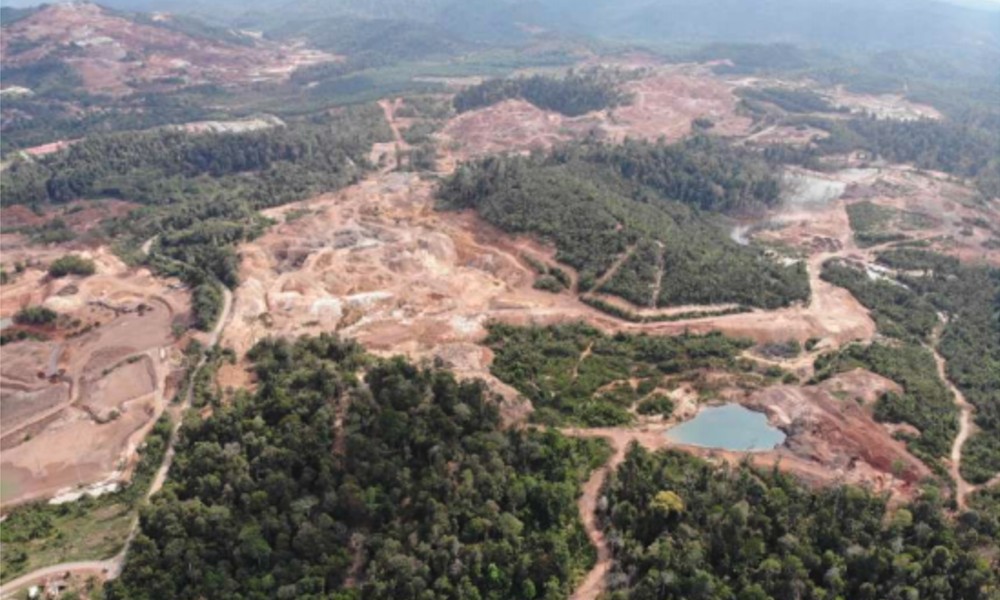
COMMENT | Standing atop Panorama Ridge, above the old mining town of Sungai Lembing, a cauldron of mist gave way to a pockmarked landscape of plantation estates and denuded slopes in the harsh light of day. My unease deepened.
The rush of development and extraction had been highly visible along the drive to the East Coast: thickets of sawmills lining the old roads, despite proud signs pointing towards Tasik Chini, before its ecosystem was wantonly destroyed. This was before the unprecedented climate crises of 2021, before the devastating floods in Germany and China, massive wildfires and heatwaves in temperate zones or decades-long droughts.
Even though things in Malaysia still seemed ordinary, climate-wise, it was hard to ignore the rampant development, pollution and deforestation that I had taken for granted growing up. Our future seemed irrevocably locked into dependency on cheap energy, consumerism and an inability to change things as the environment and climate were sidelined by the discourse on the continued growth of the economy.
But during the same trip, I also...
COMMENT | Standing atop Panorama Ridge, above the old mining town of Sungai Lembing, a cauldron of mist gave way to a pockmarked landscape of plantation estates and denuded slopes in the harsh light of day. My unease deepened.
The rush of development and extraction had been highly visible along the drive to the East Coast: thickets of sawmills lining the old roads, despite proud signs pointing towards Tasik Chini, before its ecosystem was wantonly destroyed. This was before the unprecedented climate crises of 2021, before the devastating floods in Germany and China, massive wildfires and heatwaves in temperate zones or decades-long droughts.
Even though things in Malaysia still seemed ordinary, climate-wise, it was hard to ignore the rampant development, pollution and deforestation that I had taken for granted growing up. Our future seemed irrevocably locked into dependency on cheap energy, consumerism and an inability to change things as the environment and climate were sidelined by the discourse on the continued growth of the economy.
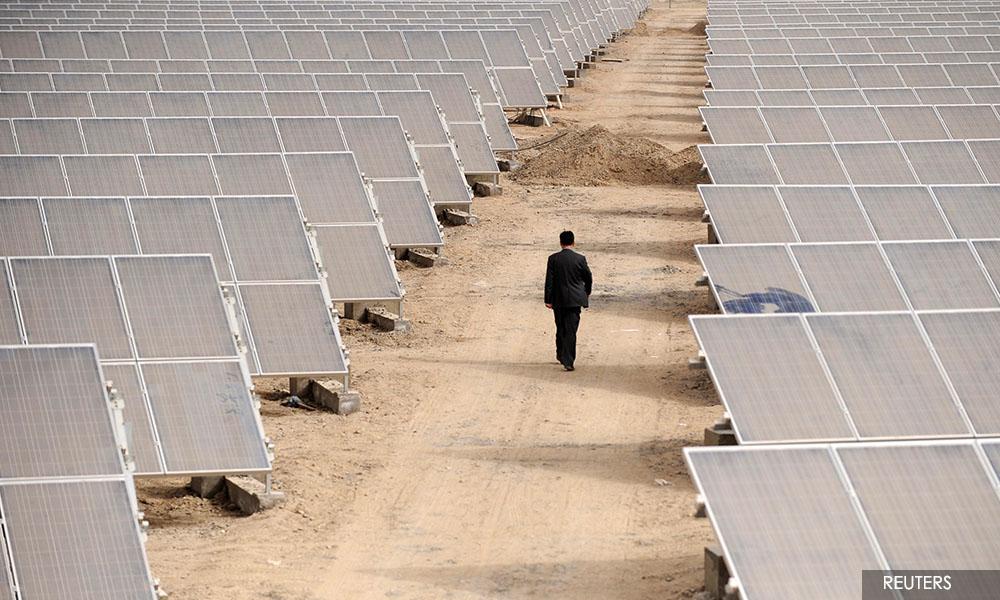
But during the same trip, I also caught a glimpse of a glittering field off the highway, and on the return, I paid closer attention to the field of panels sited at UiTM Solar Park I, a large scale solar (LSS) farm around Gambang. Perhaps, here lay a practical solution to the question of sustainability, one that involved a greater switch to renewable energy (RE), incorporating it into our energy mix to a greater degree. Perhaps, here was a way out of the morass that was our dependency on fossil fuels.
Much of the discourse around climate change has been characterised by misdirection and blaming consumers, a deliberate strategy in which oil companies like ExxonMobil effectively distracted the public from their responsibilities.

It is true that at an individual level, a change of mentality is required, and certainly mitigating steps must be taken by individuals with the means of doing so. But beyond that, what is one to do? Looking specifically at the market-oriented nature of the Malaysian economy, a more immediate large-scale shift is required to avert a climate crisis.
The active rehabilitation of capital may help, since it bears the brunt of responsibility for the crisis to begin with. And perhaps in the nexus between the state and private enterprise, a journey towards true sustainability can be accelerated.
Malaysia’s Sustainable Energy Development Authority (Seda), founded in 2011, takes as its focus the development of RE. Seda’s fairly broad mandate includes many duties, including making “recommendations (to the government) on policies, laws and actions to be applied to promote sustainable energy”, while also encouraging “private sector investment in the sustainable energy sector”.
Fortunately, not all the work has to be done from scratch, since there are existing templates from abroad which can be adapted for use in the Malaysian context.
The most viable option
In a conversation with Peter Yee, executive director of AMG Asset Management Sdn Bhd, he remarked on some of his practical experiences in the field of RE, and some general points to consider.
Electrification, that widely touted answer, is not the end. How is it actually generated in the first place: petroleum, coal or solar? And in turn, where do the necessary components (such as the minerals in solar panels) come from? The logistics of sustainability are wide ranging, requiring the coordination of technical experts on energy efficiency, machinery and resource management.
Having had the chance to study almost all the various types of RE projects available in Malaysia in terms of their capacity for electricity generation, Yee’s conclusion is that their deployment must take into consideration the supply chain.
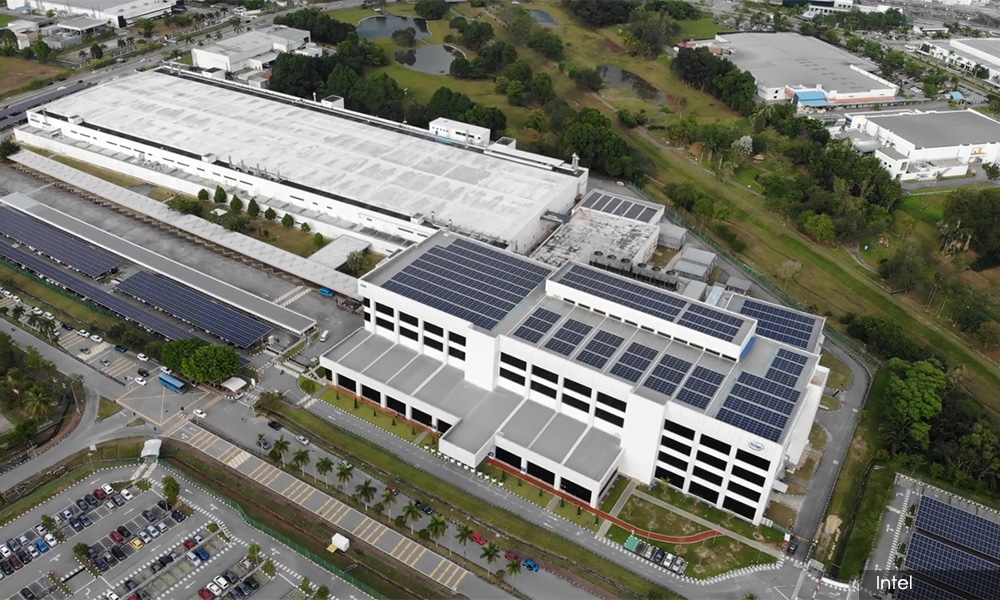
This means that solar energy, being largely cheap aside from infrastructure and labour costs, is the most viable option. But the extraordinarily vast scale of LSS farming employed in the deserts of the Gobi, Nevada or the Middle East are impractical here – rooftop solar may be a more viable option instead, given Malaysia’s scarcity of land. The aforementioned installation by UiTM may not be the most efficient solution in the long run.
Mini-hydro projects, meanwhile, are far less destructive than conventional hydroelectric projects (of which the Indian novelist Arundhati Roy is a prominent critic) and also widespread, although they are far less visible since they are sited in remote areas. The one renewable resource that we have abundant amounts of, first pioneered a decade ago, are biofuels/biomass generated from agricultural waste. But they still need to be burned to generate energy, raising questions of emission, even if the dependency on oil and gas is decreased.
Whatever the case, now is an opportune moment for investment: in a time of widespread concern about climate change, with an economy in dire need of restructuring, governments all over the world are investing in “new grids” to support electric vehicles, battery technology and giga factories.
The latest American infrastructure bill is a practical example of “building back better”. It is useful to note that the emerging global trend is towards divestment from these fuels, and traditional petroleum giants have actually been rebranding themselves accordingly.
The private sector, in recognition of actual corporate social responsibility, can be incentivised to follow along with the trend: upskilling staff, encouraging green foreign direct investment (while ensuring the welfare of labour and supporting industries), tax holidays, electric motorbikes and the integration between the town and the gown, restructuring the education system in a way that supports the shift to an actual sustainable economy, recovering “sustainability” from its cheapening into a buzzword.
The future will still be dictated by climate changes outside our borders, requiring solutions where climate science sees more cooperation between governments, researchers and civil society.
Common cause
Aside from the shift to RE, other efforts such as reforestation and the conservation of biodiversity remain important, such as the Urban Community Forest at Bukit Persekutuan, which brings together different members of society at different levels to fight for a common cause.

As important as the climate and environment is, care must be taken so that the livelihoods of workers on the ground must also be taken into consideration. John Foster Bellamy’s study of the polarisation between environmentalists and timber workers in the Pacific Northwest, encouraged by the reckless greed of companies bent on exploiting American timber resources, destroyed the possible common ground existing between the two groups. The workers were treated as exploiters of the environment, and the environmentalists as divorced from bread-and-butter issues.
Meanwhile, improved technology, such as increased fuel efficiency, isn’t the sole answer to our challenges. The Jevons Paradox, named after the 19th-century economist William Stanley Jevons, argues that increasing the efficiency of using a particular resource will only generate an increased demand, and therefore does not decrease usage of said resource.
Although Jevons’ argument was based on coal, it still holds true for oil. The modern economy, seeing efficiency, continues to ratchet up demand. Then, there is always the risk of attempting to straddle the balance between industry and the environment.
The experience of Ed Whittingham, attempting to commit to both the extraction of fossil fuels and environmental responsibility in the controversial Canadian Tar Sands project, is a cautionary tale. Whittingham was demonised by groups on both sides of the divide, and was ultimately unable to live up to his goals, “portrayed as the disgraced face of an environmental movement” by the government of his home province.
As tempting as it is to rely on magic bullets to solve our problems, true answers are never easy. For now, a firm commitment from all parties – including capital – must emerge.
WILLIAM THAM WAI LIANG is an editor at Gerakbudaya and the author of two novels. His new novel, 'The Last Days', is set in 1981 and covers the continuing legacy of the Emergency. His first book, 'Kings of Petaling Street', was shortlisted for the Penang Monthly Book Prize in 2017.
The views expressed here are those of the author/contributor and do not necessarily represent the views of Malaysiakini.








Report this comment
Are you sure you want to delete this comment?
This action cannot be undone.