
HISTORY | Rise and fall of coffee cultivation in Malaya
HISTORY: TOLD AS IT IS | British Malaya was distinguished by its illustrious, yet consequential, economic history. The country was built on the economic foundations laid by the natives, including aristocrats and common folk, capitalistic immigrants and the labouring class, as well as colonialists.
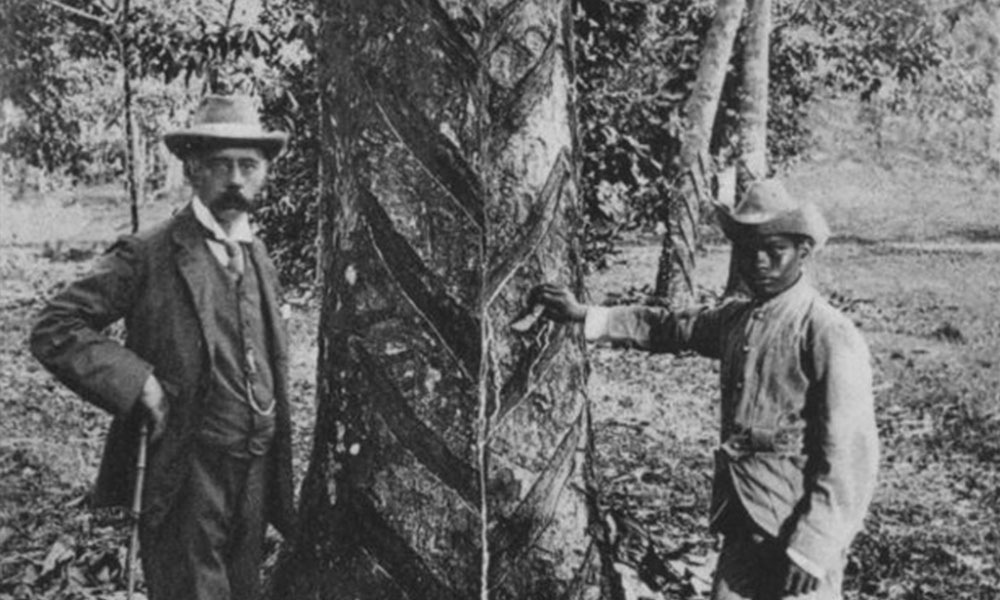
However, for the most part, rubber has driven the narrative in both scholarly and popular domains. It was, without a doubt, a phenomenon that actually made Malaya a rubber plantation country. At the same time, there was another crop, the less celebrated coffee, whose historical significance had been diminished by the wonders of rubber. While rubber might be said to have laid essential foundations, coffee laid the foundation for rubber itself.
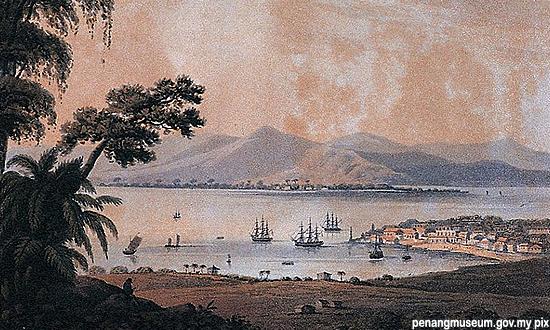
Coffee established itself as a flagship crop in the western Malay states in the late 19th century. During that period, Malaya’s main export products were sugar, tapioca and gambier, which were controlled by Chinese expertise and networks. The simultaneously advancing British colonialists, who may have intended to wrest control of the economy from the Chinese, chose to experiment with a crop that the Chinese had the least interest in by stimulating capital investment from European agriculturalist investors.
As a result, coffee emerged as the first relatively large-scale crop to open up Malaya's agricultural...
HISTORY: TOLD AS IT IS | British Malaya was distinguished by its illustrious, yet consequential, economic history. The country was built on the economic foundations laid by the natives, including aristocrats and common folk, capitalistic immigrants and the labouring class, as well as colonialists.
However, for the most part, rubber has driven the narrative in both scholarly and popular domains. It was, without a doubt, a phenomenon that actually made Malaya a rubber plantation country. At the same time, there was another crop, the less celebrated coffee, whose historical significance had been diminished by the wonders of rubber. While rubber might be said to have laid essential foundations, coffee laid the foundation for rubber itself.
Coffee established itself as a flagship crop in the western Malay states in the late 19th century. During that period, Malaya’s main export products were sugar, tapioca and gambier, which were controlled by Chinese expertise and networks. The simultaneously advancing British colonialists, who may have intended to wrest control of the economy from the Chinese, chose to experiment with a crop that the Chinese had the least interest in by stimulating capital investment from European agriculturalist investors.
As a result, coffee emerged as the first relatively large-scale crop to open up Malaya's agricultural economy. Two species were experimented with at varying times. The Liberian coffee, native to West and Central Africa and well-suited to lowlands, was the most popular. Its tree can reach a height of 30 feet and has oval-shaped, broad leaves. The Arabic coffee, a species native to the Middle East but sometimes known as Java coffee in the region, was the least favourite. Its tree can grow to a height of 20 feet and has brown leaves.
Nonetheless, coffee cultivation was a big risk, as it had already failed in the Straits Settlements in the first half of the century. However, the timing of the beginning of British expansion in the 1870s, as well as a renewed interest in coffee following developments in major coffee producers throughout the world, made it an ideal crop to accompany the colonisation of the western Malay states.
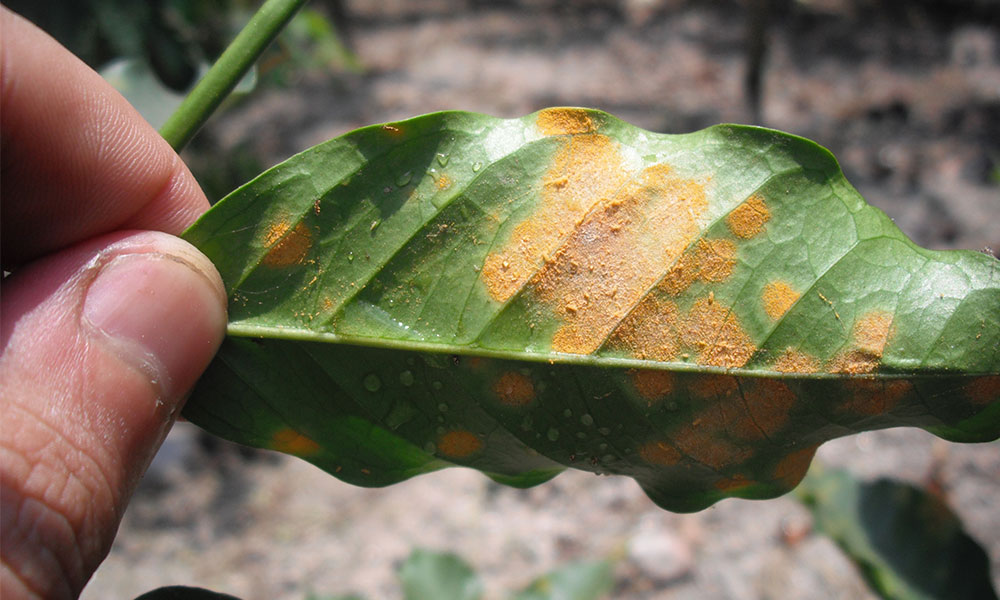
After 1869, when estates in Ceylon (now Sri Lanka), were threatened by hemileia vastatrix, a disease that causes coffee leaf rust, European planters were eager to relocate their coffee operations to Malaya for the first time. Their eyes were drawn to Perak, Selangor and Sungei Ujong, all of which had become protectorates by 1874.
Perak coffee experiment
European planters from Europe and Ceylon vied for Perak beginning in 1877, probably after James W Birch, first British Resident of Perak, emphasised the state’s suitability for coffee in his writings.
Handyside, a planter from the Kinta District, established a coffee estate in 1878, but it failed due to his own ignorance and mismanagement. The more successful coffee experiment in the early 1880s was undertaken by Percy Lionel Smith, a coffee prospector who favoured Liberian coffee. At Kuala Kangsar, Captain Schultze experimented with Arabian coffee.
From the late 1870s, planters were eyeing Selangor and Sungei Ujong. There were two coffee estates, one was that of Liberian Coffee owned by Thomas Heslop Hill, and the other was Arabian coffee owned by CE Kay. During this time, Hill and Rathborne emerged as significant coffee planters, whose estates enjoyed a brief period of success before collapsing due to legislative delays in the admission of Tamil labourers into Malaya. This particular failure served as a crucial lesson, explaining why labourers were quickly imported in large numbers when rubber became profitable.
RB Downall had the first success with Liberian coffee in Selangor, where it was to be grown most significantly. Hill and Rathborne purchased vast areas of land in Batu Caves in 1884 to plant Liberian coffee and then 2,500 acres along the Selangor-Pahang border to plant Arabian coffee. Coffee prospectors also expanded into Klang, but the coffee industry did not flourish there as much as it did in the Kuala Lumpur vicinity. By 1890, Selangor had 10 coffee estates, all of which tasted some success before the advent of rubber.
In the late 1870s, coffee made its way into Johor. It managed to permeate the state’s economy before the state was forced to yield to colonial political pressure in the early 20th century. It was also about this time that the Johor sultanate, determined to keep colonial politics at bay, pushed ahead and established amicable trade and business contacts with Europeans.
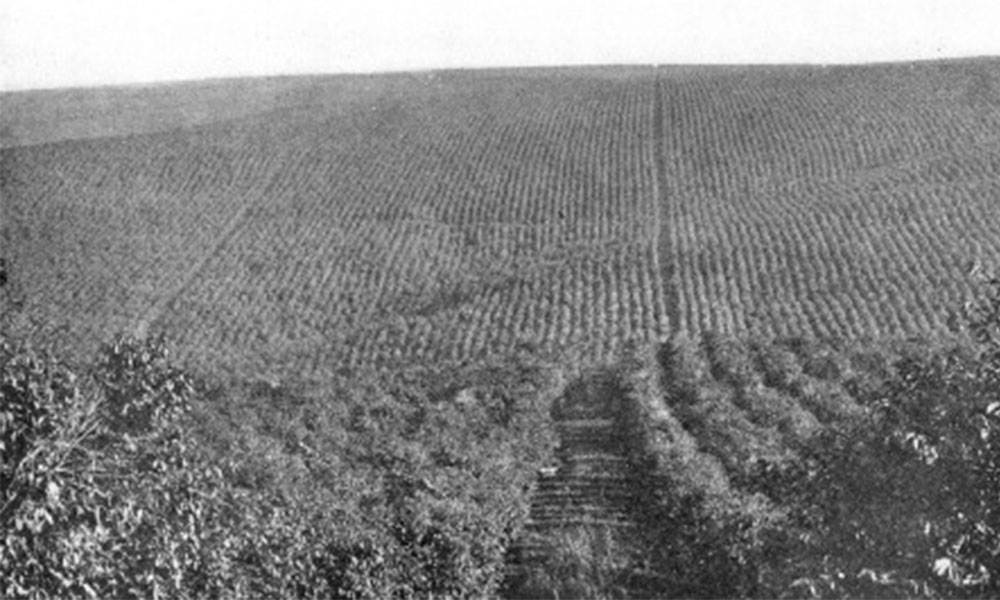
Part of this was to open the way for them to start a coffee industry, which was also owing to the sultanate’s desire to develop the state's agricultural production. The endeavour made by Hill himself, who opened an estate on Pulau Ubin in 1879, was significant in this respect. Liberian coffee was preferred generally, not only in Johor but also in the protected states, due to their topographical unsuitability for Arabian coffee.
Not only European and, to a lesser extent, Chinese capitalists (such as one Khoo Sow Chin from Penang and his company of labourers who attempted to rebuild the coffee estate left ruined following Percy Lionel Smith’s death in Perak), but also Malays, attempted to plant coffee.
Unlike the Europeans, the Malays first entered the coffee cultivation business in the late 1880s and early 1890s when coffee experienced its first and only boom era until the arrival of rubber. One successful Malay planter was Mahomed Tahir who planted Liberian coffee near Klang.
Fall of coffee prices
By 1895, coffee prices had begun to fall, placing everyone already committed to coffee cultivation in peril. But rubber was not entirely to blame. Fundamentally, coffee did not benefit much from British agricultural policy, which was still in its infancy. Although early officials provided encouragement in the form of favourable land allocations, this was insufficient.
The most difficult issue was a lack of labour, as coffee planting was labour intensive. To work 100 acres of coffee, which would take three to four years to bear fruit, up to 60 labourers were required at any given time. Even during the boom time, labour was a major source of anxiety. Notably, the British had not yet developed a solid legislation and recruitment mechanism, as it did when it adopted the 1907 Tamil Immigration Fund Act to recruit labourers.
Coffee prices had already begun to fall by the late 1890s. Prices for Liberian coffee began to fall very steeply, while planters were unable to even experiment with Arabian coffee for fear of disease. Overproduction in Brazil, the world's largest producer, was also a big contributor, as did price manipulation by major planters worldwide.
Nonetheless, a glimmer of optimism arose in 1906, when prices temporarily climbed to allow for some profits to be made from coffee cultivation in the Malay states. But, as a final blow to coffee, rubber sprang on the scene and swung the market to its side.
The coffee experience was a crucial part of nascent colonialism. It was the first crop successfully cultivated by Europeans. In some ways, the failure of coffee cleared the way for the economic success of rubber.
Despite a brief period of prosperity, coffee proved to be a useful experience for the British administration in improving its agricultural and labour immigration policies, as well as for capital investors and plantations in establishing a more robust financial and labour management operation.
Coffee cultivation also provided capital, expertise personnel, and, most importantly, emphasised the significance of a consistent supply of labourers and the consequences of a lack thereof. It was also for coffee that the British administration generated a drive to promote large-scale European investment, which subsequently resulted in a more cohesive planter-administrator relationship for rubber development in the 20th century.
SIVACHANDRALINGAM SUNDARA RAJA is an associate professor at the Universiti Malaya’s History Department. He is a well-known scholar in the field of Malaysian economic history, with numerous local and international research publications to his credit.
The views expressed here are those of the author/contributor and do not necessarily represent the views of Malaysiakini.