


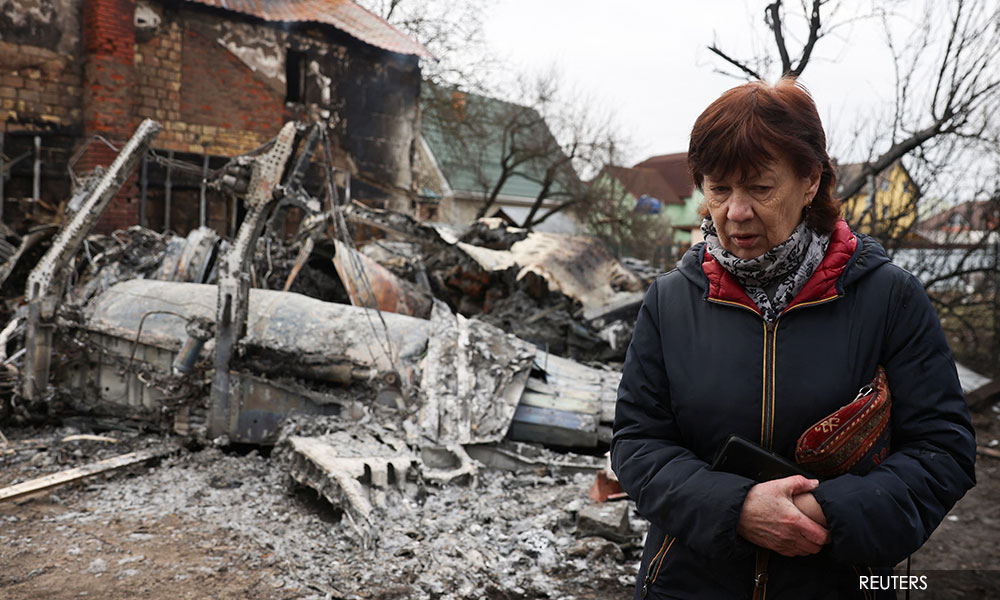

COMMENT | After Ukraine, who’s next?
“When bad men combine, the good must associate; else they will fall, one by one, an unpitied sacrifice in a contemptible struggle.”
- Edmund Burke
COMMENT | Malaysia’s failure to take a stand against Vladimir Putin’s invasion of Ukraine runs the risk of making us look cowards in the eyes of the world.
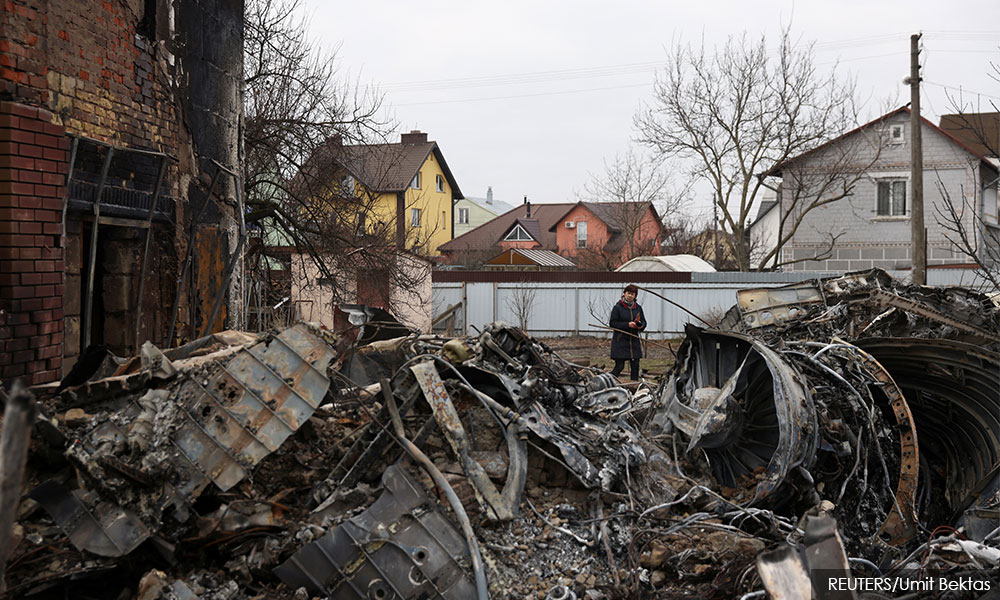
Yes, no country should be a mere puppet of the West and blindly support Nato or ignore Western hypocrisy in some matters. But Putin’s arguments for invading Ukraine does not appear to hold up to even the mildest scrutiny.
The rest of the world seems to sit quietly by while he acts with absolute impunity. The implication is clear: the powerful can conquer whoever they want, whenever they want.
Hopefully, Malaysia will not be cowed by other geopolitical powers into silence over this blatant violation of international law and norms - especially not after the wide consensus that MH17 was shot down by a missile launched from areas controlled by Russian separatists in Ukraine. Surely, we owe at least that much to the victims of that act of...
“When bad men combine, the good must associate; else they will fall, one by one, an unpitied sacrifice in a contemptible struggle.”
- Edmund Burke
COMMENT | Malaysia’s failure to take a stand against Vladimir Putin’s invasion of Ukraine runs the risk of making us look cowards in the eyes of the world.
Yes, no country should be a mere puppet of the West and blindly support Nato or ignore Western hypocrisy in some matters. But Putin’s arguments for invading Ukraine does not appear to hold up to even the mildest scrutiny.
The rest of the world seems to sit quietly by while he acts with absolute impunity. The implication is clear: the powerful can conquer whoever they want, whenever they want.
Hopefully, Malaysia will not be cowed by other geopolitical powers into silence over this blatant violation of international law and norms - especially not after the wide consensus that MH17 was shot down by a missile launched from areas controlled by Russian separatists in Ukraine. Surely, we owe at least that much to the victims of that act of violence.
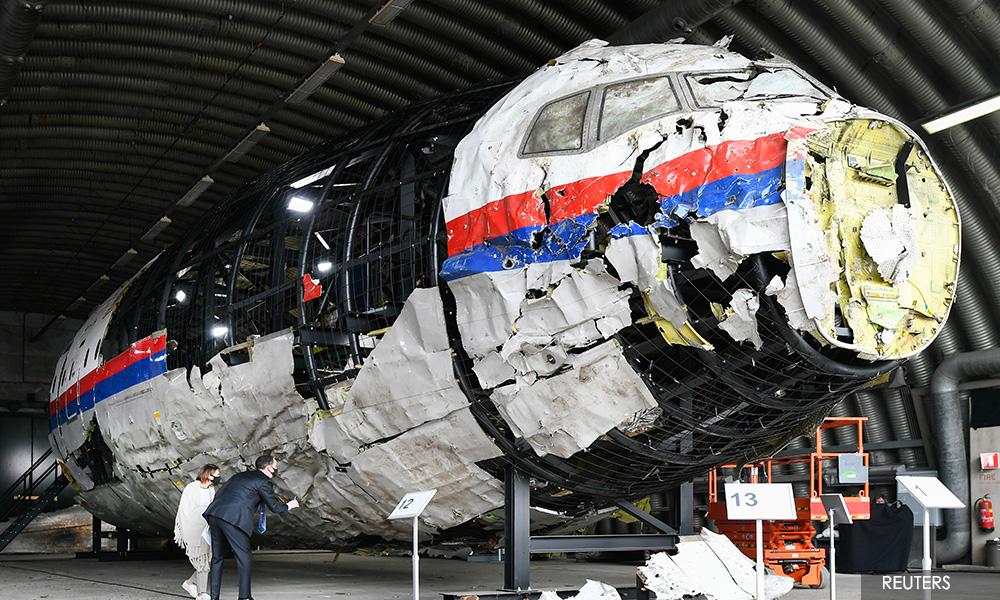
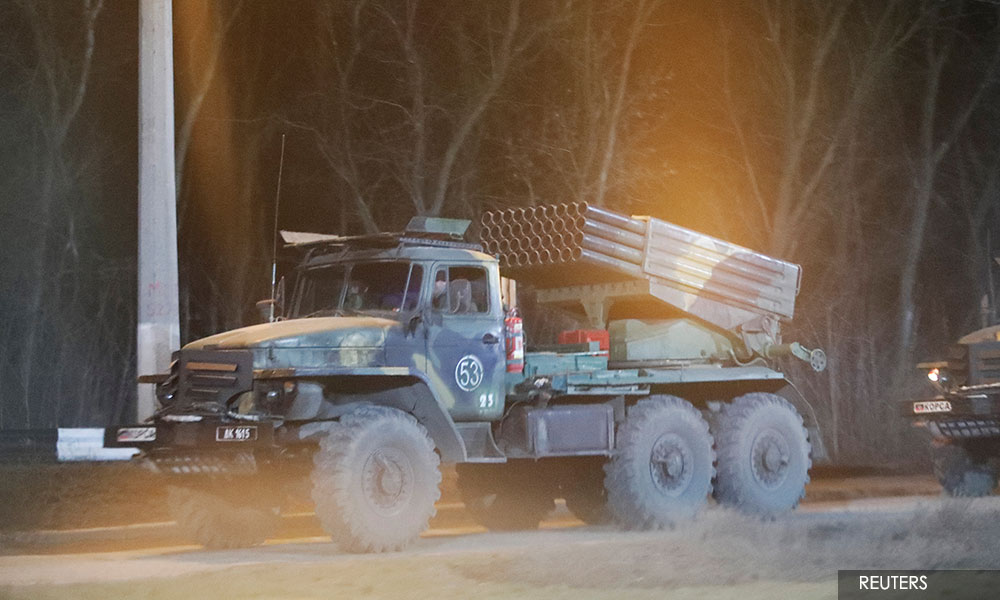
Today’s article will explore the evolution of geopolitical world order, and a few disturbing historical parallels.
Putin has been in power since 1999.
Wars that he has been involved in since then include the second Chechen war, the invasion of Georgia, the annexation of Crimea from Ukraine, and the Syrian civil war.
A common interpretation of this string of armed conflicts is the idea that Putin has been continuously testing Western resolve - in a sense, pushing the envelope further and further, trying to see what he can get away with.
Many argue that his ability to ‘get away’ with aggressive actions in the conflicts above, without having to face any serious consequences has led directly to the present full-scale invasion of Ukraine.
Decaying military power
Russia’s position is an interesting one. Perhaps too many American movies have conditioned us to think of Russia as a decaying and barely relevant military power; economically, they are ranked 11th in GDP - below Canada and South Korea, countries that are considerably smaller in terms of both population and land size.
We are also perhaps similarly conditioned to think of America and its ‘unmatched’ military as the last remaining superpower in the world - the most powerful military force the world has ever seen.
And yet, we are reminded that it is not the size of the dog in the fight, but the size of the fight in the dog. For all of America’s ‘unmatched’ military might since the Cold War, it feels like they have failed more than they have succeeded.
Autocrats around the world have sensed this American weakness, and read this as a sign that American hegemony has now started going down the path of decline that all empires experience. They have sensed that this is an opportunity that must be seized.
China is often praised for thinking in terms of decades instead of months. Putin too appears to not be acting on some kind of impulse, but merely playing out the next step in a journey that has stretched over the last two decades.
America meanwhile has struggled since the end of World War 2 with the ebb and flow of figuring out just how far it wants to police the world.
America’s longest and most intense foreign intervention is arguably the Vietnam War.
Interestingly, John F Kennedy’s inclination to increase America’s involvement in Vietnam was formed against the backdrop of a string of perceived failures to prevail against the spread of communism - namely the failure of the Bay of Pigs invasion in Cuba, the construction of the Berlin Wall, and the reconciliation of pro-Western and communist political forces in Laos.
Kennedy was quoted as saying: "Now we have a problem in making our power credible... and Vietnam looks like the place."
With the North Vietnamese underdogs basically emerging as the victors of that 20-year conflict, it appears that Vietnam was not the show of credibility that Kennedy hoped for.
It was also Kennedy who paraphrased Edmund Burke, in the more familiar saying: “The only thing necessary for the triumph of evil is for good men to do nothing.”
America’s ‘identity crisis’
The question of America’s credibility is an ongoing one as America navigates its ‘identity crisis’ as a superpower - especially after the Soviet Union imploded, ending the Cold War.
Perhaps one of the more significant tests of America’s resolve and identity after the end of the Cold War was in Somalia.
America committed significant military forces as part of United Nations operations, even though no major national interests were at stake. One could interpret this act as a test of sorts to see whether America was willing to play global policeman on purely humanitarian grounds.
What happened in the end was carefully documented in the book ‘Black Hawk Down’, which in turn was made into a movie that many may remember.
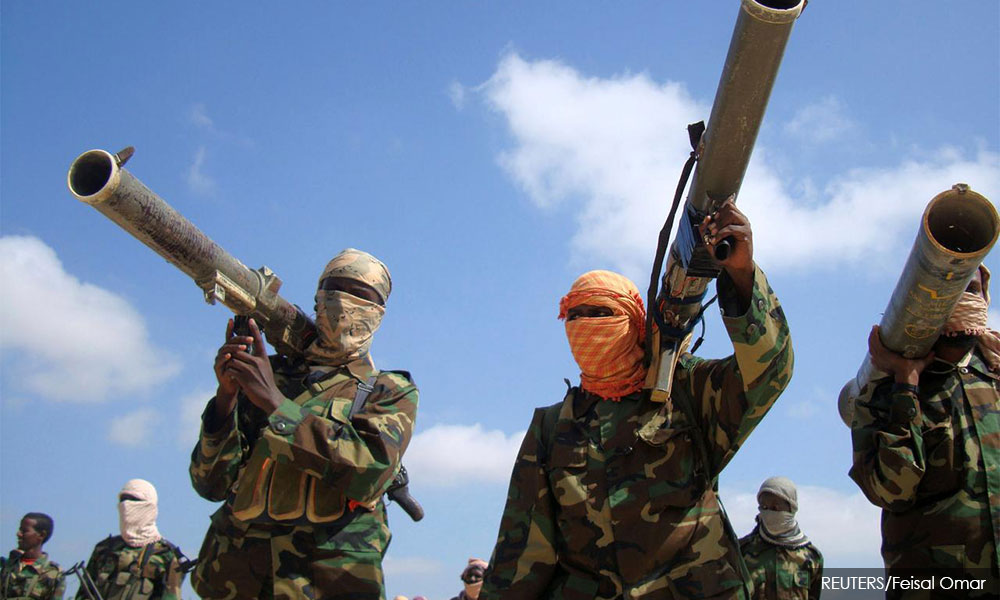
Long story short, the disastrous Battle of Mogadishu in 1993 led to the deaths of 19 American soldiers, some of whose corpses were dragged through the streets.
This left an indelible psychological impression on the American public - perhaps forever changing the calculus of what justified American boots on the ground.
(A lesser-known fact is that Malaysians were also involved in this battle, where 33-year-old Lance Corporal Mat Aznan Awang was killed by an RPG.)
Once again, America intervened but did not deliver the decisive victory against the underdogs many might have expected.
Somalia is also often regarded as the reason that Americans refused to intervene in the Rwandan genocide that took place only six months later, and resulted in some 500,000 to 800,000 deaths.
At university, for a class on globalisation we read a book on this genocide (I think it was Philip Gourevitch’s book entitled ‘We wish to inform you that tomorrow we will be killed with our families’), and learning about what happened shaped the rest of my studies.
Failure in Afghanistan, Syria and Ukraine
America continued to avoid intervening on humanitarian grounds, but Sept 11, 2001 changed everything, and the war on terror began.
This started with the invasion of Taliban-held Afghanistan.
After 20 years, 176,000 deaths, and US$825 billion in costs, the war in Afghanistan ended with the Taliban underdogs pretty much walking back into Kabul and taking back power with minimal fuss after the Americans just withdrew.
From the American perspective, pulling out of Afghanistan in 2021 was perhaps the least bad of a number of bad options available.
Someone like Putin however, may have seen this as America’s resolve once again being tested, and once again coming up short.
Of course, over these 20 years, Putin had tested American resolve more directly in multiple ways.
Russia and America backed different sides in the Syrian civil war. America’s commitment once again looked wishy-washy and indecisive, and Putin once again decisively took advantage of this.
Putin had also invaded Georgia in 2008, and more dramatically in 2014, annexed Crimea from Ukraine.
This blatant invasion was met with what was essentially a non-response, and after a while, the world pretty much eventually just went about its business - for practical means and purposes essentially letting this annexation pass as little more than water under a bridge.
Given this backdrop, it seems quite obvious that Putin should continue to feel that he can act with impunity because that is exactly what all the historical data points to.
Chamberlain’s appeasement
While being acutely aware of Godwin’s Law and the clicheness of Hitler comparisons, Putin’s actions and recent geopolitical history make such comparisons almost inevitable. To be honest, I’m somewhat surprised more people haven’t expanded on the parallels.
Neville Chamberlain was the prime minister of Britain at the onset of World War Two, and is probably most commonly associated with the word ‘appeasement’.
This referred to Chamberlain’s policy of attempting to placate Adolf Hitler. Chamberlain believed that if sufficient concessions to Hitler’s international ambitions were made, peace could be maintained in Europe.
While Chamberlain is often derided and ridiculed, reading his history suggests that he was indeed passionately devoted to the idea of preserving peace.
The very obvious context for this passion was the horrors of World War 1. Anyone who lived through that time would be understandably anxious to avoid war.
There are some parallels between Hitler’s Germany and Putin’s Russia - both were former superpowers (underdogs even, one might say) who were forced to accept a humiliating downgrading in their prestige on the international stage.
Both men were driven, ambitious individuals, eager to restore what they saw as their nation’s rightful place in the world - and neither in the least bit hesitant to employ the most violent means in pursuit of that goal.
Hitler began by annexing Austria by marching German troops into Austria. Austria requested help from Britain, but none was forthcoming.
Hitler then set his eyes on the Sudetenland region, then in Czechoslovakia. In both Austria and Sudetenland, Hitler used the excuse of defending ethnic Germans, much as Putin talks about defending the rights of ethnic Russians in Ukraine.
Chamberlain believed if he could get the Czechs to compromise and cede the territory, Hitler would be appeased and war could be avoided.
‘Our enemies are small worms’
There are two particularly memorable stories and quotes from this time. The first involves a private meeting between Chamberlain and Hitler just after the Munich Conference in 1938, where major European powers managed to persuade the Czechs to capitulate to Hitler regarding Sudetenland:
“Chamberlain took from his pocket a paper headed ‘Anglo–German Agreement’, which contained three paragraphs, including a statement that the two nations considered the Munich Agreement ‘symbolic of the desire of our two peoples never to go to war again.’
“According to Chamberlain, Hitler interjected "Ja! Ja!" ("Yes! Yes!"). The two men signed the paper then and there. When, later that day, German Foreign Minister Joachim von Ribbentrop remonstrated with Hitler for signing it, the Führer replied, "Oh, don't take it so seriously. That piece of paper is of no further significance whatever."
“Chamberlain, on the other hand, patted his breast pocket when he returned to his hotel for lunch and said, ‘I've got it!’”
After Sudetenland, Hitler was of course not appeased as Chamberlain had hoped, and had instead set his eyes on Poland. By this time, Britain and its allies had committed to defending Poland militarily. Despite this, Hitler was not fearful in any way. He told his generals: “Our enemies are small worms. I saw them at Munich."
Perhaps the question of 2022 is whether or not the autocrats of the world see today’s leaders of liberal democracies as worms as well.
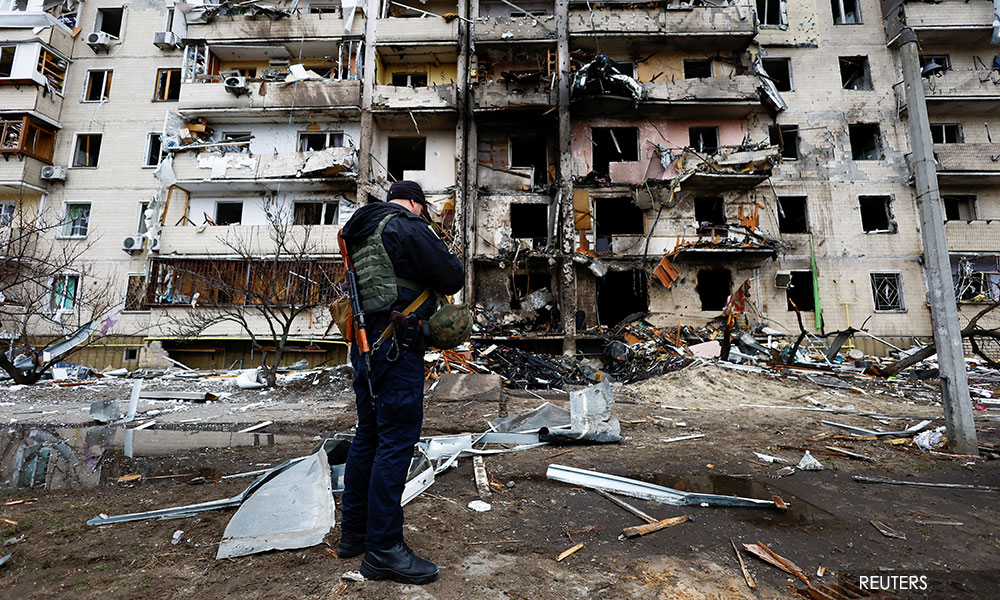
At time of writing, it was announced that Russia would not be banned from the SWIFT global financial system.
It seems hard to interpret this in any other way besides the West putting their own financial interests ahead of geopolitical concerns.
In other words, they are communicating that: Yes, Putin invading Ukraine is bad, but not so bad that we are willing to compromise our own financial interests and conveniences.
If people like Putin can push so far, for so long, with what seems to be fewer and fewer consequences, it seems only logical to expect him to keep pushing even further and harder. Today it is Ukraine; who knows what will be compromised tomorrow.
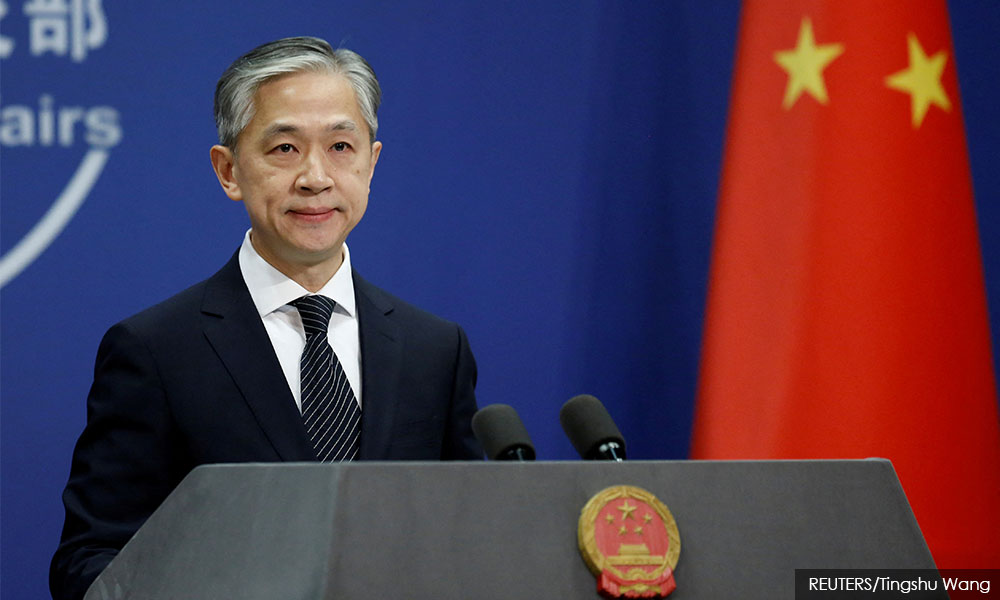
Already this week, Chinese fighter jets have once again flown into Taiwanese airspace. This should remind us of the fact that there are islands in the South China Sea that are of contested ownership as well.
The old world order is a little akin to that frog that is being boiled so slowly it hardly notices, and the people doing the boiling seem to be the kind that believe might makes right.
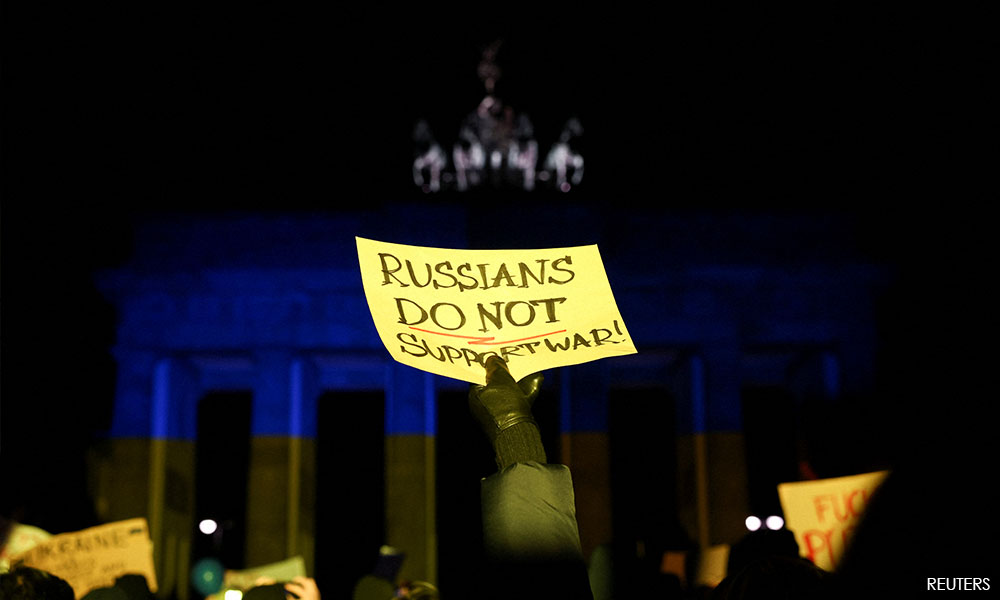
If we don’t want to live under those boots, perhaps it’s time we all started speaking up.
Because if we don’t, any one of us could be the next country that gets invaded at the whim and fancy of some autocrat. And if we don’t have oil (like Kuwait for instance), or some other super strategic importance to big powers, it looks like the rest of the world is just going to sit idly by and let conquerors have their way.
NATHANIEL TAN’s undergraduate degree is in Peace and Conflict Studies. Twitter: @NatAsasi, Email: n@post.harvard.edu. #BangsaMalaysia #NextGenDemocracy.


Report this comment
Are you sure you want to delete this comment?
This action cannot be undone.