




‘No time to waste over Israel’s threat’: Govt mulls total ban of Waze
With Israel at the heart of the government’s security concerns over Waze, Prime Minister Anwar Ibrahim has made it clear that the government is in no mood to drag its feet, warning that the risks posed by the navigation app cannot be left to linger as he revealed that a total ban remains on the table.
“The Waze issue is a serious one for us because, firstly, its headquarters is in Israel. Secondly, under the terms of use of the application, if there are any problems, Israeli law will apply. That is why I took relatively spontaneous action (to prohibit the use of Waze)...
With Israel at the heart of the government’s security concerns over Waze, Prime Minister Anwar Ibrahim has made it clear that the government is in no mood to drag its feet, warning that the risks posed by the navigation app cannot be left to linger as he revealed that a total ban remains on the table.
“The Waze issue is a serious one for us because, firstly, its headquarters is in Israel. Secondly, under the terms of use of the application, if there are any problems, Israeli law will apply. That is why I took relatively spontaneous action (to prohibit the use of Waze).
“This matter cannot be delayed, not even for a day. Some people say we should be patient first and review it first.
“I say it is clear that by using Waze, it means automatically handing over all information to Israel. So, this is a matter of public and national security, and I cannot compromise on it,” he was quoted as saying by Bernama.
Anwar said a complete ban could follow once the government had assessed possible alternatives, including developing a homegrown navigation app that could match Waze in performance.
In the meantime, he said, the government’s move to prohibit Waze, particularly among civil servants, should prompt the public to consider switching to locally developed alternatives.

“Even if it is not sophisticated, never mind, we can improve it. It is better to be safe than to hand over confidential information about the state, your personal information and the country to Israel. That is what is important to understand.
“What is more, we are among the countries that have taken a strong stand against the cruel Zionist Israeli regime. So, naturally, our actions are being monitored.
“I believe that from now on, all their influence will be used to attack us,” he said.
READ MORE: TuJu: Guan Eng asks who gave PM wrong directions; highway board says sorry
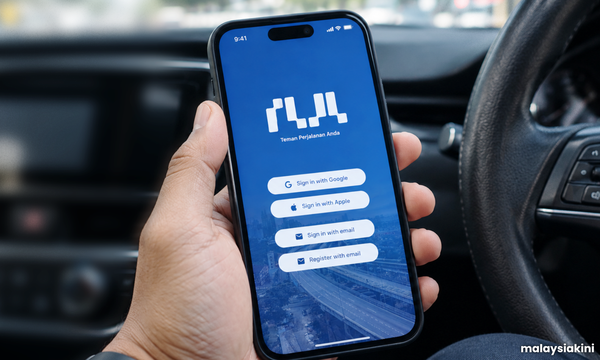
However, the prospect of replacing Waze with a local alternative has run into an immediate obstacle, which is the readiness of TuJu, a navigation application developed by the Malaysian Highway Authority (LLM).
‘Why the fuss over TuJu?’
Asked about concerns over its capabilities, Anwar acknowledged that the app was not without shortcomings, conceding that the alternative might be slower while maintaining that the security question took precedence.
“Yes, I received an admission from LLM that TuJu was apparently incomplete. It is true that TuJu has its shortcomings.
“But for the time being, I do not understand why this has become controversial. If the controversy is about how slow the alternative is, I agree.
“But our decision (to ban it) is not a matter of controversy. This is a matter of national security. It is strange that people are still pressing the issue.
“I know I am being criticised and condemned for acting hastily and rashly. I say never mind, if this causes some inconvenience to a few people, I apologise. But to me, national security is more important,” he added.

The prime minister also disclosed that the Waze issue had been discussed at today’s cabinet meeting.
Waze denies claims
Yesterday, a Waze spokesperson told Malaysiakini that the navigation app does not collect sensitive government information or lets third parties exploit the personal data of users.
“Allegations that Waze collects sensitive government information or allows any entity to exploit users’ personal data are completely false.
“Waze operates under strict privacy policies to protect user data and complies with global legal data protection standards,” the spokesperson said.
Waze traces its roots to FreeMap Israel, an open-source mapping project launched in 2009, before Google acquired the navigation app for US$1 billion (around RM4.07 billion) four years later.
Malaysia is not alone in raising concerns over the platform. Al Jazeera reported earlier this month that Iraq intended to prohibit its use by the end of December, citing fears over data security and Waze’s Israeli origins.




Please lah don't think too highly of Malaysia, Israel doesn't even give a hoot about Malaysia, don't think too much,as usual he shoots first without thinking of the consequences!Dis he acts fast,when comes to corporate mafia and AB shares he drags his body!
Good leader surrounded themselves with smart, honest and hardworking people. In this way, the leader can good advise, good solution and eventually implement good solutions. I don't see that happening in this particular event. Look more like ill advise, vested interest and corruption in play. I hope I am wrong. If I am right, the leader better wake up before it is too late.
If u google which country has banned Waze, you will see the word 'planning to ban' in 3 countries...... I mean....biar betul ?
Report this comment
Are you sure you want to delete this comment?
This action cannot be undone.