


/file/publisher-c1a3f893382d2b2f8a9aa22a654d9c97/2022/11/c1651547ada4ce0fa1803af9f48bab6d.jpg)

COMMENT | Where is our nation heading towards?
There is jubilation in some quarters at the installation of Anwar Ibrahim as prime minister of Malaysia. He fought a long and hard fight for his freedom, justice, and the premiership.
And despite the obstacles in his path and the forces arrayed against him, he succeeded in his quest.
His freedom was obtained in 2018 when the Pakatan Harapan government was first installed and Dr Mahathir Mohamad was with him. Anwar was acquitted of the first sodomy charge by the Federal Court. And then pardoned for the second conviction of sodomy.
Mahathir in a TV interview with an Indonesian reporter said he received evidence Anwar had been framed for that offence. So, Anwar was reconciled with his former nemesis Mahathir.
And yet, there are still many forces against him. Why?
GE15 did not produce a clear victory for Harapan. They had 82 seats and the largest share of the popular vote. Perikatan Nasional had only 73 seats.
But what was significant was that PAS...
COMMENT | We are in uncharted waters. A hung Parliament and a government of coalitions that competed against each other in the 15th general election (GE15). Can they govern? Will they last?
There is jubilation in some quarters at the installation of Anwar Ibrahim as prime minister of Malaysia. He fought a long and hard fight for his freedom, justice, and the premiership.
And despite the obstacles in his path and the forces arrayed against him, he succeeded in his quest.
His freedom was obtained in 2018 when the Pakatan Harapan government was first installed and Dr Mahathir Mohamad was with him. Anwar was acquitted of the first sodomy charge by the Federal Court. And then pardoned for the second conviction of sodomy.
Mahathir in a TV interview with an Indonesian reporter said he received evidence Anwar had been framed for that offence. So, Anwar was reconciled with his former nemesis Mahathir.
And yet, there are still many forces against him. Why?
GE15 did not produce a clear victory for Harapan. They had 82 seats and the largest share of the popular vote. Perikatan Nasional had only 73 seats.
But what was significant was that PAS at 44 seats emerged triumphant as the strongest party in Parliament.
Umno and GPS initially threw in their lot with PN. Convention dictated that the leader of the party with the largest number of seats should be asked to form the government.
Harapan also had the largest share of the popular vote. The Yang di-Pertuan Agong intervened and proposed a unity government. Harapan, Anwar, and GPS agreed. PN did not accept the proposal and decided to stay in the opposition.
For a while, there was widespread anxiety that PN, with its chairperson Muhyiddin Yassin and PAS president Hadi Awang as leaders of Bersatu and PAS would form the new government.
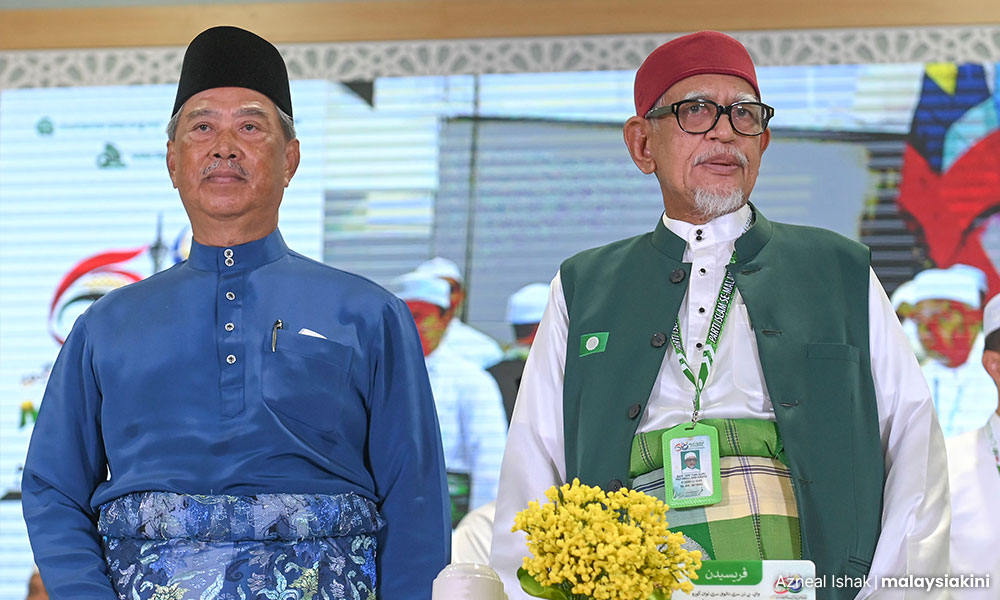
Both parties are exclusively Malay-Muslim parties and their leaders had made statements that were overtly hostile to non-Malays. In all probability, many of their followers do not share their feelings. The interaction of people on the ground would suggest a more harmonious relationship.
The King's intervention supported by the Council of Rulers saved the day.
The voting demography is however worrying. Most non-Malays voted for Harapan. And most Malays voted against Harapan. Analyst Bridget Welsh claimed only 11 percent of Malays voted for Harapan.
Many questions arise. Why the antipathy toward Anwar? Why the antipathy towards Harapan? It has been suggested that DAP is the problem. So why the antipathy towards the DAP?
It has been suggested that DAP is perceived to be a Chinese majority party. So, then the question must be asked - why this antipathy towards the Chinese?
The MCA was an exclusively Chinese party and continues to be a partner with Umno. And that has not been a problem. So why? More fundamentally, is diversity a problem for Malaysia?
To deal with each of these questions:
1. Anwar
Anwar has been acquitted of the first charge of sodomy. He was pardoned by the King. And Mahathir recently said that he was given evidence Anwar was framed for the second sodomy charge.
Anwar has been accepted as prime minister by a substantial number of Malaysians. Anwar has been accepted by the majority of the world's leaders.
So what then is the problem?
2. Anti-corruption
Anwar’s history was that of a student activist, Malay nationalist, and Muslim radical. That should worry the non-Muslims. He also started the Reformasi Movement and was known to be against corruption.
Ironically BN chairperson and Umno president Ahmad Zahid Hamidi was with Anwar at the time when he and Anwar started the Reformasi Movement. Is that the problem?
At that time, it was perceived to be a betrayal by Anwar of the trust Mahathir placed in him. But they have since reconciled. In fact, Anwar's pardon was obtained in 2018 when Mahathir was prime minister.
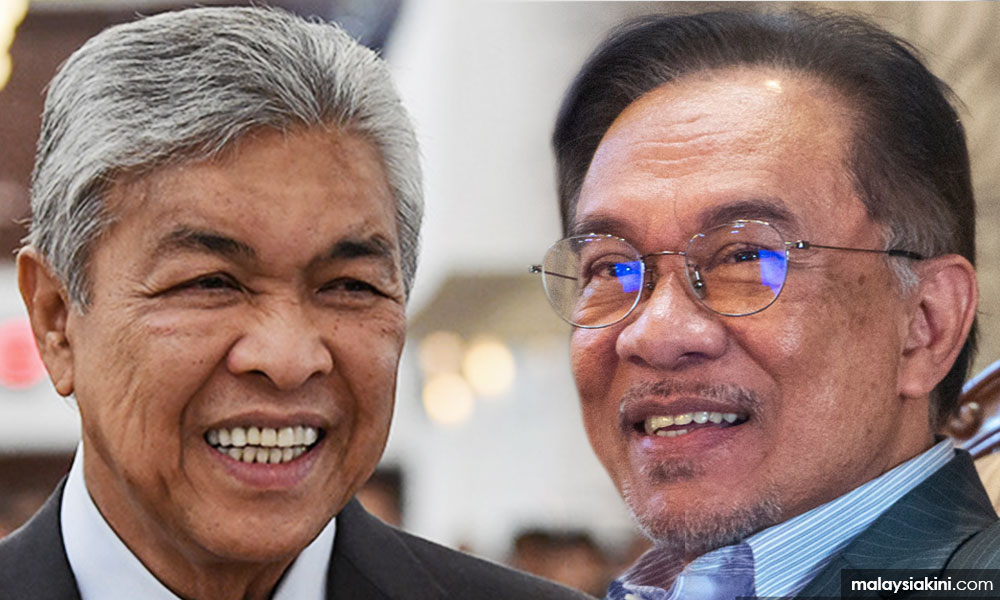
When 1MDB came to the fore, corruption was perceived to be the big problem for the country. It was bleeding our country dry and damaging our reputation.
Mahathir and Muhyiddin were galvanised into action. They spoke against corruption. As did Hadi. They all came together to unseat Najib Abdul Razak who led BN.
The problem is, therefore, not corruption. All the leaders aforesaid believed that corruption is bad for the nation.
As for corruption, Anwar should just appoint men of integrity and experience to the police, MACC, and the Attorney General’s Chambers and just leave them to do their work.
3. Harapan - a multiracial party
Is the fact of Harapan being a multiracial party the problem?
Ketuanan Melayu (Malay supremacy) has been the operating creed for many in Umno for some time. Biro Tatanegara (BTN) conditioning was insidious in revisionist history and in depicting the non-Malays as intruders encroaching into the domain of the Malays.
After 2018, the Harapan government under Mahathir discontinued BTN. But the damage was done.
There is also PAS’ Ketuanan Islam. This creed says that only Muslims can rule Muslims. In other words, non-Muslims cannot be in the cabinet or hold high positions in government.
These political philosophies - if we can describe them as such - and this kind of rhetoric causes or results in misinformation being spread by mischievous elements.
For instance, Jewish conspiracies to undermine the Malays, Christian conspiracies to convert Muslims, and Chinese conspiracies to corrupt and undermine the Malays.
No one will object to religious piety. A holy man or woman from whatever religious denomination will be a reassuring presence in a world filled with hate and strife. So, it is good that people are religious whatever their religion.
We have been a multi-religious country for a long time. And have always had respect and tolerance for our differences. Even on May 13, 1969. There were sporadic riots. But it was not a major uprising of race against race. There are many stories about how people of different races helped each other during the rioting.
There is the issue of the Muslim ummah (community). On the face of it, that is not an issue. There are Christian communities, Hindu communities, Buddhist communities, and other religious communities.
They become a problem when they are called to unite in war against another group. The days of the crusades, the Mongol and Mughal invasions, and Western colonisation are over. There was an attempt by Isis to establish a Muslim caliphate.
This fantasy may exist in some quarters. We must be vigilant. We must be careful. We have the experience of multireligious living for hundreds of years. Very few countries in the Middle East have similar experiences.
Indonesia is one of the best examples of religious tolerance and respect. We should resist attempts to separate and divide us.
Multifaceted society
Harapan under the leadership of Anwar has embraced our multiracial and multireligious society. It is however visible and clear to all that Harapan will not compromise on Malay rights or the Muslim religion.
The Malay support for Harapan may be low but the majority of MPs in Parliament are Malays. As appears to be the majority in the cabinet.
And with the coalition government, Harapan, Umno, and GPS will have to agree on their action plan for their government. Their reform and legislative agenda will have to be supported by the majority of MPs - most of whom are Malays.
There are also many Malays in the opposition who will protest vehemently should anything be done to compromise the rights of the Malays and of Islam. The King and the Malay rulers are also there to protect both the Malays and Islam.
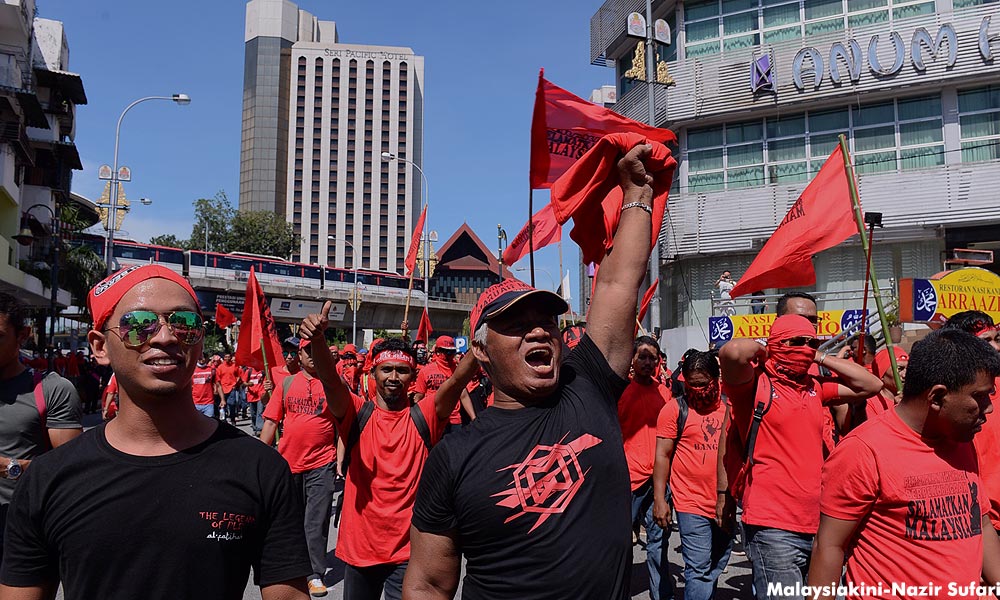
But the racial divide must be bridged. The government must be more inclusive bringing in more non-Malays to the civil service and the armed forces. Non-Malays must be perceived to be serving the nation and to be part of the administration. Poverty eradication measures must include the poor of all races.
4. Are Jews, Christians, and Chinese a problem?
A) The Jews. Time and time again statements are made of Jewish agents and Jewish conspiracies. Leaders of Israel have struck up alliances with many of the Arab states including Saudi Arabia.
Many non-Muslims also condemn the Israeli treatment of Palestinians both within Israel and outside. And many Palestinians are Christians.
Many leaders and thinkers in western nations are Jews. Most Nobel prize winners are Jews. Do we avoid them, reject the knowledge they discover, or the discoveries or innovations they produce?
B) The Christians. A large number of Sabahans and Sarawakians are Christians. Are they not Malaysians? Most of them are bumiputera. They are not converting others. They are worried about attempts being made to convert their young.
Why be alarmed by Christian, Hindu, or Buddhist worship within the country? Most people will stay with the faith they have been raised with. Live and let live. Accept that there are others who follow a different path to God. That is the state of the world. Let God be the ultimate judge.
C) The Chinese. The Chinese are industrious and enterprising. They have relatively smaller families and they save and invest their money well. They educate their children to the highest level possible. And they prefer to work in the trades where their effort can earn them more money.
They are hawkers, mechanics, electricians, plumbers, carpenters, and builders. They make or produce almost everything we use and provide the services we need. Why resent them for that?
There is nothing that stops Malays or Indians or anyone else from doing what the Chinese do. In fact, nowadays foreigners do much of the work that the Chinese traditionally did. And their employers are Chinese whose children have moved up the ladder or gone overseas.
So, the Chinese earn more money, pay more taxes, save more money, and buy assets. It is good for them. But it is also good for the country. Chinese-owned SMEs contribute substantially to the GDP of the country - about 30 percent - and employ about 50 percent of our workforce.
They are good for us. Why see them as a threat? Just learn from them. Form partnerships and joint ventures with them. More than 70 percent of Chinese men and women are employees. Not all Chinese are businesspeople.
Why is the DAP a problem?
The DAP was once the PAP. When Singapore left, it became the DAP. A Malaysian Malaysia was their slogan. Both the Malays and MCA did not like them. They were critical of the NEP. They believed they could do more for the Malays if they were in government.
And both in Penang and Selangor, where they are in coalition with Harapan, they have demonstrated good governance and brought benefits to the Malays. Both states are in the black after decades of being in the red under BN.
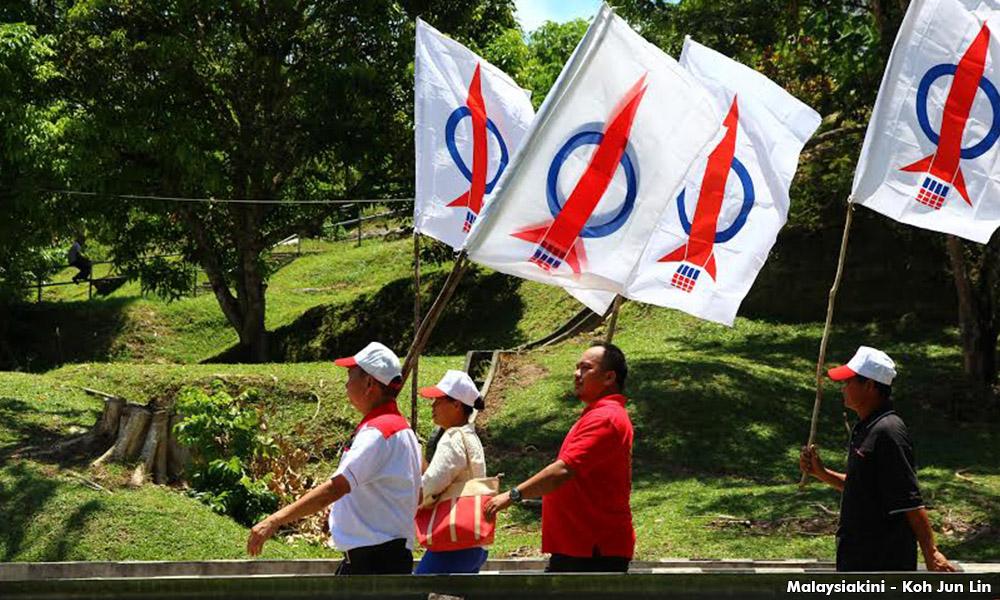
Unfortunately, in the federal government after 2018, they made some mistakes which were amplified and capitalised on by the opposition and which ultimately led to the downfall of the government.
In fairness to them, they were pitching for the long term and in the long term, the country and the Malays might have experienced the benefit of better governance. But they were denied the long term by the Sheraton Move.
DAP leaders Anthony Loke and Lim Guan Eng have recently apologised to the government of Sarawak for earlier insensitive statements made.
However, the lessons should be clear. The DAP has to rebrand itself. They should listen to Malay voices and ask the question - what can they do to reassure them that multiracial Malaysia is good for all of us?
The onus is on all to take steps towards each other, to befriend each other, and to demonstrate our commitment to the welfare of each other. We must consciously create for ourselves a sense of being part of a Malaysian community. All races must combine to move the nation forward.
The DAP, MCA, Gerakan, and even the MIC as leaders of their respective communities must look ahead and ask fundamental questions. We are not living in China or India. This is our home.
Emigration is not for everyone. It may be a solution for some. But for the vast majority of Chinese and Indians, this is our home. The blood of our forefathers and their flesh and bones are in this soil. We cannot exist as separate nations.
Vernacular education
We understand the sensitivity of vernacular schools. But how many countries have separate school systems for different races?
Singapore took the decision to have only one school system. It also took the decision to make English the main language of the country. Vernacular languages are taught in all schools.
It is through a common school system that we can forge a new generation of Malaysians who are bound together by their experience of shared education.
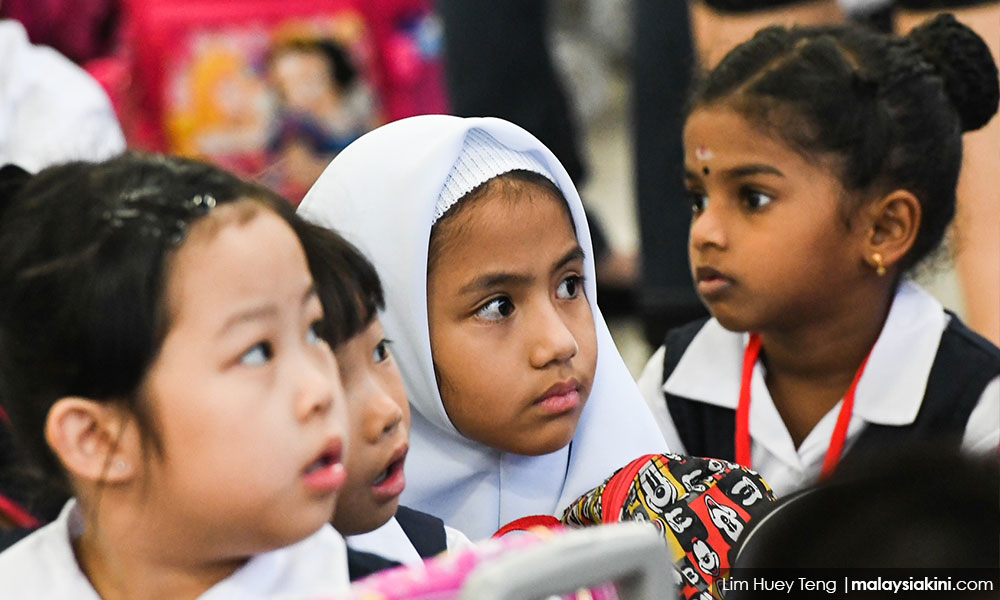
How do we get more non-Malays to attend government schools? Government schools must be revamped to make them more hospitable to non-Malays. Vernacular languages should be taught as a subject to all who want them.
Teachers should come from all races. Students should be given religious instruction in their own faith or the faith of their choice. Given the political sensitivity of this issue, it can only be done in the long term and not by coercion. Government schools must become better schools than vernacular schools.
More non-Malays should be absorbed into the civil service and the armed forces. And Chinese-owned SMEs should employ more Malays and Indians.
We cannot go our separate ways and build a united nation at the same time. It is only when we live in mixed neighbourhoods, go to the same schools and universities, work in the same offices or factories, and eat in the same restaurants that we learn about each other. And our suspicions and fears about each other disappear.
We should enjoy our diversity. Just as we enjoy each other’s food we should also enjoy each other’s company. We should learn more about each other’s culture. Chinese and Indian traditional medicine are a big part of the local scene. Yoga, Tai Chi, Chi Kung, Karate, Tae Kwon Doh, Silat, Sepak Takraw, and Aikido are followed by many.
Each of the races has its distinct cultures and traditions. We can learn much from each other. Already many of us are multi-layered culturally - without realising it, we have absorbed so much from each other - Malay, Chinese, and Indian traditions. And British laws and democratic institutions. Much more. We are at the confluence of so many civilisations.
Can the government hold?
The King and the Malay Rulers played a part in setting up the government. They had a meeting of the Council of Rulers recently and came out with several very strong statements.
They want the independence of the judiciary strengthened. They do not want the prime minister involved in the selection of judges. They also called for a halt to racist or hate speeches. They called for mutual respect and tolerance.
The government should pass a law prohibiting hate speech. Making false statements about Christian conspiracies, mass conversions, Jewish agents, and calling on non-Muslims to be excluded from the government should be outlawed. Of course, Islam should also be given respect.
The government will survive if Umno, GPS, and Harapan can work together. All must accept that they cannot get everything they want. They must work together in a spirit of compromise. The objective should be in the best interest of the nation and its people.
They should focus on the economy, the cost of living, and the poor. They should work to eliminate corruption. And provide the right kind of climate for investment.
Most of this article was written before the cabinet announcements were made. The big question was whether MPs facing charges should be appointed to cabinet positions. Should Zahid be appointed to the cabinet?
That decision has been made. Zahid has been appointed deputy prime minister. The issue is moot now.
University professor Tajuddin Mohd Rasdi in a recent article presented the argument for the appointment of Zahid as deputy prime minister. It was Zahid who made the coalition possible. It is Zahid who will keep it together.
If Zahid is not appointed, he will be perceived to be weak and his adversaries within the party will work to remove him. Prof Tajuddin said Anwar should appoint Zahid. But do not interfere with the legal and judicial process. If he is convicted, he resigns.
The other side of the argument is a moral one. Zahid’s appointment goes against everything Anwar and Harapan fought for. Once Zahid is installed in that position, the legal and judicial process may be compromised simply by the optics and by the possibility of intimidation.
This appointment is going to be controversial and will disappoint many of Harapan's supporters.
Many of the DAP stalwarts have been dropped. And surprisingly Anwar has appointed himself finance minister.
Can Umno work with Harapan?
How well will Umno work with Harapan? Zahid and Anwar seem to get on well. They were close once.
As for Umno itself, can they work with Harapan for a duration of at least five years? Is there the possibility of a longer-term relationship? Umno will not be happy playing second fiddle to Harapan. They are used to being the dominant partner.
Is there the possibility of a merger? Will Umno consider becoming multiracial? Could Harapan and Umno merge? Umno has been engaged in discussions with DAP for a long time. Such an event would be visionary. And would totally alter the political landscape. And the future direction of this country.
For that to happen, the Malays must be certain that life under this coalition is better than anything before it. Is that a realistic proposition? Can that occur within five years?
The King and Malay rulers
The King and the Malay rulers have played a crucial role in resolving the impasse of the hung Parliament. They played a stabilising role.
The rulers command the loyalty and allegiance of the people and especially the Malays in matters affecting Islam. They have a constitutional role in our scheme of government. They could be a stabilising force.
Conclusion
This is a long essay. Many articles and letters have been written by Malaysians giving ideas to the new government. All are anxious that Anwar be given a chance. All the nation needs is good governance, those in opposition should hold back and give them a chance.
Our country needs to turn around. There have been too many distractions in the last 10 years or so. The world is heading towards a recession. The pandemic is still raging on. Inflation and the rising cost of living are driving more people into poverty.
We need peace and stability. And time for the new government to do their work. Anwar has been compared to Nelson Mandela. Mandela's great gift to the nation was healing, forgiveness, and reconciliation.
Anwar should do likewise. Our hopes and prayers are with him and with the government.
DAVID DASS is a lawyer, Malaysiakini subscriber and commentator.
The views expressed here are those of the author/contributor and do not necessarily represent the views of Malaysiakini.
/file/publisher-c1a3f893382d2b2f8a9aa22a654d9c97/2022/12/dad856ad115b2d1374783f646029b0da.jpg)
/file/publisher-c1a3f893382d2b2f8a9aa22a654d9c97/2022/12/478cf2df003c5064bd9c871a31b574f2.jpg)
/file/publisher-c1a3f893382d2b2f8a9aa22a654d9c97/2021/10/2e93abd2a43be2ba4a30b52b8d5d33e1.jpg)
/file/publisher-c1a3f893382d2b2f8a9aa22a654d9c97/2022/10/ff05ea005054ec0f5e1023d88298e1ed.jpg)


Report this comment
Are you sure you want to delete this comment?
This action cannot be undone.