


/file/publisher-c1a3f893382d2b2f8a9aa22a654d9c97/2022/12/0f89ae8bb8e8e1a1a233135c5d7e8451.jpg)

COMMENT | Wanted: Better management of intra-coalition disputes
Quarrels and disputes are certain to occur - how could they not - but their management need not be inept such that they result in rancorous disintegration.
Intra-coalition quarrels, especially among Harapan components of the federal government, must be tackled in a more mature way than has been the case between an Amanah MP and his DAP antagonist.
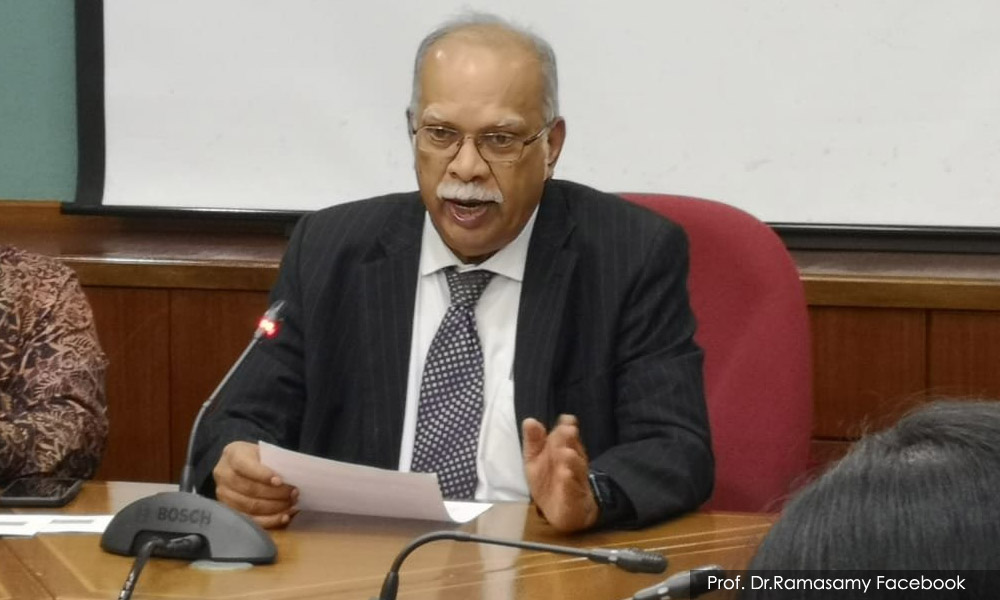
The contretemps between Amanah MP Mohd Sany Hamzan and Penang deputy chief minister II P Ramasamy over the latter’s call for a more ethnically balanced civil service should not have seen Sany calling for the sacking of Ramasamy.
Ramasamy made a call in a post on Facebook for...
COMMENT | Against the backdrop of the intra-coalition disputes that unhinged the first Pakatan Harapan government (May 2018-February 2020), the current federal government must adopt a protocol for the management of internecine quarrels.
Quarrels and disputes are certain to occur - how could they not - but their management need not be inept such that they result in rancorous disintegration.
Intra-coalition quarrels, especially among Harapan components of the federal government, must be tackled in a more mature way than has been the case between an Amanah MP and his DAP antagonist.
The contretemps between Amanah MP Mohd Sany Hamzan and Penang deputy chief minister II P Ramasamy over the latter’s call for a more ethnically balanced civil service should not have seen Sany calling for the sacking of Ramasamy.
Ramasamy made a call in a post on Facebook for Prime Minister Anwar Ibrahim to break the monopoly of Malays in the civil service.
To be sure, the acoustics for such a call, at this early stage of Anwar’s premiership, is not good. Ramasamy, a seasoned politician, should have been better aware of this reality.
But that did not give Sany (above) the license to go overboard with a call for the equivalent, as punishment for Ramasamy, of what can be termed as capital punishment.
Let’s face it, inter-component party ties within the Harapan banner enjoy a longer, and more benign basis than, say, ties between PKR and Umno within the federal government.
Calls for the sacking of one or another interlocutor in a dispute among Harapan components suggest the existence of hostility lurking beneath the surface and waiting to be uncorked.
Surely, this is not the case between Amanah and DAP, making Sany’s stridency in calling for Ramasamy to walk the plank something that is jarringly out of order.
Worse, this kind of rhetoric is contagious.
Following Sany’s impudence, Penang PKR Youth information chief Abshar Nurasyra issued a statement that also called for Ramasamy’s sacking, not only for indiscretion but also for an alleged propensity to issue controversial statements.
Prevent dissension from becoming antagonism
Harapan component parties must remember their adversaries are waiting to exploit fissures that may arise between erstwhile federal government partners, like Umno and DAP, to bring down the ruling coalition.
Why, then, should Harapan components not exercise, when jousting with each other, the verbal restraint indicative of benign relations among them and with caution that prevents dissension from bubbling over into antagonism?
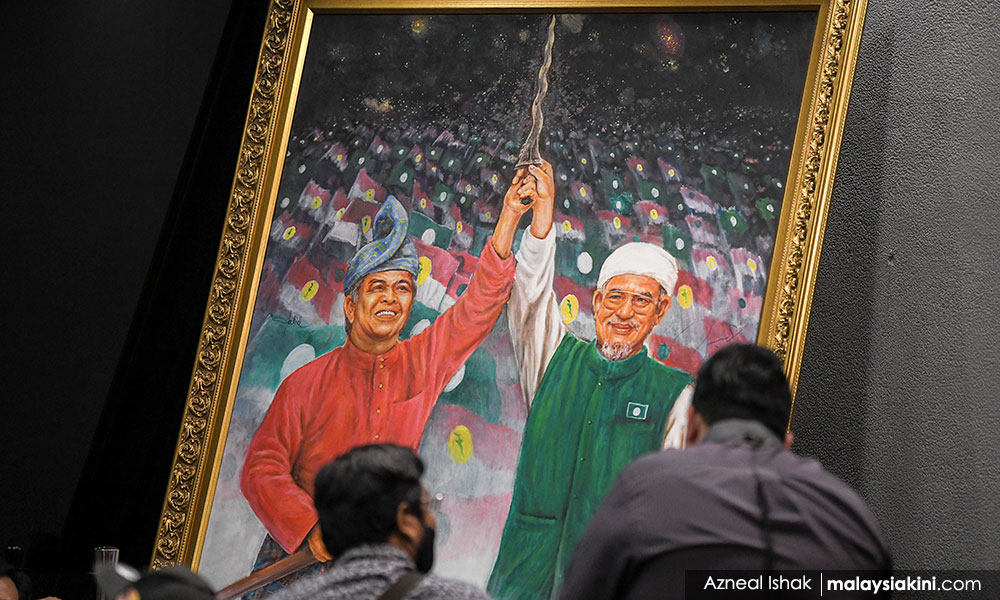
Already, PAS grandee Mohd Amar Abdullah, the deputy menteri besar of Kelantan, has confidently predicted that relations between Umno and Harapan in the federal government would not last because the two components are certain to vie with each other for the same constituencies.
He compared this rivalry to that between PAS and Umno which he said prevented fledging ties between the two parties in Muafakat Nasional from eventuating in a viable partnership.
Muafakat, formed in September 2019, promised much but delivered little because of uncontainable dissonance between the aims of PAS and Umno.
Bearing Mohd Amar and others of his cohort’s Cassandra-like predictions in mind, it behoves partners within the federal government, especially Harapan components, who are its mainstay, to refrain from the rhetorical excess that foments intra-coalition antagonism.
Dissensions are inevitable. An approach towards them that eschews antagonistic rhetoric is imperative to forestall fissures from widening into chasms.
Verbal restraint and a readiness to give interlocutors the benefit of the doubt are de rigueur among the protocols for the management of intra-coalition dissensions.
TERENCE NETTO is a journalist with half a century’s experience.
The views expressed here are those of the author/contributor and do not necessarily represent the views of Malaysiakini.
/file/publisher-c1a3f893382d2b2f8a9aa22a654d9c97/2023/02/74f586083b183b6af0a7ac91ddb199ed.jpg)
/file/publisher-c1a3f893382d2b2f8a9aa22a654d9c97/2022/09/c8a142b529a9e6f8dda4f3566a59a612.jpg)
/file/publisher-c1a3f893382d2b2f8a9aa22a654d9c97/2022/06/ceadf58c2492d96c3b3d9a8cd1f1948a.jpg)
/file/publisher-c1a3f893382d2b2f8a9aa22a654d9c97/2022/05/b847eb48642dfb8b7f709f591a52b0e7.jpg)
/file/publisher-c1a3f893382d2b2f8a9aa22a654d9c97/2023/02/efbc9a961b72da077336c02270876e13.jpg)


