


/file/1306/6acc80f77d48ac6b78f8a9b29d4f769d.jpeg)

COMMENT | Post-state polls: Where are we now?
The opposition has taken many seats from the incumbent party - mainly PAS taking from Umno and from PKR. Malays in rural areas chose PAS.
Although the status quo remains as far as control of state governments is concerned, the results are chilling for non-Malays in this country because of what PAS and Bersatu stand for.
The unity government remains in charge. There are still 4 years left before the next general election. What can they do to regain the support of the Malays?
But before that let us look at the future. What if present trends continue? What do the results portend for the future?...
COMMENT | The elections are over and the results are in.
The opposition has taken many seats from the incumbent party - mainly PAS taking from Umno and from PKR. Malays in rural areas chose PAS.
Although the status quo remains as far as control of state governments is concerned, the results are chilling for non-Malays in this country because of what PAS and Bersatu stand for.
The unity government remains in charge. There are still 4 years left before the next general election. What can they do to regain the support of the Malays?
But before that let us look at the future. What if present trends continue? What do the results portend for the future?
A worst-case scenario would be PAS taking control of the federal government. They will advance the Islamisation of the country.
Seeing what they have done or tried to do in the states they control we can expect a ban on lotteries, casinos and gaming machines and restrictions on the sale of alcohol, restrictions on foreign artistes performing in the country and the introduction of hudud law and strict dress codes for everyone.
There will be challenges made in the courts invoking articles in the Constitution dealing with freedom of worship and the equality of all citizens.
If PAS obtains a two-thirds majority in Parliament, they will try amending the Constitution or abrogating it altogether, with their stated objective of replacing the Constitution with the Syariah.
There will be resistance. The Federal Court has ruled that the basic structure of the Constitution cannot be altered. In other words, we cannot transform our democracy into a theocracy, and we cannot alter the fundamental liberties of our citizens.
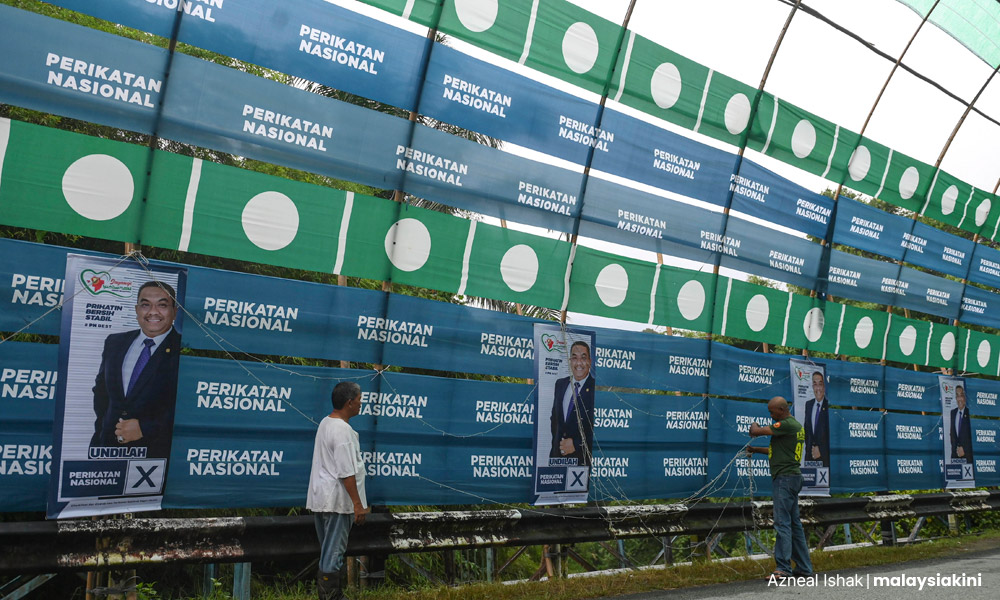
So, there will be an impasse. The courts, Malay Rulers, the police and armed forces will presumably hold the balance.
So unable to change the Constitution in the way they want, what will a PAS government seek to do? The rhetoric of both PAS and Bersatu suggests that the Malays are not adequately looked after by the unity government.
In fact, they go beyond that. They suggest that the presence of non-Malays in leadership is the problem.
But how would an all-Malay government improve things for the Malays?
Multiracial government is not the problem
The reality is that earlier governments have been headed by Malays and these governments have done much to help the Malays.
The civil service and armed forces are predominantly Malay. Many schemes, funds and projects have been set up for the Malays. There is Permodalan Nasional Berhad (PNB) and, Felda, Mara, Tabung Haji and government-linked companies.
There are quotas for public universities and for government scholarships that favour the Malays. There is a large Malay middle class which includes professionals and businesspersons.
But the B40 Malays are dissatisfied. There are many poor Malay households in the country. There are also many poor non-Malay households. Wealth distribution and low incomes are a problem. Salaries are not keeping pace with the cost of living. Ethnicity is not the problem.
It is not the presence of Chinese and Indians in the government that is the cause of poverty in the country. Malay leaders have led the country since independence.
And the New Economic Policy (NEP) has been aggressively implemented since 1971. It is necessary to look at the effectiveness of current policies and schemes that were designed to help the Malays.
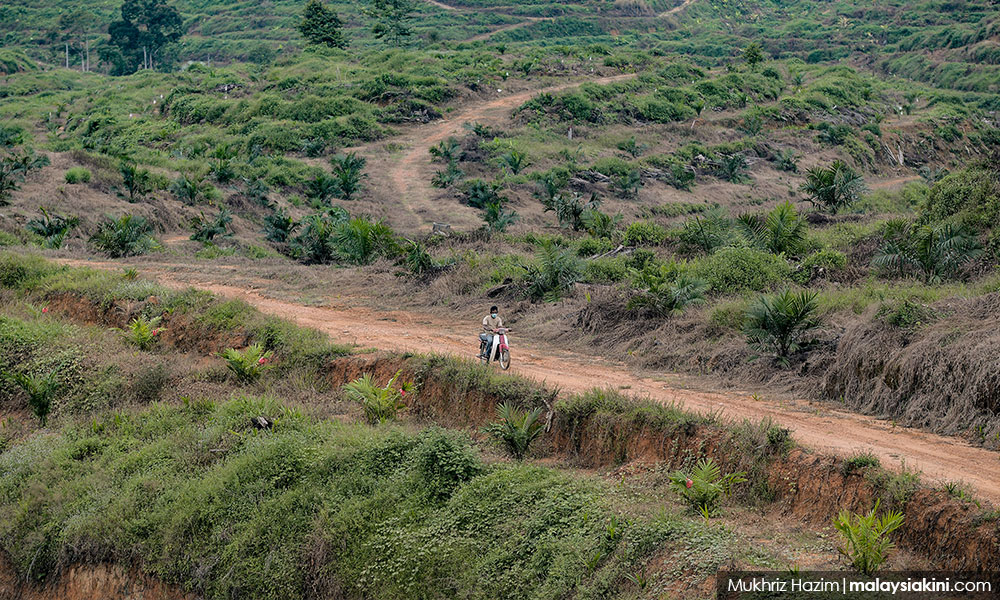
And we must also look at corruption, leakages and wastage. Worker productivity is tied up with good education and skills training.
The way to improve the lot of the Malay poor is to improve the economy, increase the tax base and obtain more investment, both foreign and domestic.
In addition to reforms that will raise educational standards and skills training, improve transparency and accountability, we must reinforce checks and balances to limit or reduce corruption and leakages.
There is a technological revolution taking place. We must adapt and keep pace. Regional economies are overtaking us.
Government must be inclusive
The participation of all is required. That is not going to happen with a government that excludes non-Malays from government and does not recognise non-Malays as equal citizens.
It is a dangerous myth we subscribe to if we think that it is possible to exclude non-Malays from the government.
There will be political uncertainty and instability if that happens and it will not be good for the country. An increasing number of non-Malays will seek to leave the country. There will be capital outflow.
But why the government was unable to retain the support of Malays? They have been trying to deal with some of these issues. Unfortunately, they inherited a host of problems and they have not had enough time to implement the much-needed reforms they promised.
These questions must be asked and answered. Why did so many Malays desert Umno? Why did Umno, the traditional protector of the Malays fare so badly? Why did Harapan lose ground? How did PAS, a party previously contained to the east coast states, become a national party?
What is generally not realised is that most Malays are now urban dwellers. Except for Penang, the Malays are the majority in all the major towns and cities.
A substantial number of urban Malays appear to have supported Pakatan Harapan. The lower weightage given to urban votes may provide part of the explanation.
So, it may not be a “Green Wave” phenomenon. It may simply be Malays looking for a Malay party that is relatively clean and committed to their interests.
PKR’s dependence on Umno and DAP is ironically its strength and its weakness.
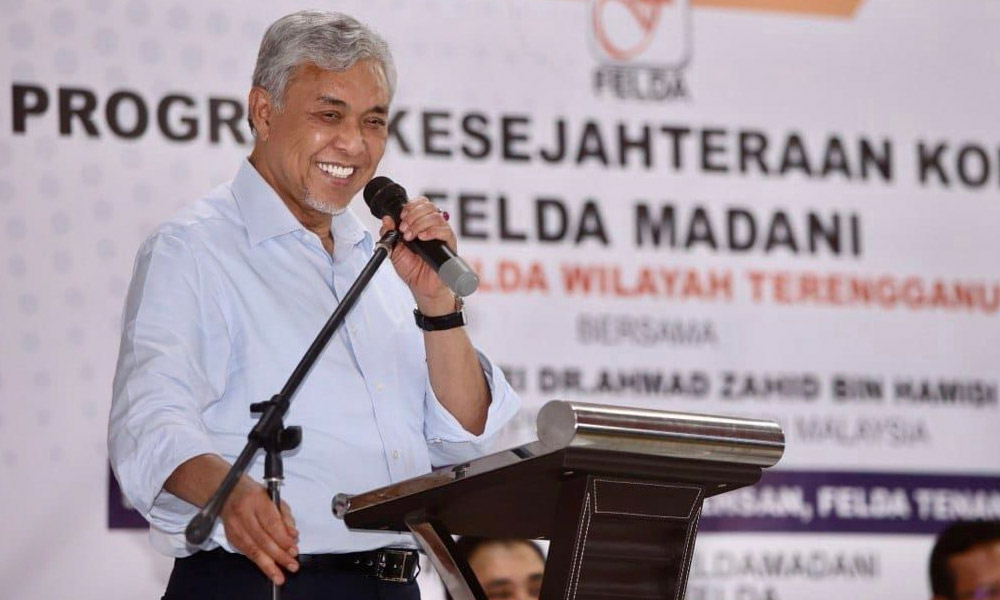
BN and Umno have been associated with much corruption. Ahmad Zahid Hamidi is facing many charges. He had also suspended or sacked many powerful Umno leaders, and they have become adversaries within and outside the party.
Umno must reinvent itself. How will they heal the rifts within the party?
And what will it take for Prime Minister Anwar Ibrahim and PKR to broaden their support amongst the Malays?
PAS has, by all accounts, a brilliant on-the-ground machinery for engaging with the people.
The DAP continues to be demonised by PAS and Bersatu. Should the DAP and Harapan merge? Or will that scare the Chinese supporters of DAP and the Malay supporters of PKR?
Penang is the only Malaysian state with a Chinese chief minister and DAP will not do anything to jeopardise that.
And DAP must do a better job of improving its image. As leaders of the Chinese community, they must demonstrate the commitment of the party and the Chinese community to the welfare of the Malays and the country.
Class not ethnicity
The incidence of such a high level of poverty indicates that wealth is not being equitably distributed within communities. That is the underlying issue, not ethnicity.
Why is a class-based approach to affirmative action for the poor not adopted by the government? PSM is the only party that has formulated proposals and drawn up proposed legislation to look after the poor, the infirm and the elderly. Why were they rejected by the electorate?
I suppose the easy answer is that people did not want to split the vote. It was going to be a fight between the supremacists and those who advocate multiracialism. But look at PSM's proposals. Eradicating poverty, raising the living wage and looking after the aged and infirm must be our priorities.
Malaysia, the reality
Whichever side of the political divide you are on you must accept certain realities. All parties and their leaders must accept:
That this country is irreversibly multiracial and multi-religious.
We have a Constitution that establishes a democratic system of government, and guarantees religious freedom, equality of all its citizens and other fundamental liberties.
That stability is essential for economic advancement and both foreign and domestic investment.
Non-Malays contribute substantially to the country’s economy.
The indigenous people of Sabah and Sarawak make up 12 percent of the population in this country. Together with the Indians and Chinese, they make up about 42 percent of the country.
Malaysia is a trading nation and how we treat our minorities will affect our relationship with many countries. China is the second largest economy in the world and India is the 5th largest economy. Both are the largest buyers of our palm oil.
We cannot morph into an Islamic state or exclude non-Malays from the government without affecting the stability of the country and its economy.
Facing up to our multiracial reality
Therefore, all parties including Umno, PKR, Bersatu, PAS, Amanah, PSM, Muda and the East Malaysian parties have no option but to accept our Federal Constitution and the reality of our multiracial and multi-religious society.
All should work for the benefit of all. The idea of each race going their separate ways will not work for us.
There was a time when our leaders were close friends with each other. There was a time when we went to the same schools. There was a time when teachers, civil servants, police and armed forces personnel came from all races.
There was a time when we were encouraged to think as Malaysians first before our respective ethnicities.
What are we doing now? What are we being asked to do now? China and India see their respective diaspora as assets that they can use to advance their interests.
Surely, we want to use our people as our assets to advance our interests.
DAVID DASS is a lawyer, Malaysiakini subscriber and commentator.
The views expressed here are those of the author/contributor and do not necessarily represent the views of Malaysiakini.
/file/publisher-c1a3f893382d2b2f8a9aa22a654d9c97/2023/07/42a161264384cf1261a4b5d494fca5d6.jpg)
/file/publisher-c1a3f893382d2b2f8a9aa22a654d9c97/2023/08/48b7d704500d534a60f6fc884da48759.jpg)
/file/publisher-c1a3f893382d2b2f8a9aa22a654d9c97/2023/01/8b0dbf5e3ef58fe34717488c9224e7a3.jpg)
/file/publisher-c1a3f893382d2b2f8a9aa22a654d9c97/2023/08/3582822208abb618927956c48f83cbe9.jpg)
/file/publisher-c1a3f893382d2b2f8a9aa22a654d9c97/2022/02/1e8df6e855c2992ccc282a3cb639adc0.jpg)
/file/publisher-c1a3f893382d2b2f8a9aa22a654d9c97/2023/08/698bd5174c94310c3b23ae02cf761595.jpg)
/file/publisher-c1a3f893382d2b2f8a9aa22a654d9c97/2023/07/3250f7be397cb5d22976716bdd0eb30d.jpg)
/file/publisher-c1a3f893382d2b2f8a9aa22a654d9c97/2023/02/b5129ce602d09e24eac1f392f7643cd9.jpg)


Report this comment
Are you sure you want to delete this comment?
This action cannot be undone.