/file/publisher-c1a3f893382d2b2f8a9aa22a654d9c97/2024/07/6c1edca34dd974ad0dfdc72a165a33a3.jpg)

COMMENT | Can Adrian Teh's latest film unite Malaysians?
COMMENT | It is said that two things will always unite people in Malaysia - food and sports. Those who claim this will use all kinds of examples to prove it.
For example, how all Malaysians love quintessentially Malaysian dishes like nasi lemak. We hear all kinds of tales about how Malaysians overseas come home and the first thing they want to do is to eat a big plate of nasi lemak to really feel like they’re home.
I don’t doubt that this is true. Nasi lemak is one of the few things that I truly miss every time I am outside of the country for extended periods and it indeed is one of the first meals that I would eat when I get back to our shores.
But this is just too superficial and general to prove that...
COMMENT | It is said that two things will always unite people in Malaysia - food and sports. Those who claim this will use all kinds of examples to prove it.
For example, how all Malaysians love quintessentially Malaysian dishes like nasi lemak. We hear all kinds of tales about how Malaysians overseas come home and the first thing they want to do is to eat a big plate of nasi lemak to really feel like they’re home.
I don’t doubt that this is true. Nasi lemak is one of the few things that I truly miss every time I am outside of the country for extended periods and it indeed is one of the first meals that I would eat when I get back to our shores.
But this is just too superficial and general to prove that Malaysians are a united people. Just peel a little bit deeper and you’ll find out.
We can’t even go a couple of hours without groups of people angrily protesting that bak kut teh has been proposed to be classified as a national dish.
Is it so evil to consider a dish that contains pork as a dish that is identifiably Malaysian? Actually, it doesn’t even have to be pork. You can use chicken and even mushrooms in place of pork to make bak kut teh.
Racial stereotypes
So what is the issue here? Would it be because it is a Chinese dish? And if so, what is wrong with a dish that was created by the Chinese community in Malaysia to be classified as a national dish? You won’t find it anywhere else around the world.
Is the Chinese community in Malaysia not considered Malaysian? Is only one group of people considered to be Malaysian?
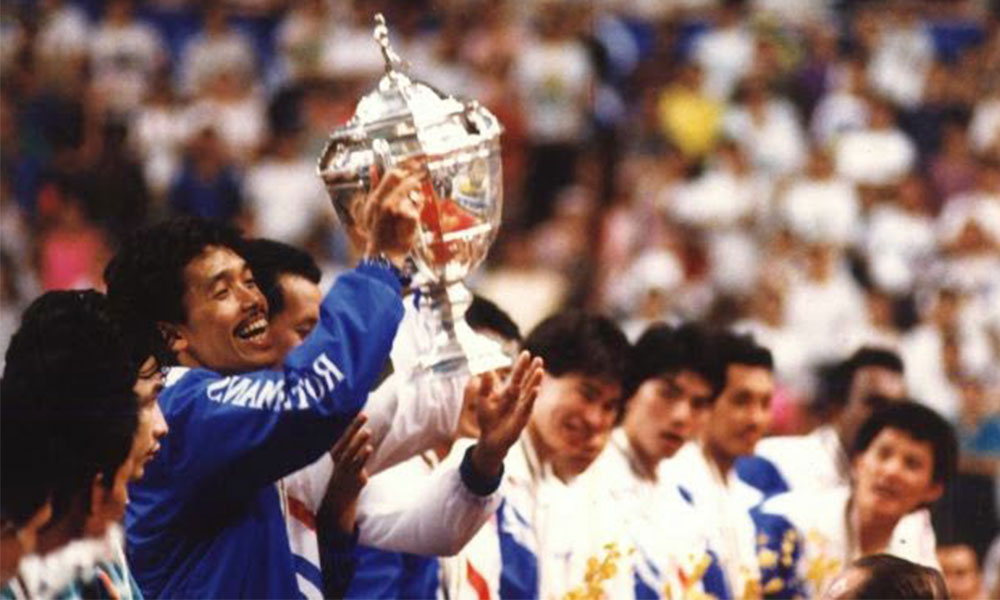
Then there is sports. We are so proud to say that sports unite us all. For example, remember the 1992 Thomas Cup when Malaysia beat Indonesia at Stadium Negara to win the tournament for the second time after 25 years?
The whole country rejoiced and Rashid Sidek, Foo Kok Keong, Razif Sidek, Jalani Sidek, Cheah Soon Kit, Soo Beng Kiang and Kwan Yoke Meng became national heroes.
Again, I don’t doubt that sports can unite us, but this is during rare occasions. Just like food, the way sports unite us is just too superficial and general, to really mean anything at all.
If anything, there are many examples of how even sports show how divided we are as a people. Many types of sports in Malaysia are seen as racially segregated.
Take basketball, for example. It is generally seen as a sport played by the Chinese. When people found out I played this sport, they would ask me twice just to make sure. And when they are convinced that I do play, they would ask if I went to a Chinese school when I was younger.
Then, there is football, which is seen to be a sport for the Malays. Don’t forget hockey. Now that one is reserved for the Indians and Punjabis.
I am not bringing up this issue to provoke people. I am bringing it up because I think we should never stop making an effort to unite ourselves.
We need to realise that there is so much to do to fix the racial relations among Malaysians and we should not be blinded by general and superficial examples of unity - like the examples I gave above.
Let’s look past our differences and come together
Last night, I watched filmmaker Adrian Teh’s latest film “Gold” in the cinema. It was the opening night. Teh is best known for his war and conflict movies like “Paskal” and “Malbatt: Misi Bakara”.
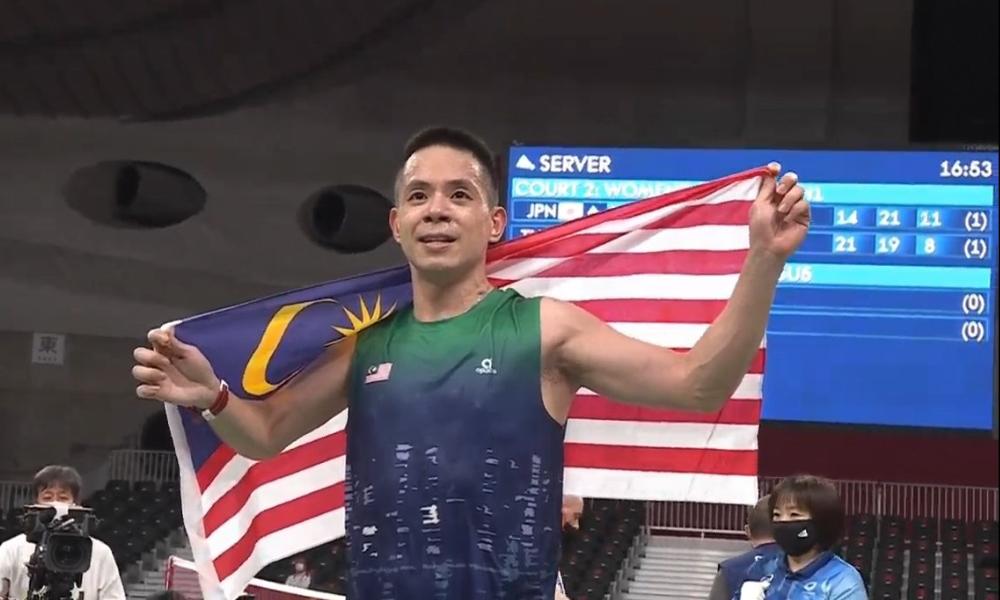
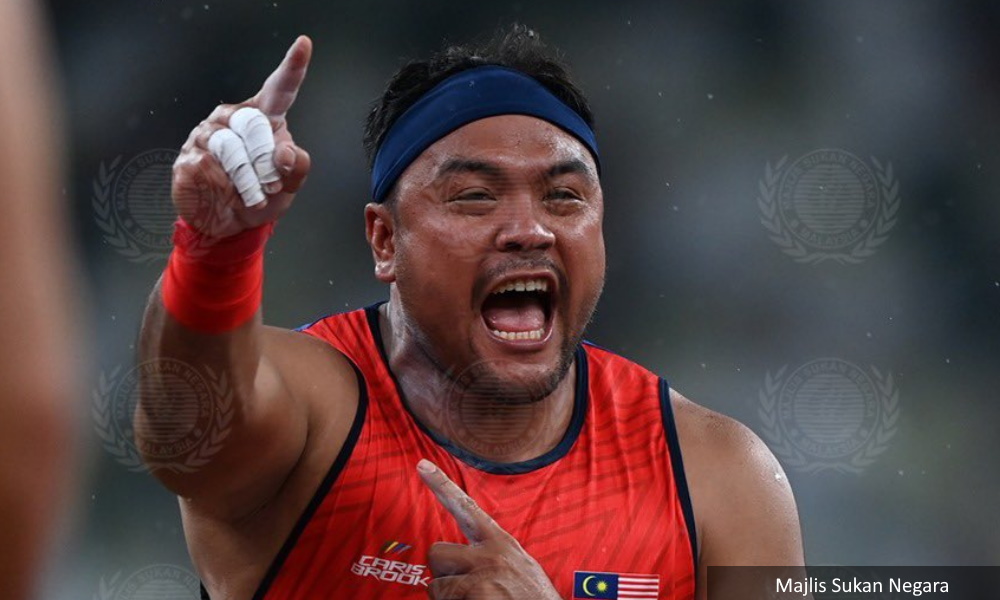
However, “Gold” is not a war movie. It is based on the true story of how Malaysian para-badminton player Cheah Liek Hou, coached by Rashid, won the gold medal at the Tokyo 2020 Paralympics.

Why am I mentioning the movie? I think this is Teh’s best film yet because of the message he tries to convey in the film, which is that we need to look past our differences and realise that we have what it takes to be a great nation if we can just come together.
The film is well made, with good performances by Farid Kamil as Rashid and Jack Tan as Cheah.
Cheah started as an able-bodied badminton player selected to play for Malaysia, but very quickly was diagnosed with Erb’s palsy, which categorises him as differently abled.
He perseveres as a badminton player and competes as a para-athlete, winning 11 world championships. However, his dream is to win a Paralympic gold medal, which he eventually does with the help of former national player Rashid.
Although the movie is about badminton, it is more about sincere love. There is love between a father and a son, an athlete and his coach, love for one’s country and love for pursuing one’s passion.
And, as Rashid tells Cheah in the movie, “I wish the country can see how we work so well together, and realise that they all can do it too. Then we can really show that Malaysia is a great country!”
Don’t worry! That particular dialogue in Malay written by scriptwriters Tan Pik Yee and Teh does not sound as cringy as my English-translated version.

The movie also fuses actual footage of when Cheah smashes the winning point and, my favourite part, when Cheah interrupts Rashid’s live news interview to drape the medal around his coach’s neck and scream to the camera, “This is for you coach!”.
Rashid responds by saying ”I failed to win a gold medal the last time, but now I have!” and they hug each other. Trust me! It isn’t cringy at all!
So how about it, Malaysia? Can we look past petty differences and just realise that we can be a great nation if only we can come together as a people?
Hats off to Teh for wanting to tell Cheah’s story. My spirit of unity has been renewed after watching “Gold”, and I suggest that everyone go and watch the movie too.
ZAN AZLEE is a writer, documentary filmmaker, journalist and academic. Visit fatbidin.com to view his work.
The views expressed here are those of the author/contributor and do not necessarily represent the views of Malaysiakini.