


/file/publisher-c1a3f893382d2b2f8a9aa22a654d9c97/2019/07/a6f136e52b5f9f4ae4e3d4f98de11d94.jpg)

COMMENT | Out of the shadows - the horror of child sexual abuse
COMMENT | This could just be an urban legend, but the physiologist in me knows that if you put a frog in boiling water, it either dies immediately or jumps out while it still can.
If you place a frog in a pot of cold water and gradually raise the temperature, it will get used to the temperature until it is too late to do anything.
For too long, we have been frogs in water where the temperature is gradually rising. In Kelantan, for the last 33 years, the water situation has been getting incrementally worse but no one noticed. We use bore water that turns from crystal clear to turbid in the blink of an eye.
We are told it is OK and we believe that half-truth. We wait for buses under leaky roofs without complaining much even if sheltered locations are becoming few and far between. We are told we need to adjust according to the situation, and we also believe that half-truth.
I thought this was a “Kelantan” thing, until last month. I realised we all are complacent frogs when it comes to the unimaginable horror of physical and sexual abuse faced by hundreds of children placed in charity homes across the country.
COMMENT | This could just be an urban legend, but the physiologist in me knows that if you put a frog in boiling water, it either dies immediately or jumps out while it still can.
If you place a frog in a pot of cold water and gradually raise the temperature, it will get used to the temperature until it is too late to do anything.
For too long, we have been frogs in water where the temperature is gradually rising. In Kelantan, for the last 33 years, the water situation has been getting incrementally worse but no one noticed. We use bore water that turns from crystal clear to turbid in the blink of an eye.
We are told it is OK and we believe that half-truth. We wait for buses under leaky roofs without complaining much even if sheltered locations are becoming few and far between. We are told we need to adjust according to the situation, and we also believe that half-truth.
I thought this was a “Kelantan” thing, until last month. I realised we all are complacent frogs when it comes to the unimaginable horror of physical and sexual abuse faced by hundreds of children placed in charity homes across the country.
This was going on for years, hidden in plain sight. How could I have missed it?
I can spot a typographical error in my student’s thesis from a kilometre away. How could I not have seen this? I suppose I should not feel guilty, but I do, along with a plethora of other emotions ranging from disgust to nausea and anger.
Certainly, it does raise issues of accountability and awareness.

Was there total unawareness on the part of those responsible for keeping our children safe? What about those who have been entrusted to maintain a civil society? Surely there were early warning signs.
When important issues like this take a long time to be exposed, it can be due to a complexity of systemic, social, and psychological factors.
Systemic factors
The Out of the Shadow Index 2022 benchmarks how 60 countries (home to approximately 85 percent of the global population of children) are preventing and responding to child sexual exploitation and abuse.
The index is the first attempt to develop a global assessment of how countries are addressing the issue. It focuses on how stakeholders are approaching the problem at the national level.
Malaysia can be said to have effective laws and policies to safeguard its children, yet in the Out of the Shadow Index 2022, we are ranked 28th out of 60 nations, behind Indonesia, Thailand, the Philippines, and Vietnam.
Clearly, as recent events have shown, we need to do something about this and do it fast.
What systemic issues could have caused us to rank so low on the index?
This index measures four key domains: environment, legal framework, government commitment and capacity, and engagement of civil society and industry. Ranking low on this index suggests systemic failures across these areas.
There are so many possible systemic issues contributing to a low ranking. Perhaps we have overloaded or understaffed agencies, resulting in missed cases and inadequate follow-up on reports. If frontline professionals are not equipped to detect or report abuse, it remains hidden.
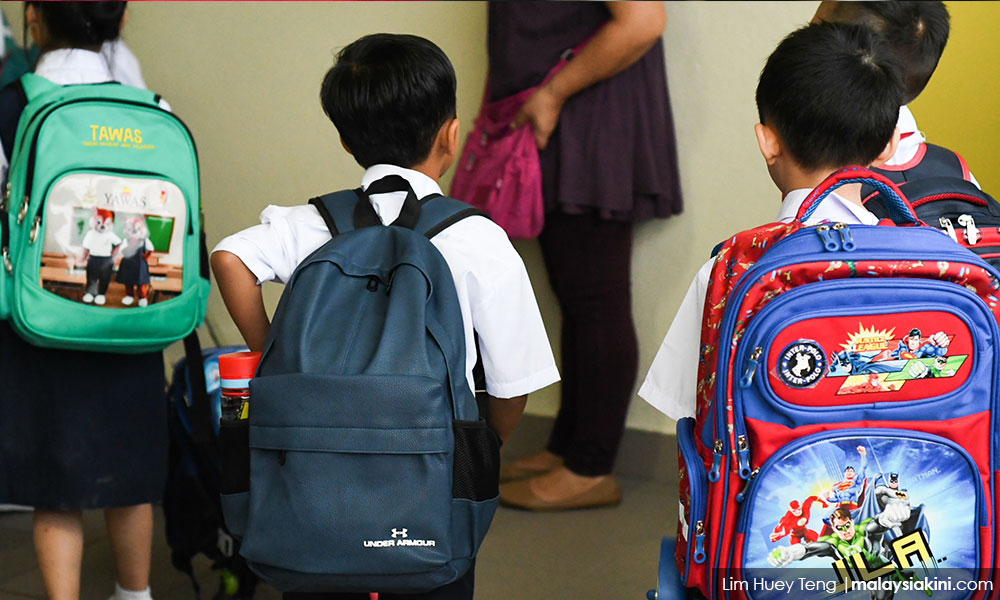
Perhaps it is the fear of shame or ostracism that prevents children and families from speaking out. If children do not speak, it remains hidden.
Perhaps it is poverty and limited public education about child sexual abuse and exploitation. If fewer people recognise warning signs or understand how to report abuse, it remains hidden.
Social factors
In 1837, Hans Christian Andersen wrote a fairytale called “The Emperor’s New Clothes”.
It is about an emperor who is tricked into believing he is wearing an invisible suit of clothes when, in reality, he is wearing nothing. Such is the power of deception and collective denial that even the villagers saw the emperor wearing his new clothes - until a child speaks the truth, saying, “But he isn’t wearing anything at all!”
Why did it take so long before any action was taken? There are times when it seems that our institutions operate in a reactive mode. If you want anything to be effectively addressed, first make a police report.
Our bureaucracy rarely acts pre-emptively and often lacks proactive risk management. It often addresses issues only when they reach crisis levels or become the subject of complaints.
Or perhaps it has to do with something more insidious. Power dynamics exist where people are often discouraged from addressing wrongdoing if it involves influential individuals or groups. Was it their social power or their financial strength that protected them from scrutiny?
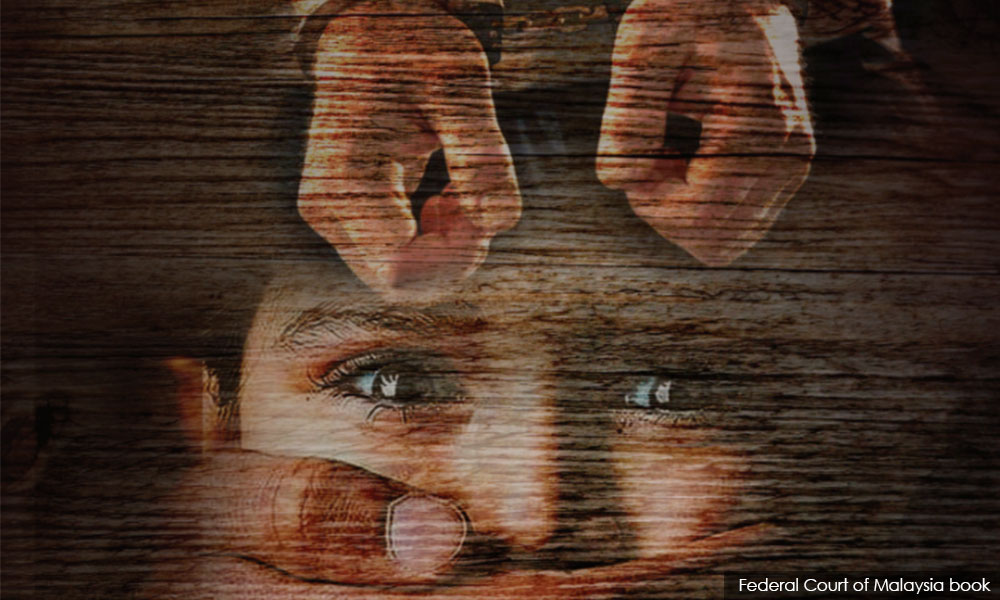
Together with a lack of accountability and bureaucratic inefficiency, these are ideal situations for such a horrific case of child sexual abuse to occur.
It took Malaysia almost 10 long years before someone was brave enough to speak out against authority and popular opinion when he knew something was wrong. In this case, someone finally was brave enough to say the emperor was not wearing any clothes.
Psychological factors
I can understand the shock and horror that you and I feel about the sexual abuse of children, but I cannot understand why it occurred for so long and on such a massive scale within our midst, virtually undetected. Where did you and I go wrong?
Many a time, we find ourselves stuck between a belief and behaviour. Surely a religious community would be morally strong. Surely sexual abuse and child abandonment are never compatible with morally upright communities.
Therein lies the cognitive dissonance, a theory proposed by Leon Festinger in the 1950s. He states that we have a powerful drive to maintain cognitive balance and reliability.
In simpler terms, when a person engages in behaviour that does not match their beliefs and moral values, they tend to experience psychological discomfort which is termed cognitive dissonance.
This feeling of discomfort from two conflicting thoughts makes us choose, rationalise, or explain our thoughts. Either we change our behaviour, or we rationalise our decisions so that we do not alter our belief system and moral values.
Sometimes, we get it right but in this case, we got it horribly wrong.

Cognitive dissonance is why many of us failed to see what was happening, in some cases right in our own backyards. Did the neighbour not realise that the children were not going to school? Did no one notice how the children behaved?
In the Victoria Climbe case (UK, 2000), an eight-year-old girl was severely abused and killed by her guardians despite being seen by multiple agencies, doctors, social workers, and police, who all failed to see clear signs of abuse.
Similarly, in California (2013), Gabriel Fernandez was tortured and murdered by his mother and her boyfriend despite multiple reports of abuse.
In the case of Baby P (Peter Connelly) - UK (2007), a 17-month-old child, died after enduring severe abuse at the hands of his mother, her boyfriend, and a friend.
Despite multiple visits from social workers, doctors, and the police, the abuse was not detected in time. Social services failed to take adequate action even after clear signs of neglect and injuries were present.
These cases reveal a pattern of systemic issues, such as poor communication between agencies, inadequate investigation of clear warning signs, and failures in safeguarding protocols.
The inability of social services to act quickly and effectively often leads to tragic consequences for vulnerable children. The silence of the community was indeed fatally deafening.
Sadly, we often fail to recognise something negative even when it happens right in front of us. Sometimes, it is because they do not align with our beliefs or expectations, and when we encounter something that contradicts our beliefs or values, we might subconsciously ignore it to avoid the discomfort of holding conflicting thoughts.
To bring back cognitive stability our brains choose to ignore what we see. Sometimes we even downplay or ignore anything negative because it does not fit our expectations of normalcy.
These factors often prevent us from recognising or addressing negative situations, even if it happens right in front of us.
Community engagement
We need to strengthen our community engagement and foster a culture where neighbours check in on each other, especially on children and vulnerable individuals.
We need school and community involvement where parents and community members participate in school activities. We need strong support systems so that we become more vigilant and concerned about our own communities.
This atrocity should never happen ever again. As Kofi Annan so aptly said: “There is no trust more sacred than the one the world holds with children. There is no duty more important than ensuring that their rights are respected, that their welfare is protected, that their lives are free from fear and want and that they can grow up in peace.”
ZALINA ISMAIL is a former professor in Neurophysiology at the School of Health Sciences, Universiti Sains Malaysia, as well as a fellow of the Foundation for Advancement of International Medical Education and Research.
The views expressed here are those of the author/contributor and do not necessarily represent the views of Malaysiakini.
/file/publisher-c1a3f893382d2b2f8a9aa22a654d9c97/2024/09/1fca4b312be85f5e9de0a6773317a84d.jpg)
/file/publisher-c1a3f893382d2b2f8a9aa22a654d9c97/2024/08/c3417b432a4e3f5ab9aa14c1ea56ae0e.jpg)
/file/publisher-c1a3f893382d2b2f8a9aa22a654d9c97/2024/09/b3b33b9f9dcbf7aa532bdf1f8e3fd3db.jpg)
/file/publisher-c1a3f893382d2b2f8a9aa22a654d9c97/2020/12/3b4e65a56e038c6d51b1ad2361d47244.jpg)
/file/publisher-c1a3f893382d2b2f8a9aa22a654d9c97/2024/09/73279cbc583b9ce17f22e667090bb2cf.jpg)
/file/publisher-c1a3f893382d2b2f8a9aa22a654d9c97/2024/09/b78ea37056423e440246f187b0a76335.jpg)


