


/file/publisher-c1a3f893382d2b2f8a9aa22a654d9c97/2023/11/f9b8b116bd8a31950f95a0c14be6af93.jpg)

COMMENT | Tech-based solutions the low-hanging fruit of carbon credits
COMMENT | With the 29 Conference of Parties’ (COP29) official adoption of new operational standards for a mechanism under Article 6 of the Paris Agreement, the path is now clear for establishing a global carbon market.
The mechanism establishes an international carbon trading system that allows companies to offset their emissions by funding projects that reduce or remove carbon dioxide (CO2).
COMMENT | With the 29 Conference of Parties’ (COP29) official adoption of new operational standards for a mechanism under Article 6 of the Paris Agreement, the path is now clear for establishing a global carbon market.
The mechanism establishes an international carbon trading system that allows companies to offset their emissions by funding projects that reduce or remove carbon dioxide (CO2).
Even after aggressive decarbonisation efforts, many will still have residual emissions that cannot be reduced due to economic, operational, or procedural limitations.
These companies will need carbon dioxide removal or reduction solutions to offset the remaining emissions and meet their net-zero targets.
In turn, they can also trade the carbon offsets generated by these projects in either compliance or voluntary carbon markets and claim the associated environmental impact.
There are essentially two main approaches: one focuses on carbon sequestration through trees, soils, and biochar, which directly remove or store carbon from the atmosphere; the other emphasises reducing emissions with technologies like renewable energy (solar, wind, and geothermal power) and heat recovery, which lower future carbon emissions by replacing carbon-intensive energy sources with low-carbon alternatives.

Both natural and technological solutions are crucial in mitigating the most severe impacts of global warming, yet nature-based solutions (NbS) often steal the spotlight.
Tech-based solutions deserve recognition
At its Fifth Session, the United Nations Environment Assembly (UNEA-5) took a significant step by passing a resolution that adopts a multilaterally agreed definition of NbS, recognising its critical role in the global response to climate change.
The resolution appears to prioritise NbS over technological or engineered carbon removals.
The global emphasis on forests and forestry may reflect their prominence in international negotiations and national policymaking, as seen in initiatives like Reduced Emissions from Deforestation and Degradation.
Historically, policy discussions have focused on forests primarily for their role in climate change mitigation, particularly as carbon sinks.
However, it is crucial that the current focus on forestry as a “climate solution” does not overshadow or delay the urgent need for ambitious action to integrate tech-based solutions as part of the decarbonisation plan!
Easy pickings
Owing to some of the limitations and challenges of NbS, carbon credits targeted at forestry will take longer to bear fruit, inciting the need to pursue multiple carbon reduction approaches to keep up with rising emissions.
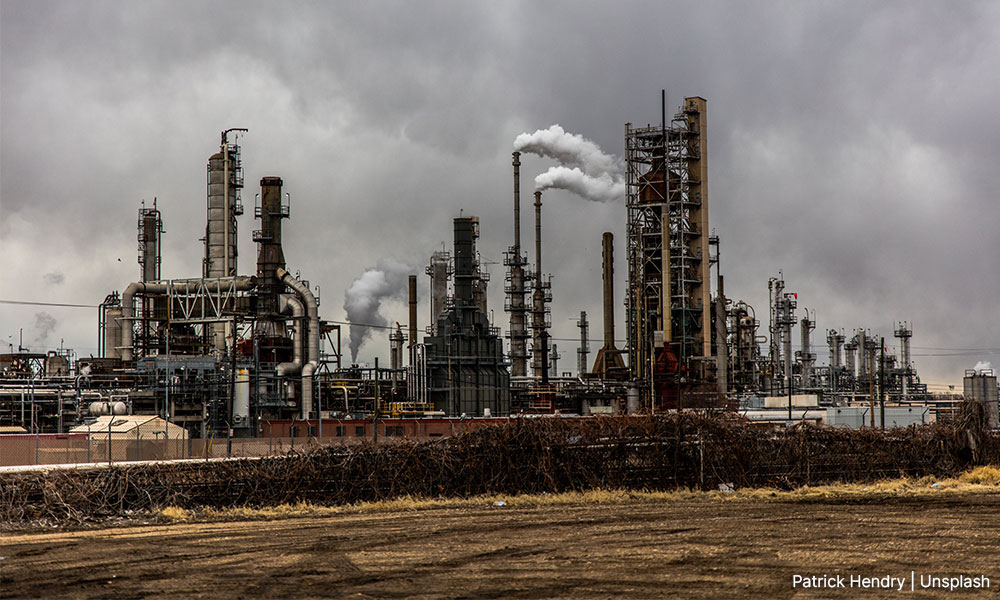
First, challenges in measuring and predicting the effectiveness of NbS create high uncertainty about their cost-effectiveness compared to tech-based approaches.
Second, inadequate financial models and flawed economic appraisal approaches result in underinvestment in NbS.
Third, inflexible, sector-specific governance structures limit the uptake of NbS, with engineered interventions remaining a better approach for many climate adaptation and mitigation challenges.
Additionally, carbon credit standard setters like Verra and Gold Standard require long-term monitoring as part of their permanence safeguards for NbS, but the definition of ‘long term’ can vary.
Most NbS methodologies are still in development and will likely undergo further revisions and adjustments, making them less attractive compared to tech-based solutions.
Generating quality credits
Tech-based solutions offer greater permanence in CO2 reduction because they are controlled and less vulnerable to environmental risks like wildfires or flooding, which can damage biological carbon sinks.

For instance, renewable energy technologies reduce emissions by replacing fossil fuels, a major source of CO2. As a result, carbon credits from tech-based projects are likely to be valued as high-quality credits.
High-quality carbon credits can help close the investment gap by attracting private capital to fund low-emission innovations, particularly in jurisdictions where compliance carbon pricing mechanisms are not yet in place.
Both NbS and tech-based solutions are essential. Investing in a diverse range of approaches will allow tech-based solutions to deliver short-term mitigation, while NbS are scaled to effectively neutralise emissions and achieve net zero.
Although carbon offsetting should be a last resort, pursued only after all efforts for emission reduction and decarbonisation have been exhausted, the carbon offset market plays a crucial role in helping countries and organisations achieve global net-zero emissions goals.
It enables responsibility for unavoidable emissions by funding projects that reduce or absorb CO2 elsewhere. It also offers a reliable way to lower the carbon footprint of hard-to-abate industries through a mix of NbS and engineered climate solutions.
CHONG YEN MEE is a UNFCCC Roster of Experts member and a consultant working with Soon Hun Yang, who founded Eco-Ideal Consulting Sdn Bhd, a local environmental consultancy specialising in carbon advisory services.
The views expressed here are those of the author/contributor and do not necessarily represent the views of Malaysiakini.
/file/publisher-c1a3f893382d2b2f8a9aa22a654d9c97/2024/11/ebc47e21d0cdce3679ff9d0dbd7f6060.jpg)
/file/publisher-c1a3f893382d2b2f8a9aa22a654d9c97/2024/11/bed59ab6f67c5120c24af5dd686fdc3f.jpg)
/file/publisher-c1a3f893382d2b2f8a9aa22a654d9c97/2024/11/a8829a0fc5dc3b5151a9a40d2cbf1ddc.jpg)
/file/1037/3b3b64c7323c4e027fcdf10beaffec43.jpg)
/file/publisher-c1a3f893382d2b2f8a9aa22a654d9c97/2024/10/651415547fea5eb7b6a126e539018d8d.jpg)


Are you sure you want to delete this comment?
This action cannot be undone.