


/file/publisher-c1a3f893382d2b2f8a9aa22a654d9c97/2025/05/b97a5051c86a403c0398641598f0f8c0.jpg)

COMMENT | Asean Summit's gift to KL traffic woes
Bear with me. I can safely say that the traffic problem has been with us for over half a century. In 1970, I was living in Sentul and had to travel every weekday morning right across town to Pantai, where Universiti Malaya was located.
It took me at least three hours both ways on a good day. I sometimes took shortcuts. If I got off at the Kuala Lumpur main railway station from the bus which I took at the university, and timed it at the appropriate hour - 12.30pm at lunch and 4.30pm in the evening, I could avoid road traffic and save 45 minutes for that 10-minute ride to Sentul and the five-minute walk to home. Bliss.
KTM ran train services for its staff at these times, and in...
COMMENT | Let me state that this is not a satirical piece - I honestly think the lessons from the recent Asean Summit in Kuala Lumpur can teach us much about the traffic problem in the city and even solve it.
Bear with me. I can safely say that the traffic problem has been with us for over half a century. In 1970, I was living in Sentul and had to travel every weekday morning right across town to Pantai, where Universiti Malaya was located.
It took me at least three hours both ways on a good day. I sometimes took shortcuts.
If I got off at the Kuala Lumpur main railway station from the bus which I took at the university, and timed it at the appropriate hour - 12.30pm at lunch and 4.30pm in the evening, I could avoid road traffic and save 45 minutes for that 10-minute ride to Sentul and the five-minute walk to home. Bliss.
KTM ran train services for its staff at these times, and in the mornings, to transport staff who stayed in Sentul to its headquarters, back to their homes for lunch, back to work, and back home again after that.
Years later, KL would introduce trains for public transport - LRTs and MRTs - but delayed by over a decade to around 1998 compared to Singapore because Dr Mahathir Mohamad wanted to push cars through his misguided national car project, Proton.
After Proton added considerably to the traffic problem and the number of cars clogged the roads (four of five cars were Protons), he conceded to the introduction of trains, partly because the expensive projects would help to provide badly needed projects and money for his cronies.
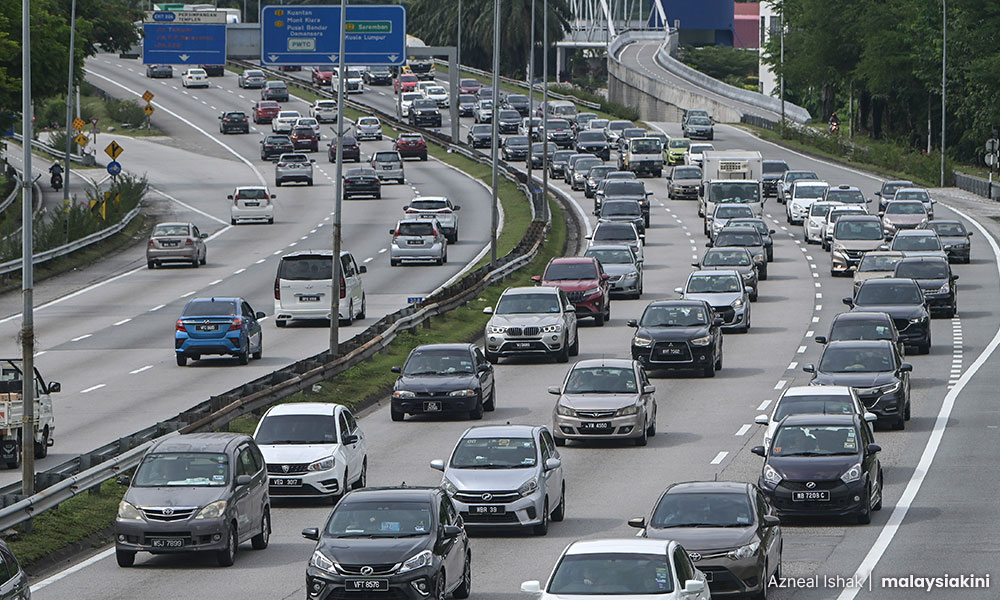
This resulted in piecemeal projects with poor integration, which had to be rectified through expensive retrofitting and through what else but horrendously expensive MRTs and new LRTs during Najib Abdul Razak’s time as prime minister in the 2010s.
Poor public transport
Although Najib was forced to exit in 2018, new lines continued to be constructed, and even God does not seem to know when they will be completed. Meanwhile, the roads are getting increasingly congested and clogged with no relief in sight.
During rush hour, it might take as much as three to four hours to get to Kuala Lumpur and back to my home in Setia Alam, Klang, mostly via the North Klang Valley Expressway or NKVE, some 55 years after the nightmarish Sentul to Pantai rides.
So despite all the money we have spent, there is no connectivity to key areas in the city and back for most of our commuters because, unlike the system in Singapore (excuse the comparison, I know it bites), which connects the island nation nearly seamlessly.
Our similarly expensive projects have not had the same results, and we all have to bear with a massively inefficient transport system, considerable personal expenses on maintaining cars, tolls, fuel costs, and the incalculable cost of invaluable time wasted travelling.
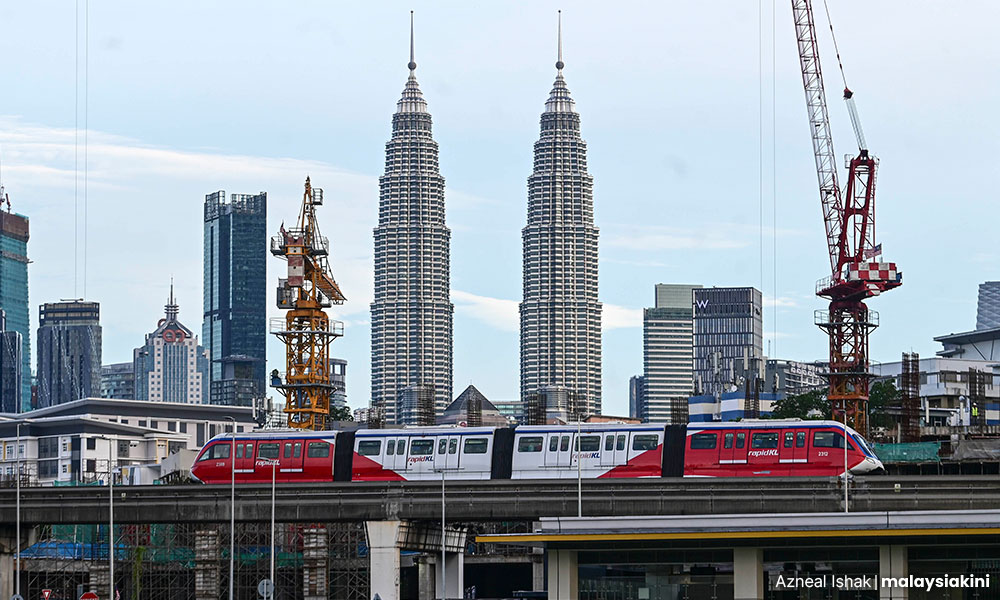
Well, that’s a short exposition of the troubled transport woes facing us every morning and evening today. The more astute among us, and those who had to go to work physically then, would have noticed something during the Covid-19 pandemic.
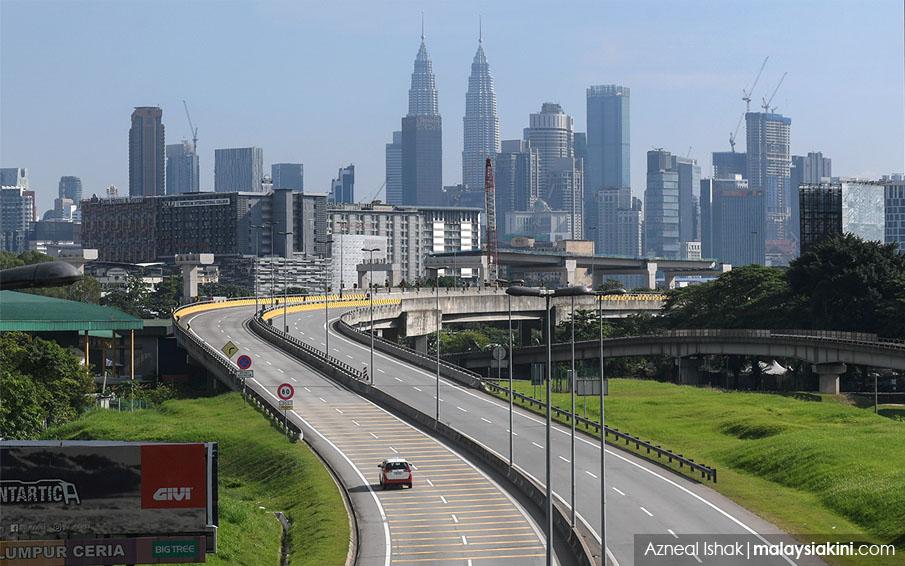
There were no traffic jams, the road being as clear as blue skies on a cloudless day, because almost the entire workforce was working from home - they were forced to. The impact on productivity, I trust, was not as bad as all that.
Let’s think out of that proverbial box again by using our minds for solutions. What struck me during my recent travail-free travels was that there were surprisingly no jams over the last few days.
A trip to the outskirts of KL took me slightly more than half an hour in rush-hour traffic, instead of the usual up to an-hour-and-a-half to two, fuming in standstill traffic in many places before getting to my final destination.
But why was this? Because Anwar Ibrahim’s brilliant Madani government (alright, I’m using journalistic and literary licence here, and therefore some satire) announced road closures because of the recent three-day Asean Summit. But amazingly, there were neither road closures nor traffic jams.
Work from home
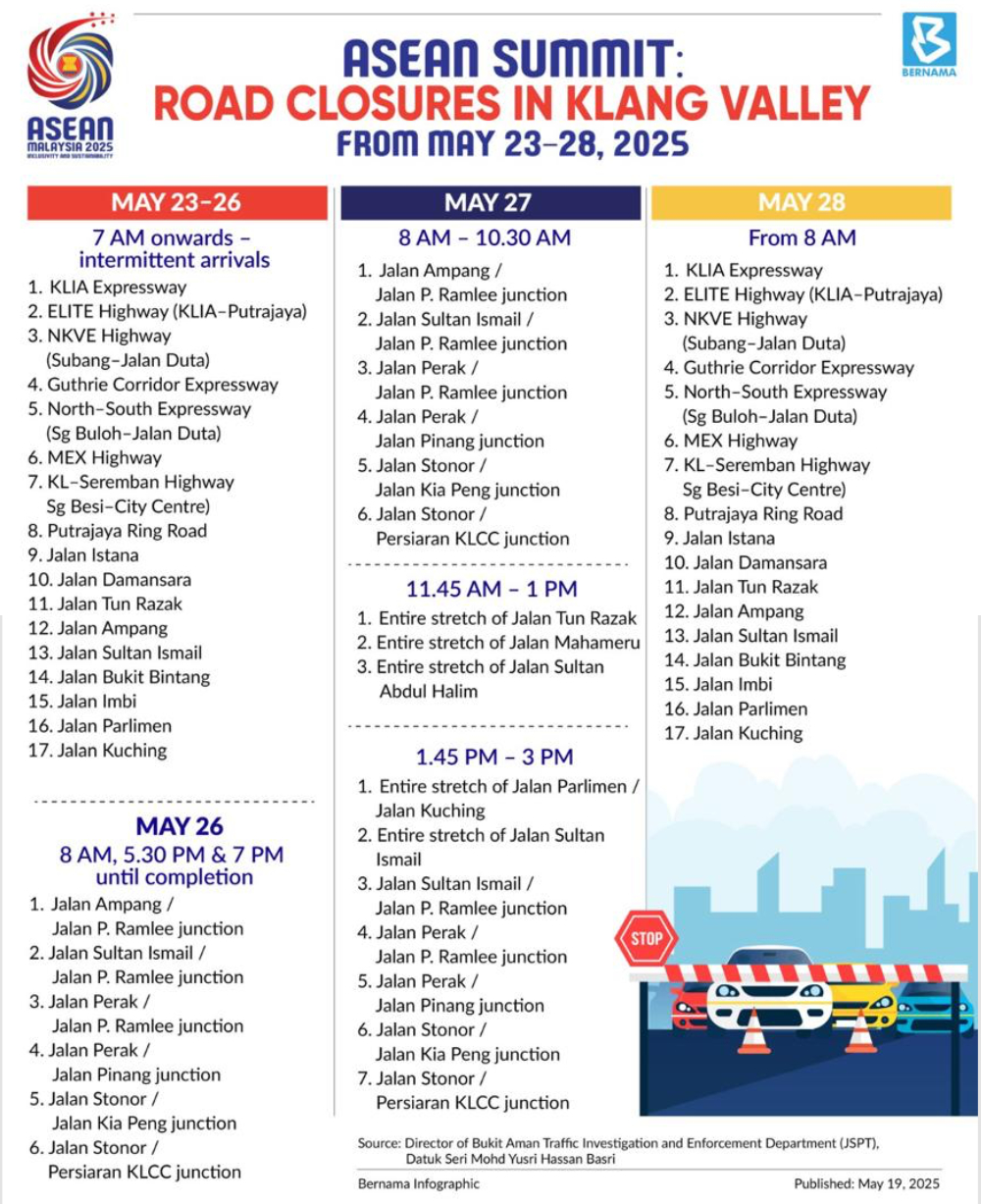
How come? Look at the road closures in the chart. If you are a KL resident, you will know that these are extensive closures for all of those days. I was on some of these roads in a vehicle on both May 26 and 27. Road conditions on both days were normal at the peak hours!
There is only one explanation for that. Many people working in the city were given permission to work from home on those days, with the threat of road closures considerably reducing the number of cars and bikes on the roads.
So here’s my solution, not a brilliant one but one that is eminently workable, and which I am sure many of you harried commuters have thought about countless times before in one form or another and have wanted to tear your hair out in frustration that the government does not implement this nearly costless measure.
Simply require all employees to work from home two days a week. By that I mean anyone who can work from home, and it excludes people like machine operators, doctors, and essential staff who need to be at their workplace to work.
Oh yes, employers will moan - don’t they always anyway? But if they are smart enough, they will get a commitment from their employees to do a reasonable amount of work, which can be measured and monitored.
Do secretaries have to make coffee for their bosses, or can’t they type documents from anywhere? Can’t journalists write their stories from anywhere? Can’t accounts be balanced at home? Can’t people meet online? Can’t most online meetings replace physical ones?
If we think about it, most work can be done at home. So, let it be so. Let departments choose how they want to do it. Covid-19 and the recent Asean Summit show beyond a shadow of a doubt that it can be done.
At least we will have one positive outcome from Asean 2025, otherwise bereft so far of anything substantive, and thank it for finally solving our traffic woes in Kuala Lumpur.
P GUNASEGARAM says cheap, simple solutions are often much better than complex, expensive ones.
The views expressed here are those of the author/contributor and do not necessarily represent the views of Malaysiakini.
/file/publisher-c1a3f893382d2b2f8a9aa22a654d9c97/2022/05/e8ab34e83940bd0e0165b6af4c5cdf63.jpg)
/file/publisher-c1a3f893382d2b2f8a9aa22a654d9c97/2025/02/a9c0856153e4adf4af5c9b44cd23b9fa.jpg)
/file/publisher-c1a3f893382d2b2f8a9aa22a654d9c97/2024/10/5e5500b9ba6458b35003b58fb6fd6e9e.jpg)
/file/publisher-c1a3f893382d2b2f8a9aa22a654d9c97/2022/07/30caaeb567aaebc3faacec5d4063f8d9.jpg)
/file/publisher-c1a3f893382d2b2f8a9aa22a654d9c97/2024/12/b3422f5e85c5a6d5de0c8250225fef38.jpg)


Are you sure you want to delete this comment?
This action cannot be undone.