


/file/publisher-c1a3f893382d2b2f8a9aa22a654d9c97/2020/10/2bda679309c88e264ef963588bbe46d2.jpg)

COMMENT | Rule of law and the struggle for judicial independence
“The rule of law means literally what it says: the rule of the law. Taken in its broadest sense, this means that people should obey the law and be ruled by it.
“But in political and legal theory, it has come to be read in a narrow sense that the government shall be ruled by the law and be subject to it. The ideal of the rule of law in this sense is often expressed by the phrase ‘government by law and not by men’.
“Let me mention the independence of the judiciary very briefly, lest we forget its significance. The existence of courts and judges in every ordered society proves nothing: it is their quality, their independence, and their powers which matter…
“The rules concerning the independence of the judiciary are designed to guarantee that they will be free from extraneous pressures and independent of all authority save that of the law. They are, therefore, essential for the preservation of the rule of law.” - Sultan Azlan Shah, 1984.
COMMENT | In August 1957, the Federation of Malaya became an independent nation, comprising 11 states.
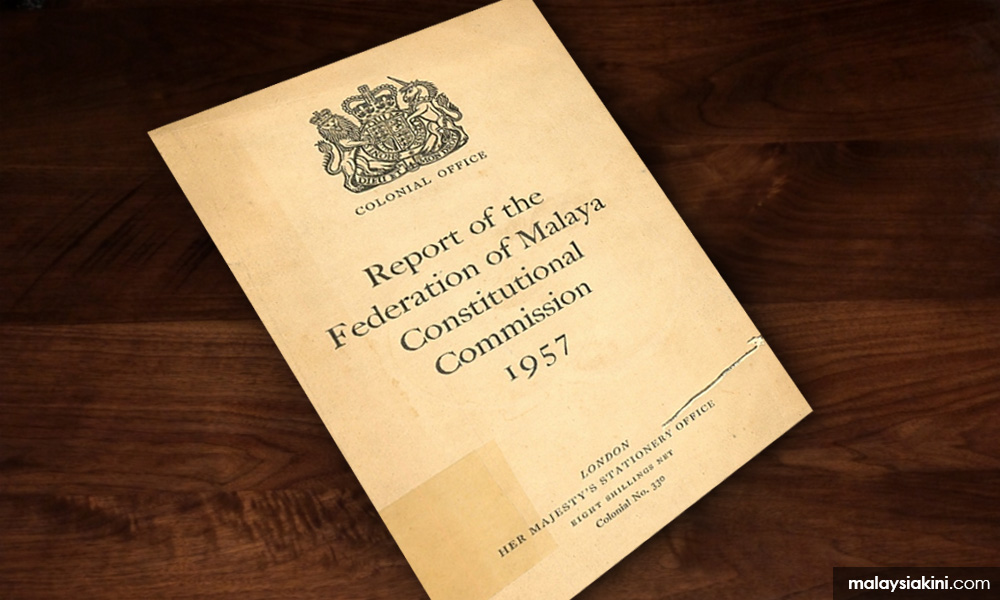
Its foundational document was a written Constitution, meticulously drafted by the Reid Commission and agreed upon by the British government, the nine hereditary rulers, and leaders representing the major ethnic groups in the country.
“The rule of law means literally what it says: the rule of the law. Taken in its broadest sense, this means that people should obey the law and be ruled by it.
“But in political and legal theory, it has come to be read in a narrow sense that the government shall be ruled by the law and be subject to it. The ideal of the rule of law in this sense is often expressed by the phrase ‘government by law and not by men’.
“Let me mention the independence of the judiciary very briefly, lest we forget its significance. The existence of courts and judges in every ordered society proves nothing: it is their quality, their independence, and their powers which matter…
“The rules concerning the independence of the judiciary are designed to guarantee that they will be free from extraneous pressures and independent of all authority save that of the law. They are, therefore, essential for the preservation of the rule of law.” - Sultan Azlan Shah, 1984.
COMMENT | In August 1957, the Federation of Malaya became an independent nation, comprising 11 states.
Its foundational document was a written Constitution, meticulously drafted by the Reid Commission and agreed upon by the British government, the nine hereditary rulers, and leaders representing the major ethnic groups in the country.
The Reid Commission was tasked not only with crafting the Constitution but also with ensuring safeguards for a multi-ethnic, multi-religious society, drawing heavily from diverse constitutional traditions.
In 1963, Singapore, Sabah, and Sarawak joined Malaya to form Malaysia, following a referendum and the recommendations of the Cobbold Commission.
Singapore, however, left Malaysia in 1965. The States of Sabah and Sarawak secured their unique position through the Malaysia Agreement 1963.
The Constitution was declared the Supreme Law of the Federation under Article 4(1). It established Malaysia as a constitutional monarchy with democratic institutions.
Embedded within the Constitution is the doctrine of separation of powers, ensuring that the executive, legislature, and judiciary are separate branches intended to act as checks and balances on one another.
Malaysia was intended to be a nation governed by the rule of law, with all laws subject to the limitations and safeguards enshrined in the Constitution.
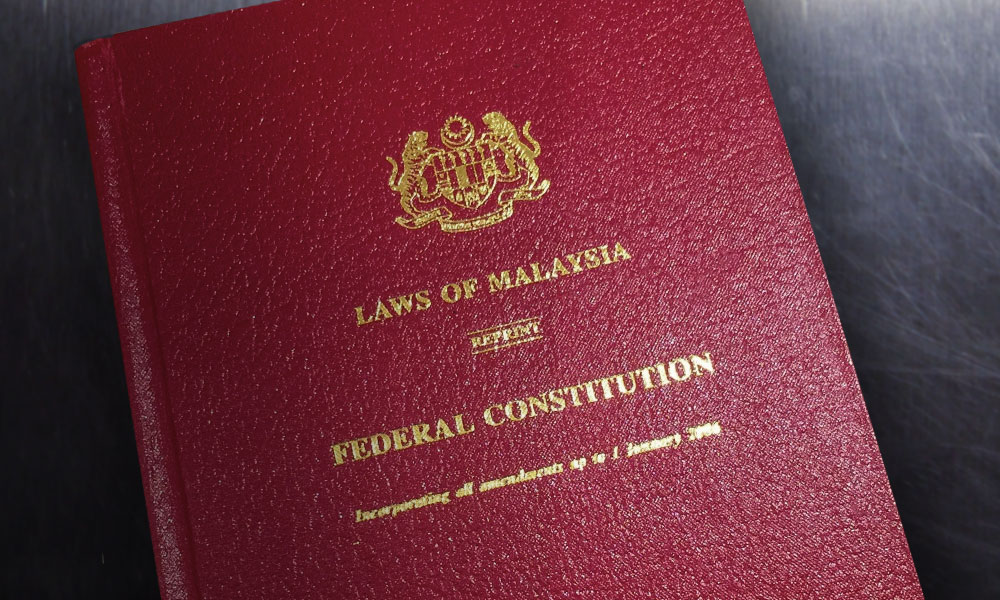
The Constitution clearly defines the rights and powers of the state, the position and authority of the Malay rulers, and the rights, responsibilities, and freedoms of all citizens.
Transition to democracy
This was a monumental step for the country. From a system of hereditary rulers wielding absolute power, through a period as British colonies and protectorates, with democracy finally arriving in Malaya in 1957, and transitioning to Malaysia in 1963.
The rule of law, anchored in a written Constitution, was both new and exciting for the people of Malaysia.
Hereditary rulers wisely and graciously accepted limitations to their authority. The transition was not always smooth. Elected governments accepted their constitutional limitations.
The rulers continued to command the loyalty and obedience of their subjects. They retained certain constitutional powers and remained the heads of the Islamic faith in their respective states.
Collectively, they formed the Conference of Rulers, from whose ranks one would be chosen to serve as the Yang di-Pertuan Agong - the king - for a five-year term.

Since independence, Malaysia’s government has been formed by coalitions of political parties representing the major ethnic groups and the states of the federation.
Adjusting to constitutional limitations and accepting the independent interpretation of the Constitution and laws by the judiciary has not always been easy for those in power. Sometimes there was resistance or challenge.
Early respect for institutions
Malaysia’s first two prime ministers were lawyers trained in England. Both respected the law and upheld Malaysia’s democratic institutions.
However, the political landscape changed significantly during the premiership of Dr Mahathir Mohamad, who led the country for 22 years.
1988 assault on the judiciary
Mahathir was openly cynical about the effectiveness of Parliament and critical of the role of judges as independent arbiters of the law.
In 1988, he set in motion a series of events that severely undermined the judiciary and traumatised the nation.

Among the most significant developments was the amendment to Article 121(1) of the Constitution, which altered the basis of judicial power.
The courts would no longer derive their authority from the Constitution itself but would exercise only such powers as Parliament chose to confer upon them. The clear intention was to subordinate the judiciary to Parliament.
Some judges accepted this new limitation on judicial authority.
The crisis deepened when the then Lord President, Salleh Abas, acting on behalf of all the judges, lodged a formal complaint to the king regarding Mahathir’s sustained attacks on the judiciary.
The outcome was unprecedented. Salleh was dismissed, along with two other Federal Court judges who had sought to intervene to delay proceedings against Salleh.
Restoring judicial independence
Over the next three decades, the judiciary struggled to restore and reassert its status, dignity, and authority as an independent branch of government.
During the tenure of former prime minister Abdullah Ahmad Badawi, efforts were made to rehabilitate the dismissed and suspended judges. They, or their families, were paid compensation in recognition of the injustice suffered.

In recent years, the Federal Court has issued a series of landmark decisions reaffirming that the core powers of the judiciary cannot be stripped away by legislative amendments.
Basic structure doctrine and present situation
The current Chief Justice, Tengku Maimun Tuan Mat, has been a steadfast proponent of the basic structure doctrine.
This legal principle asserts that the essential features of the Constitution - such as the separation of powers, judicial independence, and fundamental rights - cannot be amended or abolished, even by Parliament.
The Constitution, as she maintains, cannot be used to destroy itself or any of its fundamental pillars.
Today, a new constitutional issue has arisen. There is growing controversy over the refusal or delay to grant six-month extensions to Tengku Maimun and two other senior judges.

This lends itself to unhealthy speculation. Why should a typically granted six-month extension be withheld?
Behind this immediate controversy lies a deeper issue - the question of judicial succession and the future independence of the courts.
Despite Malaysia’s relatively short tenure as a democratic nation adhering to the rule of law, the country and its people have accepted the legal system as an integral part of its modus operandi.
It connected itself to the common law of England, immediately gaining the benefit of centuries of judicial jurisprudence and accumulated wisdom, and in so doing, joined the global community of common law nations where justice, the rule of law, and an independent judiciary are cornerstones of their civilisations.
Like the United Kingdom, India, and other common law nations, Malaysia’s judiciary serves as the guardian of constitutional limits on governmental power.

We have accepted the supremacy of our Constitution. It is the grundnorm - the foundational document on which our democratic system has been built.
All laws must conform to the principles set forth in the Constitution. Independent judges are there to ensure compliance.
Way forward
The words of our Constitution and laws must be interpreted by honest, independent judges. It is not enough to have noble and sometimes aspirational words in our Constitution.
We need courageous men and women, learned in the law and experienced in the complexities of society, to give life and meaning to the law.
Each judge takes a solemn oath to uphold the Constitution. They must, in both head and heart, be equal to this sacred task.
Our history has offered painful lessons. It is vital that we learn from them and ensure that the principles of constitutional democracy, the separation of powers, and the rule of law remain firmly intact.
The issue is not the six-month extension. The question is: why the hesitation?
DAVID DASS is a lawyer, Malaysiakini subscriber and commentator.
The views expressed here are those of the author/contributor and do not necessarily represent the views of Malaysiakini.
/file/publisher-c1a3f893382d2b2f8a9aa22a654d9c97/2025/06/d6200ce96532cc44845d09a815015251.jpg)
/file/publisher-c1a3f893382d2b2f8a9aa22a654d9c97/2019/11/f9023d9fbcb61a3c740c6e5fdba171ab.jpg)
/file/publisher-c1a3f893382d2b2f8a9aa22a654d9c97/2025/05/7aa0b32f5455bc92249d5fa45b7570d9.jpg)
/file/publisher-c1a3f893382d2b2f8a9aa22a654d9c97/2025/06/08a9c3fee7d699e5ffa4d23844181a2a.jpg)
/file/publisher-c1a3f893382d2b2f8a9aa22a654d9c97/2024/04/32507b11bb35570f2b4c238b4d23cad9.jpg)
/file/publisher-c1a3f893382d2b2f8a9aa22a654d9c97/2025/06/8578093e548c65471f226ad752512702.jpg)


Report this comment
Are you sure you want to delete this comment?
This action cannot be undone.