


/file/publisher-c1a3f893382d2b2f8a9aa22a654d9c97/2023/11/af1bf482596ac329631b8ad2d50fd4bc.jpg)

COMMENT | Chai's road from reformasi to reckoning
COMMENT | There was a time when Malaysian students abroad could fill a room simply by talking about their country.
Among them was James Chai, then a student activist in Britain, deeply involved in the networks that championed reformasi. Not with slogans or perks, but with conviction that Malaysia could be different.
They debated injustice, held talks, and organised quietly in cafes, halls and homes, across London, even while warnings sometimes came from officials at home.
For Chai and many like him, the hope was moral: that by speaking openly and returning when the moment arrived, they could help rebuild a nation.
Today, that same hope has...
COMMENT | There was a time when Malaysian students abroad could fill a room simply by talking about their country.
Among them was James Chai, then a student activist in Britain, deeply involved in the networks that championed reformasi. Not with slogans or perks, but with conviction that Malaysia could be different.
They debated injustice, held talks, and organised quietly in cafes, halls and homes, across London, even while warnings sometimes came from officials at home.
For Chai and many like him, the hope was moral: that by speaking openly and returning when the moment arrived, they could help rebuild a nation.
Today, that same hope has collided with the machinery it once sought to reform.
Political talks by the then opposition, the parties that would later form the government, were regularly organised to expose wrongdoing and keep Malaysians abroad informed.
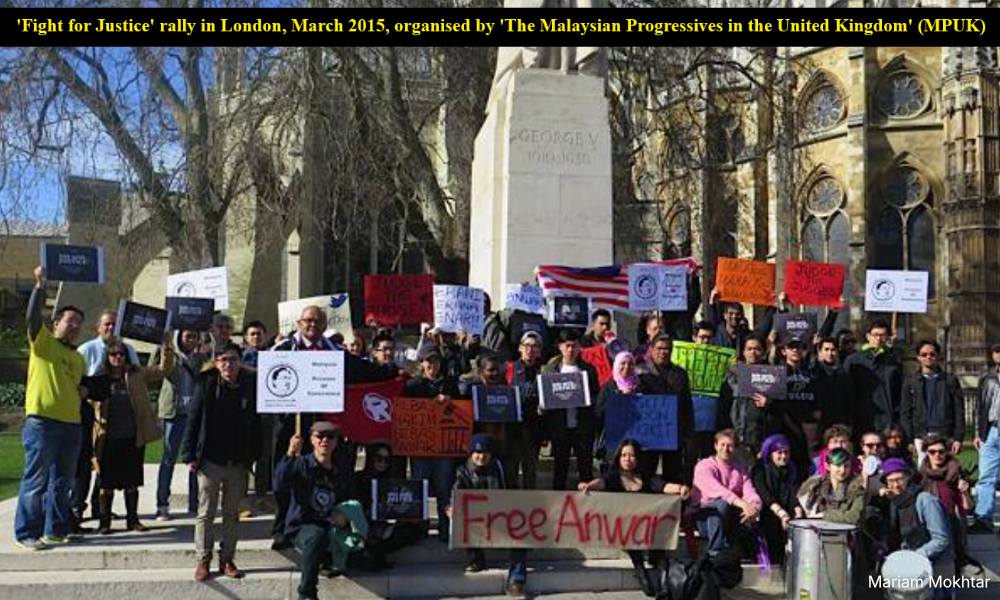
However, Malaysian organisers often believed attendance had to be encouraged with food. Nasi lemak, curry puffs, and other dishes appeared at talks, sometimes sold cheaply, sometimes offered freely.
It was hospitality, perhaps a way to recreate home, but it also revealed a style of leadership reliant on inducement rather than persuasion.
In sharp contrast, in Britain, student political meetings rarely require such incentives. People attend because the argument itself is compelling.
Quiet caution
Among Malaysian students, a quiet culture of caution existed. Some attendees were thought to be government observers or informants. Photographs were sometimes taken.
Some students allegedly received warning letters from the Malaysian education attaché or scholarship bodies, reminding them that participation in political activities could jeopardise funding or result in termination of studies.
Some students attended anyway. Incidentally, this culture of fear continues today.
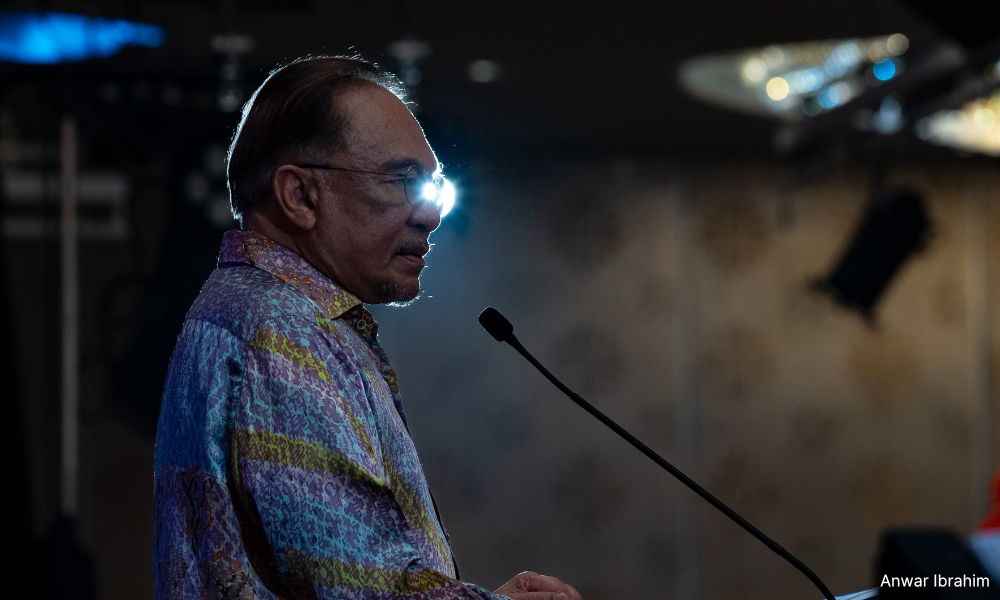
I recall meeting Chai during that period, when he was a student activist in England. Like many of his generation, he was passionate about reformasi and the belief that Malaysia could be something better than it had been.
He followed Anwar Ibrahim’s struggles closely and had been inspired by Anwar’s courage and attention to the disenfranchised. Chai and his friends in London braved rain and intimidation to protest injustice, not for reward, but for ideals of fairness and hope.
Different national conversation
Years later, Chai would find himself at the centre of a different national conversation.
The former aide to ex-economy minister Rafizi Ramli is under MACC investigation in connection with a RM1.1 billion collaboration involving British semiconductor company Arm Holdings.
The MACC states Chai is being sought to assist investigations related to the deal.
Chai has disputed the public notice and press coverage. He argues authorities made little effort to contact him privately before issuing the notice and giving the impression he was a fugitive.
The MACC, however, maintains they attempted to contact him via WhatsApp starting Feb 24 but received no response; the number was later blocked.
They stress that such notices do not imply guilt and are routine for any citizen’s cooperation.

At this stage, the facts remain contested. Chai insists he acted in good faith, while the authorities maintain their actions were lawful.
The public response, however, points to something broader than a single case.
Disillusioned
For many Malaysians who once invested hope in political reform, Chai's story resonates because it touches on a sense of disillusionment.
The generation that came of age during reformasi believed politics could move beyond patronage, factional rivalry, and the weaponisation of institutions.
Some idealists returned to serve in government, civil society, or the private sector. Others discovered how difficult change could be. Many quietly built lives elsewhere, closing the door behind them.
The most telling voices are often those who could have benefited from the system. Many Malay Muslims, who are more likely to face fewer barriers in education, employment, and public life, spoke of reluctance to return.
They did not say this with anger, but quiet resignation, observing a system they did not wish to navigate. These were individuals who could have prospered comfortably, yet chose distance over accommodation.
None of this means Malaysia lacks talent. The country continues to produce remarkable individuals who remain attached to its future. But the loss of idealism is harder to measure than the loss of people.
People can leave, but ideals leaving is irreversible and corrosive. Loss of idealism is invisible, harder to quantify, but arguably more damaging.
When young, bright, committed people stop believing that the system can change, the country loses the moral and civic energy needed to push for reform.
When idealism starts to fade
Chai’s case will ultimately be decided through investigation and evidence. The authorities have their account; Chai has offered his own. It is not the task of a writer to decide here.
What his story reveals is how fragile political idealism can be when it encounters the machinery of power.
For the generation that once believed reformasi could reshape politics, the question is not simply who is right or wrong. It is whether the ideals that animated those struggles still have a place in the country’s life.
Nations rarely notice the moment when idealism begins to fade. Yet over time, those moments shape a country’s future as surely as any policy or election.
MARIAM MOKHTAR is a defender of the truth, the admiral-general of the Green Bean Army, and the president of the Perak Liberation Organisation (PLO). Blog, X.
The views expressed here are those of the author/contributor and do not necessarily represent the views of Malaysiakini.
/file/publisher-c1a3f893382d2b2f8a9aa22a654d9c97/2026/03/2a173f43d9759742ab1714ac55cd7433.jpg)
/file/publisher-c1a3f893382d2b2f8a9aa22a654d9c97/2026/03/f8672d19fd71ad1993ca737603917ee6.jpg)
/file/publisher-c1a3f893382d2b2f8a9aa22a654d9c97/2025/05/99574b062444a20b53ee1c47c6a8990a.jpg)
/file/publisher-c1a3f893382d2b2f8a9aa22a654d9c97/2022/01/e3a4c0fd9cdd67354f64b4526048cdee.jpg)


Report this comment
Are you sure you want to delete this comment?
This action cannot be undone.