


/file/publisher-c1a3f893382d2b2f8a9aa22a654d9c97/2024/01/babf962673b4a9a85eb29161c041dae9.jpg)

MP SPEAKS | Turap must not become another private monopoly in worker recruitment
Editor's note: Malaysiakini has contacted Bestinet and is awaiting the company's reply to this joint statement.
MP SPEAKS | We are concerned by reports that the government is reviving the Universal Recruitment Advanced Platform, or Turap, despite serious unresolved governance issues surrounding the existing Foreign Workers Centralised Management System (FWCMS).
The cabinet members, including all ministers campaigning in the Johor by-election, must explain clearly: has the cabinet approved Turap, and if so, why is Bestinet Sdn Bhd once again being placed at the centre of the migrant worker recruitment ecosystem?
Turap is not merely a technical application. It concerns recruitment, employer matching, immigration processes, worker mobility, recruitment costs, labour rights and sensitive personal data.
Such a system cannot be decided behind closed doors or introduced as a fait accompli.
The stated objective of Turap is to bypass exploitative middlemen, match workers directly with employers and reduce excessive recruitment costs.
These are objectives that everyone should support. But a digital platform alone does not guarantee reform.
Without transparency, enforcement and accountability, we may digitise the same old exploitation in a more concentrated way.
The public should not forget the serious concerns raised about FWCMS. A Public Accounts Committee report found that FWCMS had operated for more than six years without a formal contract between the government and Bestinet.
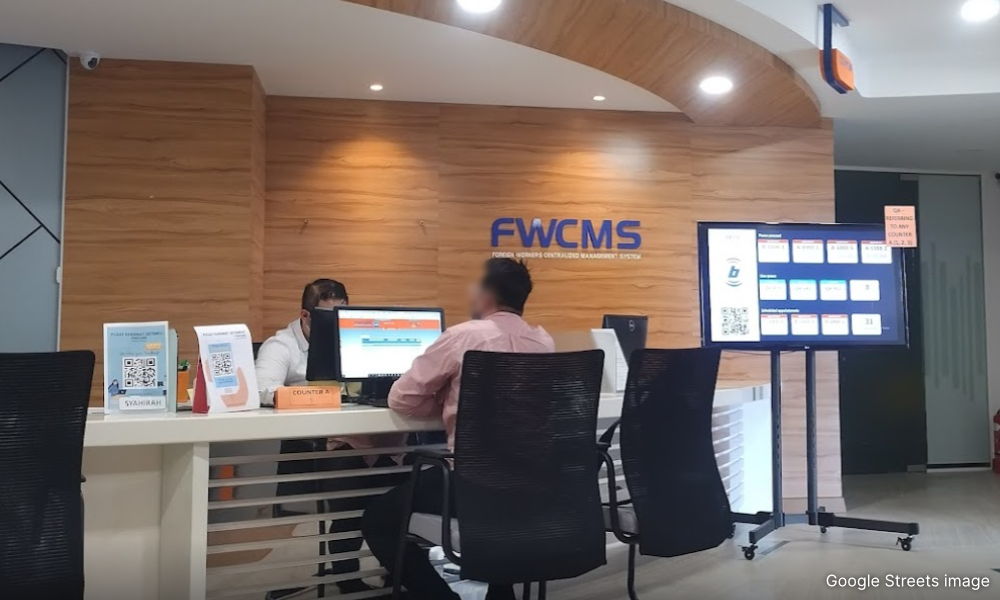
It also highlighted control weaknesses, including super administrator IDs not held by government officers and unauthorised users approving employer applications.
The Auditor-General’s 2022 report classified the overall management of FWCMS as unsatisfactory.
READ MORE: ILO statement doesn't diminish global recognition of migrant worker system - Bestinet
Despite these concerns, the government subsequently formalised an agreement with Bestinet from June 2024 until January 2031 at RM215 per worker, compared with the earlier RM100 rate.
The public deserves to know why Malaysia is now considering giving the same company another major platform in the migrant worker recruitment chain.
Direct negotiation?
There is also a fundamental procurement question: was Turap proposed through direct negotiation with Bestinet? If yes, why was this allowed?
A nationwide platform involving millions of migrant workers, highly sensitive data and potentially substantial long-term revenue should be subjected to an open tender or transparent request-for-proposal process. It cannot be justified merely because Bestinet already operates FWCMS.
In fact, the concern is precisely that Turap may further entrench a single private company across the migrant worker ecosystem - from recruitment in source countries, to employer matching, entry approvals, permits, renewals and worker data.
READ MORE: Bestinet defends migrant worker system track record, says Turap will complement it
Reports have indicated that Bestinet’s proposal could involve a 12-year contract, with charges of up to US$1,000, or approximately RM3,950, per migrant-worker application, in addition to a fee equivalent to one month’s salary per worker.
Even if these terms remain under discussion, they raise very serious questions about affordability, value for money and whether a supposedly worker-friendly reform may end up creating another lucrative long-term concession.
Public-private partnership status
The government must clarify whether Turap is being packaged as a public-private partnership under the Public-Private Partnership Unit. A PPP label must not become a backdoor to avoid open competition or public scrutiny.
If Turap is indeed a PPP project, the government must disclose the concession period, payment and revenue model, risk-sharing arrangement, data ownership, exit clauses, feasibility study and value-for-money assessment.
It must also explain whether the Public-Private Partnership Unit carried out market sounding and considered alternatives, including a government-owned platform or an open tender involving qualified Malaysian technology companies.
We therefore call on the government to answer the following questions:
1. Has Turap been approved by cabinet, either in principle or formally?
2. Was Turap proposed or awarded through direct negotiation with Bestinet?
3. Is Turap being structured as a PPP under the Public-Private Partnership Unit, and if so, what is the justification for not conducting an open tender?
4. What are the proposed commercial terms, including the concession period, fees per worker, projected revenue and risk-sharing arrangement?
5. What safeguards will ensure that workers do not continue paying illegal or excessive recruitment fees through overseas intermediaries?
6. How will the government prevent direct recruitment from pushing recruitment activities underground, especially in source countries?
7. Why is another system needed when FWCMS already exists and NIISe is being developed?
8. Who will own and control the sensitive data of migrant workers and employers?
Do it right
Malaysia does need genuine reform in migrant worker recruitment. We must eliminate excessive fees, debt bondage, exploitative agents and the unacceptable cases where workers arrive only to discover that the promised employment is not available.
But reform must not mean replacing many middlemen with one powerful private monopoly.
We urge the government to pause any implementation of Turap until Parliament and the public receive full disclosure.
The procurement process, PPP structure, if any, relationship with FWCMS and the National Integrated Immigration System (NIISe), cost structure, data governance framework and worker-protection safeguards must all be made public.
Malaysia does not need another black box in migrant worker recruitment. We need a transparent, competitive, government-accountable and worker-centred system that genuinely breaks the cycle of exploitation.
LEE CHEAN CHUNG is Petaling Jaya MP.
WONG CHEN is Subang MP.
ZAHIR HASSAN is Wangsa Maju MP.
BAKHTIAR WAN CHIK is Balik Pulau MP
RODZIAH ISMAIL is Ampang MP.
S KESAVAN is Sungai Siput MP.
TAN KAR HING is Gopeng MP.
The views expressed here are those of the author/contributor and do not necessarily represent the views of Malaysiakini.
/file/publisher-c1a3f893382d2b2f8a9aa22a654d9c97/2023/08/795854a8305ae50102db4b0f1c626c15.jpg)
/file/publisher-c1a3f893382d2b2f8a9aa22a654d9c97/2024/07/c7290b3ca5d12385e7fe2484ca39bce0.jpg)
/file/publisher-c1a3f893382d2b2f8a9aa22a654d9c97/2024/07/e09f95a217fdeb89bf0067dcf01d166f.jpg)
/file/publisher-c1a3f893382d2b2f8a9aa22a654d9c97/2026/04/4ecb4bebc4de397d5fb9f50a4c28b6fe.jpg)
/file/publisher-c1a3f893382d2b2f8a9aa22a654d9c97/2022/03/cc13381571329d552c7763b64aa72c09.jpg)


Report this comment
Are you sure you want to delete this comment?
This action cannot be undone.