




Integrated mass transit system the answer
The news that our prime Minister acknowledges the deteriorating state of KTM Komuter and RapidKL LRTs proves that there is still a glimmer of hope for improvements in the transport system.
 No ministry official have ever cared to
turun padang
during rush hour to discover our mass transit woes, the PM visit could not have been any more timely. I’d recommend the same for other leaders, in the fashion of the great leader, Caliph Umar. My addendum for the PM is to ask him to try the RapidKL buses.
No ministry official have ever cared to
turun padang
during rush hour to discover our mass transit woes, the PM visit could not have been any more timely. I’d recommend the same for other leaders, in the fashion of the great leader, Caliph Umar. My addendum for the PM is to ask him to try the RapidKL buses.
We need to understand the role of a mass transit, factor in the various stakeholders, and only then provide suggestions. Knee-jerk reactions such as the retraction of RapidKL’s subsidy shows an erroneous understanding of the system.
The news that our prime minister acknowledges the deteriorating state of KTM Komuter and RapidKL LRTs proves that there is still a glimmer of hope for improvements in the public transport system.
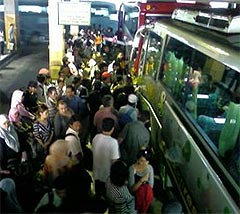 No ministry official has ever cared to
turun padang
during rush hour to discover our mass transit woes, the PM visit could not have been any more timely. I’d recommend the same for other leaders, in the fashion of the great leader, Caliph Umar. My addendum for the PM is to ask him to try the RapidKL buses.
No ministry official has ever cared to
turun padang
during rush hour to discover our mass transit woes, the PM visit could not have been any more timely. I’d recommend the same for other leaders, in the fashion of the great leader, Caliph Umar. My addendum for the PM is to ask him to try the RapidKL buses.
We need to understand the role of a mass transit, factor in the various stakeholders, and only then provide suggestions. Knee-jerk reactions such as the retraction of RapidKL’s subsidy shows an erroneous understanding of the system.
We share many things daily; the streets, boulevards, street lamps, trash collection, fire and police services - through our pooled tax contributions. All tenants in high rise apartment collectively care for lifts, as they benefit all.
Mass transit is extension of that ideal. If everyone is bent on getting to points on their own terms only, there will be no incentive for a mass transit. We drive our private cars as we can afford it, and that creates widespread urban sprawling, costly public road infrastructure build-ups and patching and massive traffic jams. The collective productivity is lost and it backfires on our individualistic pursuit for a more urbane lifestyle.
Time to share
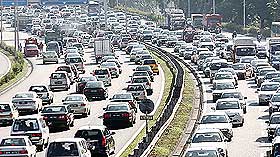 Every single additional road space taken by a new road user will eat out another user's space. It is a no-nonsense zero-sum game. If we can pool our resources together to build sidewalks, streetlamps and city streets, why it is hard for us to get the same allocation to build an integrated mass transit system that can utilise the shared sidewalks, streetlamps and city streets more efficiently?
We don't have to worry about beating each other for the scarce road space we’ve got.
Public transport operators bear construction, system and operations cost and their failure is indicative of our own failure to share.
Individual efforts to negotiate traffic causes air/sound pollution, loss of productivity and possible fatalities. It can appear that commuters are subsidising society by enduring the scarcity problem on the road caused by private vehicle users - the traffic jam.
If we think mass transit thrives in the presence of competition without governmental interference, then remember the single biggest competitor to mass transit is private transport (cars, MPVs, SUVs, motorbikes, trucks etc). Private transport monopolises most of the government-funded infrastructure that mass transit relies on.
Other supports processes - enforcement, licensing, rationalisation, fare system, feedback management and public information - operate distinctly under separate agencies with apparent overlaps. The Economic Planning Unit, Transport Ministry, Commercial Vehicle Licensing Board, Road Transport Department, police, Works Department etc are all working silos. Without coordination - there is an accountability problem, and operators in order to survive, cut corners.
The cost borne by the operators and its users are disproportionate to the scarce roads utilitised by private vehicles - whom don’t incur the full cost to society: infrastructure, wear and tear, pollution, congestion, accidents and productivity loss.
That is why revenue is only a third of the operating budget of transit system operators in the first world. The remainder is covered by taxes. Research in the United States shows that every dollar invested in public transportation generates four to nine dollars in local economic activity.
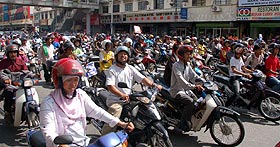 Without funding, current operators cannot lure people from just buying a motorcycle.
The Malaysian Institute of Road Safety Research has anticipated higher road deaths from the rapid influx of motorcyclists on the road - a response to the higher petrol prices.
Spend on buses
It is imperative for the government to up spending on transit through the full incorporation of bus services as part of the upcoming 2009 Budget.
Riding a transit bus is 79 times safer than riding a car, let alone riding a motorcycle.
Scarce space is passed onto private firms to become highway concessionaires for those who can ill-afford the toll fees and forcing them to more time draining and congested space competition on non-tolled roads.
Tolled expressways zigzag across dense suburban populations, dividing neighboring communities and complicating the already complex traveling routes outside of the limited access highway system. This hampers efforts to create a fast, efficient and effective mass transit system for all of us.
If the government can be so generous in allowing more expensive roads and highways to be built to increase societal benefits of connectivity, why can’t it use a portion
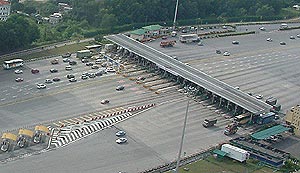 of its pooled resources to support an economical yet integrated mass transit system, which include all modes of transport including buses, high speed trains, electronic moving units, monorails and light rail transits, to prevent higher societal costs of congestion?
To illustrate, 30 buses are more than capable to relieve the maximum amount of free flow traffic that the million ringgit Akleh(Ampang-KL Elevated Highway) can sustain at any one time. With combined ‘park-n-ride’ capacity of 10,000, the parking bays in Shah Alam and Bukit Jalil Stadiums can render all three Kesas, NKVE and Elite expressways private vehicles free. This is possible provided there is an exclusive and potent transit authority to provide infrastructure and operational support at federal and state level.
Ten thousand is the maximum number of fast traveling cars which the Kesas, NKVE and ELITE expressways together can support at any given time - 780km of highway lanes with smooth 100kph traffic speed, considering the 100 feet (30m) safe traveling distance (using the three-second rule under good road conditions) between cars averaging 5m in length and 40kph in speed.
Akleh has 32km of individual traffic lanes, and one double-decker express bus can retire 60 cars.
LRT expansions will not cope with Klang Valley’s overall mass transit penetration and acceptance due to its limited coverage and slow inbound and outbound journeys with too many stops. Furthermore, the current limited lines in downtown areas can’t hold the additional capacity expected by the rail expansions.
Expressway Rap id Transit (ERT)
Since we have an excellent
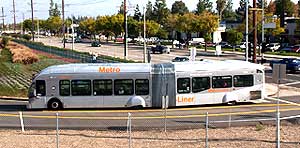 network of limited access free flow expressways around Klang Valley, we can virtually consider these expressways as expressway rapid transit (ERT) ‘tracks’ with ERT buses as ‘trains’.
Bus ‘stations’ can be built on top of these ‘tracks’ at identified strategic transit points with high suburban population, and bus terminals for suburban feeder bus services together with depots and car parks can be build inside the suburban area and next to the ERT points so that transit time can be cut short.
Three strategic Kuala Lumpur gateway points for expressway rapid transit buses can be created at KL Sentral/MidValley, Imbi and Sentul Timur with dedicated bus ramps to NKVE and NPE, KL-Putrajaya, and Duke expressways respectively. These gateway points should be conveniently linked to Ampang and Kelana Jaya LRT Lines, KL Monorail, and high frequency busway rapid transit with limited routes and dedicated lanes.
The Dang Wangi LRT Station can be the main gateway point that caters for ERT from Ampang as it sits strategically at the end point of the Akleh. To fill up demand during rush hours, express bus operators should be allowed to bid for periodical contracts to serve as ERT buses.
In a nutshell, all stakeholders of mass transit must take into consideration of the following in their efforts to improve mass transit in the long term:
• Mass transit should not be seen as means of travel for those who can’t afford private
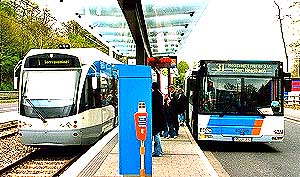 transport anymore as the entire population can no longer afford to neglect mass transit
• Investment (often times wrongfully implied as subsidy) in mass transit infrastructure, operations and systems to social, economic and environmental wellbeing has to be coordinated by transit authorities.
• Mass transit infrastructure needs proper support at the local level as the single biggest mean of accessing public transport is walking, and local council has all of the means to ensure accessibility and ease of mobility for all sections of the society, including the disabled, senior citizens, pregnant ladies and young children
• Instead of the zero-sum game the current private operators, public-funded companies (RapidKL and KTMB) and government agencies are playing with, there must be fair allocation of risks and responsibilities between operators and authorities, and non-discriminating distribution of tax revenue and fee income to adequately cover urban population’s transport needs
• The government must not abandon the principles of transparency, good governance and public participation in moving our mass transit forward.
Choosing to ignore the problem, will result in a more daunting challenge in the future.
We deserve our right to get around to where we want to be in a truly shared, caring manner. Enough of the wild goose chases. Effective, integrated rapid transit is the answer we must seek from our caretakers.
Hopefully the prime minister’s surprise visit is a positive sign that the government has the political will to put this country’s mass transit on the right track.
M ZULKARNAIN HAMZAH represents the Association for Improvement of Mass Transit (Transit) Klang Valley.


