




Anwar, a shot in the arm for Malaysian democracy
The opposition leader has already delivered results by incessantly pressing for reforms to the judiciary and Anti-Corruption Agency
Anwar Ibrahim has returned to parliament as opposition leader, 10 years after he was sacked as deputy prime minister and finance minister of Malaysia, deputy president of Umno and heir apparent to the ‘throne’ of Dr Mahathir Mohamad.
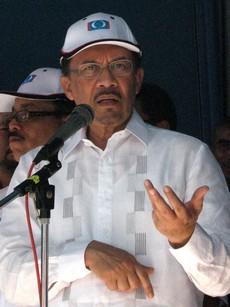
In many ways, the sacking of Anwar is probably the single most important event in the process of Malaysia maturing as a democracy. For once, Malaysians have 'a shared history' - a story or a myth that was needed to bring Malaysians together and something they could collectively fight for that was not based on social class, race or religion.
Prior to Anwar’s sacking, the common myth was May 13 - the race riots that were used repeatedly by the ruling Barisan Nasional, spearheaded by Umno, to blackmail Malaysians into submission. This myth was perpetuated by a very successful developmentist state.
Credit, no doubt must be given to Barisan Nasional (of which Anwar was part and parcel of for a good 14 years) for delivering on economic growth, peace and stability.
Malaysia's fortunes turned for the worse since the 1997/98 East Asian Financial Crisis which led to Anwar's sacking. While having recovered, actual economic growth has not matched any of the
 government's own projections and dwarfed in comparison to the likes of India, China and Vietnam. FDI, a key driver of economic growth, has been on a downtrend while corruption, the reverse.
Malaysians were relieved when Mahathir gave way to Abdullah Ahmad Badawi in the hope of improving Malaysia's fortunes. Prime Minister Abdullah, after having the strongest mandate ever for an
 incoming prime minister in 2004, managed to spectacularly erase all those gains within a span of four years.
Enter Anwar, a key factor in the reversal of fortunes of Umno, who discarded him10 years earlier. He successfully managed to bring together two long standing opposition parties - a social democratic party (DAP) and a theocratic Islamic party (PAS) with a strong theme of social and economic justice with his PKR (whose economic leanings are at best unclear, at worst - populist) to form an alternative grand coalition called Pakatan Rakyat.
The 12th Malaysian general election has been described as a political tsunami for the significant shift away from the ruling party. Anwar’s return to parliament follows on from the evident disgust that Malaysians have with the ruling party.
Vibrant democracy
What do Anwar and Pakatan bring to Malaysia?
The single biggest contribution evidently is the return to a more vibrant democracy. The election has seen a cleansing of the old guard (with dubious records) and those having survived it, being replaced.
The pressure that Anwar has put on the government has already delivered results. Several far reaching measures in restoring the independence of the judiciary, the Anti-Corruption Agency etc are now being put in place.
Furthermore, Pakatan is running four state governments along West Coast - the economic heartbeats of the nation. The reform measures they have put in place are now setting benchmarks in good governance.

At the same time, Anwar has been criticised for focusing on forming a new government through defections and sidelining his coalition members. More importantly, Anwar has been taken to task for not strengthening and/or institutionalising Pakatan Rakyat.
A shadow cabinet has yet to be formed and it is still unclear how policies from Pakatan are and will be formulated. Anwar would do well to remember the mistakes made by previous opposition leaders who relied on their personality and failed miserably rather than strengthening the institutional framework for the opposition parties to work together.
Needs-based affirmative plan
A bigger threat and one that the more sober commentators hope will diminish with Anwar's return to Parliament are select albeit limited populist measures that have been introduced by the Pakatan run state governments.
PAS’ manifesto for the general elections was ‘Th
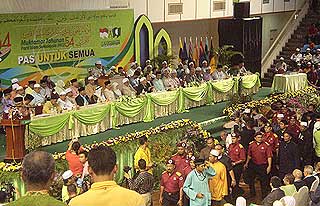 e Welfare State’ and Anwar has promised to continue expensive fuel subsidies if Pakatan forms the federal government. While it is understandable that these policies are being formulated to gain support from the people, it is hoped that these policies do not become a permanent solution.
For the international community - not much will change. Anwar believes on orthodox economics and will not bring much change in policy despite his current populist stance. What may be of interest is the emphasis on good governance and a move away from ethnic-based affirmative action through socio-economic policies to a more needs-based affirmative action.
International investors may also see further liberalisation in Malaysia should he come to power as PKR has indicated further economic reforms to keep Malaysia competitive.
It is heartening to see that democracy is alive and well in Malaysia. The people of Malaysia should be commended for taking a risk with this new coalition.
The ruling party should also take a bow - for having delivered on economic growth to now seeing its citizens make their own decisions in determining their future.
Barisan Nasional - probably the most successful entity to run a country (or maybe PAP of Singapore deserves that credit) - can be proud for not allowing Malaysia to descent into chaos ( a la Zimbabwe) after seeing its fortunes reversed.
GREG LOPEZ is a Malaysian studying at the Crawford School of Economics and Government at the Australian National University.


