




Why it is now or never
The Permatang Pauh by-election has rightly earned its reputation as Political Tsunami II.
It has not only confirmed that Political Tsunami I - the general election on March 8 – was not accidental, but has also established beyond doubt that Pakatan Rakyat will be a far superior political force than Barisan Nasional (BN) in moving Malaysia out of the quagmire of economic malaise and political shambles.
Contrary to the BN leaders’ cavalier reference to Permatang Pauh as “just another by-election”, it is in truth a battle royale between the two protagonists.
The Permatang Pauh by-election has rightly earned its reputation as Political Tsunami II.
It has not only confirmed that Political Tsunami I - the general election on March 8 – was not accidental, but has also established beyond doubt that Pakatan Rakyat will be a far superior political force than Barisan Nasional (BN) in moving Malaysia out of the quagmire of economic malaise and political shambles.
Contrary to the BN leaders’ cavalier reference to Permatang Pauh as “just another by-election”, it is in truth a battle royale between the two protagonists.
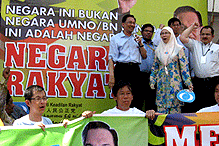 It resulted in a drubbing for BN that some rightly nicknamed a ‘Waterloo of BN’ - a decisive defeat reminiscent of the famous battle that marked the eclipse of France in the Anglo-French war for supremacy two centuries ago.
How can it be otherwise when both had pooled all their resources for this epic showdown, in the course of which BN was completely outclassed and resoundingly clobbered?
Against Anwar Ibrahim’s clarion call for sweeping political reforms and advocacy of a reviving economic agenda, BN/Umno could only answer with vile personal attacks and ugly incitement of racial hatred and fear.
And the mismatch in campaign strength was painfully glaring. Starting from the nomination day when the number of BN supporters was dwarfed by that of Pakatan, the latter put up a dazzling campaign marked by buoyant morale, strong discipline, seamless co-operation among its partners and convincing conveyance of its pro-rakyat agenda.
In contrast, BN’s campaign was mired by paucity of cogent ideology, disarrayed teamwork, low morale, and resorts to defamation, election fraud and trickery.
The great contrast in support from the masses could easily be seen from the stunning majority won by Anwar who garnered two-thirds of the votes cast, despite BN having waged its dirtiest campaign to date.
This included many abuses of public resources to gain votes, such as impromptu dispensation of millions of ringgit in public funds and incessant dissemination of vicious propaganda through the government-controlled media, besides manipulating the partisan Election Commission.
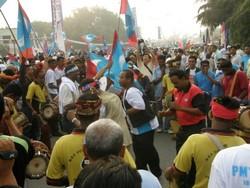 An analysis of the polls shows that PKR had made substantial inroads since March among all the three races, in addition to grabbing a lion’s share of votes from young voters of all races.
That young voters have deserted BN in flocks is a clear indication of their detestation of BN’s antiquated politics. It augurs a sunset scenario for this overstayed political power, keeping in mind that almost one third of qualified voters - most of them young - have yet to register as voters. Imagine the impact they will have on future elections when they are registered.
From this by-election, we see that the migration of electoral support of all races away from BN has continued unabated since the general election. This phenomenon is attributed in part to yet another blunder by Prime Minister Abdullah Ahmad Badawi in failing to honour his post-election reform pledges, and in part to Umno’s unaltered course of racial hegemony which embarrass other racial parties and further alienate non-Malays.
Under Umno’s business-as-usual stance of governance, deterioration in all fronts continue -political, economic, social - as exhibited by the quickening pace of scandals of endless corruption and abuse of power that further undermine public confidence and trust.
Economy mismanaged
An economic slow-down and escalating inflation have hit many countries. Malaysia is suffering more than its fair share of hardship due to gross mismanagement by an incompetent leadership.
As a major petroleum producer and exporter in this region - Malaysia produces 1.7 million barrels of oil equivalent per day - we should be riding it out with relative ease compared to countries without oil fortunes. Instead, we are landed in a double whammy of hyper-inflation and stagnant growth, which have inflicted widespread economic hardship to individuals and industries alike.
A case in point is the Budget 2009 recently tabled by Abdullah. Although there are minor allocations to assist the needy, these are far from inadequate to overcome the sufferings of the public caused by severe shrinking of our ringgit.
 The budget tends to deal with surface symptoms but fails to address the root causes of our economic malaise. Shrewd political observers have rightly call it a populist budget aimed at giving life-support to a wobbly prime minister and his government.
The budget lacks policy direction based on a macro view of the economy, but there is evidence of reckless spending. A glaring example is the alarming ballooning of operating expenditure in recent years. This has doubled to RM154.2 billion during the four years of Abdullah’s premiership, and tripled since 2000.
It really boggles the mind as to how such expenditure - for wages, rental, maintenance, office supplies and the like - could have expanded so swiftly. Part of the answer could perhaps be found in the auditor-general’s annual reports which are unfailingly strewn with recurring cases of massive leakages due to negligence, abuse of power and outright corruption.
Rapidly increasing operating expenditure (largely unproductive) in tandem with corresponding dwindling development expenditure - which has shrunk to one-quarter of total budget by 2009 - is undoubtedly a negative development that has contributed to sluggish growth.
It is really painful to note that, despite our fabulous oil wealth and booming prices in recent years - the contributions from which now account for a whopping 40 percent of total revenue - Malaysia should have struggled through12 consecutive years of heavy budget-deficit spending with lacklustre economic growth to boot.
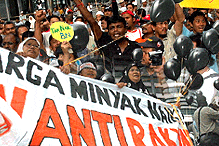 What reasons can we give for this phenomenon if not for a corrupt and inept political leadership that squandered our wealth and threw away golden opportunity to build a solid base for our economy?
Prudent spending can of course improve our fiscal health, but such revitalisation cannot be achieved without restoring investors’ confidence, liberalising the economy by removing race-based and crony-driven protectionist policies, and upgrading education and public service by restoring meritocracy.
All these measures should go hand-in-hand with sweeping political reforms to restore confidence and competence to all the institutions of state - judiciary, police and attorney- general’s chambers among others.
Only through such full-scale and simultaneous attacks on the ills that bedevil our entire political and economic fronts can we hope to nurse our nation back to strong economic health.
Case for Pakatan rule
There is not the slightest chance that the BN is capable of embarking on such a reform venture. This is the reason why Pakatan, under Anwar’s leadership, must endeavour to take over the reign of government without delay.
We can’t wait for the next general election. This is because the unwieldy BN coalition with its antiquated political philosophy and policy has long past its validity period, and it is now in the final stage of disintegration with intensifying intra-party and inter-party in-fighting.
At the rate the squabbling is proliferating, satellite racial parties, which have already been hollowed out at the grassroots, will depart BN, leaving Umno to stand alone. It is corrupt to the core and plagued by an intractable leadership problem.
Needless to say, the nation is now cruising on a rudderless journey, with its dire consequences on the economy. Allowing nature to take its course under these circumstances would be to invite irreparable damage to the nation’s political, economic and social fabric.
 A more compelling reason why Anwar must succeed in attracting crossovers to form a new federal government is that Umno will not sit idly by for long, watching its empire crumble. The longer the delay in the takeover of power, the higher the risk of the political partnership of Pakatan being sabotaged by a desperate dying power.
Having seen how readily and ruthlessly Umno has cast its repressive net over political rivals in the past in order to preserve its hegemony, it is almost a certainty that Pakatan will not be allowed to sail through smoothly to the next general election. And the hope of millions for a better tomorrow may then be dashed.
As for those who take the moral high ground to condemn the impending cross-over of MPs as betrayal of democratic principles, my simple answer is that Malaysia is not a democracy in the first place. If we are, Pakatan would have won the general election, and there would not have been the necessity to engineer the present crossover.
To sceptics who maintain that Malaysia is a democracy, I ask: Which democratic government in the world could steam-roll an ostentatiously pseudo sodomy case over a personage like Anwar and yet survive the wrath of public opinion?
Do keep in mind that the corrupt system that put Anwar in jail for six years on similar pseudo charges a decade ago is still intact today.
KIM QUEK is a retired accountant and a member of opposition party PKR.


