


AGC denies defying king's decree, cites two conflicting legal implications over Najib's house arrest
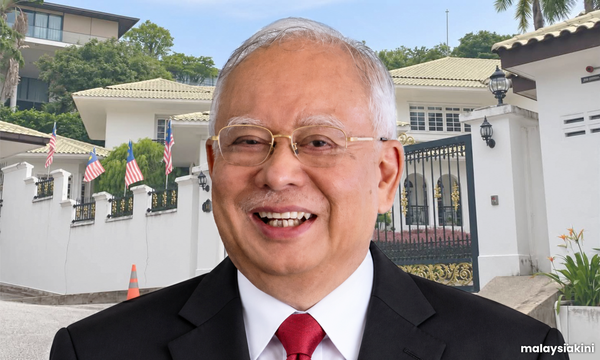
The Attorney-General’s Chambers has denied defying Yang di-Pertuan Agong’s decree following its decision to suspend the implementation of Najib Abdul Razak’s house arrest.
Instead, it said the move was taken to ensure that Najib’s rights are safeguarded after yesterday’s Kuala Lumpur High Court decision ordering his release.
The AGC's latest statement came as...
The Attorney-General’s Chambers has denied defying Yang di-Pertuan Agong’s decree following its decision to suspend the implementation of Najib Abdul Razak’s house arrest.
Instead, it said the move was taken to ensure that Najib’s rights are safeguarded after yesterday’s Kuala Lumpur High Court decision ordering his release.
The AGC's latest statement came as various quarters, including the Yang Di-Pertuan Agong, said the agency risked defying the king's orders concerning Najib's conditional house arrest.
The AGC stated that the issue arose after the High Court handed down its ruling shortly after Najib completed the payment of his RM50 million fine yesterday.
Although the court directed that he be released immediately, it also stated that the remainder of his sentence must be served under house arrest until Aug 23, 2028, in accordance with the conditional pardon.

According to the AGC, this situation carries two distinct legal implications regarding Najib’s sentence, which should not be determined unilaterally.
The statement noted that if the sentence in the SRC International case remains in effect, no question arises regarding the execution of the remaining sentence in accordance with the Conditional Pardon Order.
"Conversely, if the SRC International sentence has legally concluded, its effect on the commencement of the sentence in the 1MDB case must be determined.
"Both possibilities carry different legal implications and should not be decided based on assumptions or unilateral interpretations," the AGC said.
READ MORE: Agong: Disputing Najib's conditional pardon could amount to insubordination
AGC’s stance
Yesterday, the AGC temporarily deferred Najib’s house arrest following two conflicting interpretations of the pardon order, which stipulated that Najib must pay a RM50 million fine before serving his remaining sentence under house arrest.
First interpretation: The payment of the RM50 million fine only fulfils the fine component of the sentence, while the prison sentence for the SRC International case continues until Aug 23, 2028. Under this interpretation, house arrest serves as an alternative method or venue to serve the remaining prison sentence rather than a termination of imprisonment.
Second interpretation: The payment of the RM50 million fine serves as a condition that allows the pardon to take full effect, implying that the entire sentence for the SRC International case - including the prison term - is deemed completed.
The AGC added that questions surrounding the status of the remaining prison term in the SRC International case also carry implications for the execution of Najib’s prison sentence in the 1MDB case.
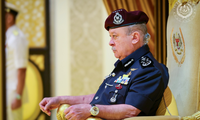
In the statement issued by Istana Negara today, Yang di-Pertuan Agong Sultan Ibrahim Sultan Iskandar stressed that the power to grant pardons is a royal prerogative enshrined under Article 42 of the Federal Constitution.
"The exercise of such power must be respected in accordance with the position of a constitutional monarchy and the principle of the rule of law," the statement read.
The AGC further dismissed depictions that its action in seeking legal clarification was an attempt to usurp or execute the king's royal pardon powers.
It stated that the power of pardon and the power of the court to interpret and determine the legal effect of an order are two distinct matters.
"Seeking a court ruling on the execution of an order in no way implies questioning the authority of the party that issued that order.
"Therefore, it is inaccurate to equate the AGC’s stance - that a legal question requires judicial determination - with allegations that the attorney-general has usurped His Majesty’s pardon prerogative," it said.




Incompetence.Why now?
What a spectacle this whole Najib house-arrest saga has turned out to be! Just when we thought the drama could not get any more complicated, the Attorney General's Chambers (AGC) comes forward to deny that it has defied or disregarded the King's decree. Its explanation is that it is merely seeking legal clarification to ensure that the royal pardon and the various court orders are properly implemented. But surely the bigger question is this: how did we get ourselves into such an extraordinary constitutional and legal predicament in the first place? On the one hand, Istana Negara has stated quite unequivocally that the King's conditional pardon is clear, that all the stipulated conditions have been fulfilled, and that any attempt to dispute or frustrate its implementation would amount to defying the royal decree. On the other hand, the AGC insists that it is not challenging the King's authority but merely seeking judicial clarification over the legal implications of Najib's remaining SRC sentence and his separate 1MDB conviction. Whatever the legal merits of these arguments, the optics are hardly reassuring. The AGC was represented at the Pardons Board meeting when the conditional pardon was granted. One would reasonably expect that the necessary legal considerations and implications would have been examined and clarified at that stage, rather than becoming a subject of controversy at the eleventh hour. If there were genuine legal ambiguities, why were they not identified and addressed earlier? And if the royal decree was indeed clear and unambiguous, why has its implementation become such a contentious affair? This is no longer merely about Najib Razak, his lawyers, the AGC or the political theatrics surrounding his fate. It is fundamentally about the credibility of our constitutional institutions, the independence of our judiciary, the proper exercise of executive authority and, above all, public confidence in the rule of law. A constitutional monarchy cannot function effectively if royal decrees, executive decisions and judicial processes appear to be pulling in different directions. Nor should the public be left wondering whether the law is being applied consistently or whether political considerations are clouding the process. The rakyat deserves clarity, consistency and accountability, not a running drama of conflicting statements, legal manoeuvres, political posturing and finger-pointing. At the end of the day, the rule of law must prevail, not the rule of personalities, political expediency or selective interpretations. Aren't we in a pickle indeed! What should have been a straightforward exercise in constitutional and legal administration has become an embarrassing national spectacle. And the greatest casualty in this entire saga may well be public confidence in the very institutions entrusted with upholding our Constitution and the rule of law.
Report this comment
Are you sure you want to delete this comment?
This action cannot be undone.