




PM on the high wire with NEM
Prime Minister Najib Razak is walking a tightrope when it comes to the New Economic Model (NEM) said analysts. In a Malaysiakini interview with civil society groups, Research for Social Advancement (Refsa) director Richard Yeoh said that the NEM can only succeed if the policy is as inclusive as it claims to be.
Prime Minister Najib Razak is walking a tightrope when it comes to the New Economic Model (NEM) said analysts.
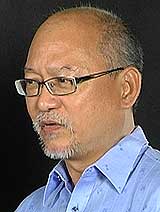 In a
Malaysiakini
interview with civil society groups, Research for Social Advancement (Refsa) director Richard Yeoh
(right
) said that the NEM can only succeed if the policy is as inclusive as it claims to be.
In a
Malaysiakini
interview with civil society groups, Research for Social Advancement (Refsa) director Richard Yeoh
(right
) said that the NEM can only succeed if the policy is as inclusive as it claims to be.
"Bottom line is that Najib must come up with a policy that embraces all levels of society, all groups, all genders," he said.
This is important to address the perceived inequity which permeates society as the result of affirmative action brought in by the New Economic Policy (NEP), said Institute for Democracy and Economic Affairs chief executive Wan Saiful Wan Jan.
"I agree that to a large extent we owe much of what we are today to the NEP, and we must accept that this covers the success and problems (including) a sense of uneasiness among the people (due to) different treatment of the races," he said.
The NEM's challenge, Yeoh said, is to undo the darker side of the earlier policy's legacy, or risk sliding further down on the global competitiveness scale.
But the proposal to scrap racial quotas and providing equal opportunities has rattled certain sectors of society including the Malay rights NGO Perkasa, who have largely benefited from such ethnic-based policies.
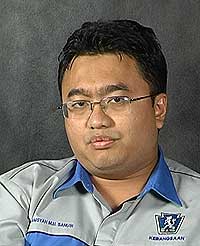 The only way out for Najib, said Malaysian Youth Clubs Association (MAYC)
pro-tem
vice-president and social commentator Akhramsyah Sanusi (
left
), is to perform the trick of balancing demands from both sides of the spectrum.
The only way out for Najib, said Malaysian Youth Clubs Association (MAYC)
pro-tem
vice-president and social commentator Akhramsyah Sanusi (
left
), is to perform the trick of balancing demands from both sides of the spectrum.
The good news is, he noted, Najib, is already on trying hard and is "opening the d oors for discussion".
"The way the NEM was presented was, ‘We will now focus on the bottom 40 percent of the population' and in the same breath (Najib) said, ‘Almost 80 percent of those are Malays and Bumiputera'.
"This is interesting because it is almost affirming that the NEP still has a role to play while addressing what (the non-Bumiputera) have been clamouring about," he said.
The bad news, however, is the fact that there is little of this ‘engagement' taking place, and the prime minister can do well to begin now to clear up the ‘confusion', which has led Perkasa down the path of dissent.
But in any case, he added, Perkasa has been largely misunderstood, and that their outrage is more because the new model gives the impression that the NEP has failed.
"To them it's very emotive, to say that (the NEP was) a failure. Was it wrong then that we sought affirmative action in the way that was done then?" he asked.
Excerpts of the interview follows with content edited for language and brevity.
Malaysiakini : A good way to start this discussion is to look back into history and to look at the National Economic Policy, which many have said is the New Econcomic Model's predecessor. The spirit of the NEP, many believe, is about creating an equal society. 40 years on, why have we failed? Why is NEM talking about the same thing?
Akhramsyah Sanusi : I think the first thing we should note is that the NEM is not a successor of the NEP. The NEP ended (and was) replaced by the National Development Policy and Vision 2020. To harshly judge the NEP is incorrect. If anything, you could argue that where we are today, we are able to think of moving from a middle income nation to a high income nation, this owes in a large part to the NEP. We could have easily gone down the paths of other countries where as a whole can be considered a middle income country, but has much wider disparity between top earners and low income earners.
Wan Saiful Wan Jan : I agree that to a large extent we owe much of what we are today to the NEP, and we must accept that this covers the success and problems. In terms of raising the prosperity of the country, yes, the NEP has done quite a bit.
 But in terms of the implementation of the policies, it has caused uneasiness among people, with many complaining about the different treatments between races. Maybe it's not so much the policy but the implementation. This is the problem when the government tries to socially engineer society, there will always be unintended consequences.
Richard Yeoh : To me it appears that every 20 years we come to a period of angst. I can say a lot of bad things about the NEP, but if you want me to give a yes-no answer, I would say, yes, NEP was good, was successful.
It created a big middle class, evened out the differences between ethnic group and rural-urban divide, probably the best social engineering project in the world, or even in history. But in the 1980s, cronyism, corruption and nepotism came in, and the NEP was used to justify these bad things.
We are at the crossroads again, and we have the NEM which doesn't have specifics, no timeline, no real targets. Again, I cannot help feeling despondent that we will be taken for another 20 year ride.
If I could just pick on one thing that Akhram said, income disparity. The United Nations Development Program found that the Gini coefficient in Malaysia is the second highest in Asia, behind Papua New Guinea. Does that mean that the NEP has in fact addressed income disparity?
Wan Saiful : Inequality in the country has increased. A large part of it is because when the economy was pseudo-liberalised before, only a certain part of society benefited. If you know people, you'll benefit from it, if you don't know people, that's it. This is because it wasn't properly liberalised, and that is my fear for the NEM. There will always be inequality in society. We cannot aim for equality in outcome. Give people equal opportunity, the outcome may be different.
Which is what the NEM in its proposal, is about, market-friendly affirmative action, meaning equality in opportunities. And is this a move long overdue, the scrapping of racial quotas?
Wan Saiful : I am still quite baffled by this term market-friendly affirmative action.. I have never found that term anywhere, I am still waiting for someone to give me a clever definition.
Yeoh : It's an oxymoron.
Akhramsyah : I am concerned over the sloganeering around this. Market-friendly affirmative action is to me a bit of a clash in terms...to me the elaboration of that will be very difficult and the Prime Minister is probably quite wise in taking a consultative approach.
A policy that is presented as an idea and hence developed with engagement will probably find greater acceptance. In fact, the NEP too was developed that way... which made it so wonderful in conception.
I think what Najib has done is to open the door for the process to happen again. But my concern is how this engagement is going to happen as I have yet to hear of really structured engagement sessions organised.
I am interested in the focus to refine what we had with the NEP. For example, in NEP we have specific targets for equity holdings, and this had a reasonable background behind them. Now (Najib) is trying to change the context in a way that society wants him to change. He has proposed something that has balanced both sides.
I was actually quite stunned. The way it was presented, was ‘We will now focus on the bottom 40 percent of the population' and in the same breath he said, ‘Almost 80 percent of those are Malays and Bumiputera', which is interesting because it is almost affirming the NEP still has a role to play while addressing what (the non-Bumiputera) have been clamouring about.
It still doesn't make groups like (Malay rights NGO) Perkasa happy. (Perkasa president) Ibrahim Ali has been really upset.
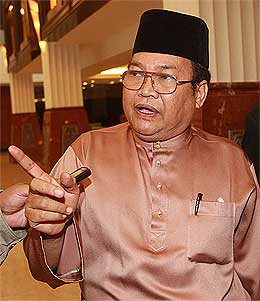 Wan Saiful
: Can anything make Ibrahim Ali (
right
) happy?
Wan Saiful
: Can anything make Ibrahim Ali (
right
) happy?
Akhramsyah : This is their role, isn't it? This is their raison d'etat .
But some analyst said there is reason to believe that Perkasa does somewhat represent the majority Malay community who are uncomfortable with the scrapping of the racial quotas.
Akhramsyah : Nobel Laureate Richard Feynman once said, and I am paraphrasing very badly I'm sure, but he once said, usually when there is friction, it is because of confusion. My thinking is that there is a lot to be clarified with regards to the NEM. The prime minister has opened the door, what we should do as the rakyat is to seek clarification.
Wan Saiful : I completely agree. It's a good starting point, it opens up a process of consultation. This is something I have never seen, at least in my lifetime, and it's a big thing and (Najib) has to be lauded for that.
As well we see a lack of denial. It has more often been ‘Oh no, we're doing fine' but this time it has been a very frank report saying, ‘These are our problems. Help us fix it.'
Wan Saiful : That's right. The report is frank, it has opened up the door for discussion, we should use it.
Yeoh : I think people who are not happy to let go of old policies for whatever reason will always try to create confusion. The minute you discuss these things, social contract comes in, Article 153 comes in. I dare say that no sane Malaysian will oppose Article 153, or the so-called social contract, although many academics have come forward to say that there is no such thing.
What people are not happy about, especially the non-Malays, and even the Malays should be unhappy about if they know what has been done in the name of Article 153...is that it is being used carte blanche for the sake of cronyism and nepotism.
Ironically, NEP has encouraged competition (and) made Malaysia more competitive. The non-Malays feel pressured. Obviously there is less for them than in a free for all situation so they have to work harder. The Malays, Bumiputeras, they are also becoming more competitive, because they are told that in the first 20 years, and subsequently, there are all these opportunities for you, go and grab them. Don't say you haven't had the chance, and there is no level playing field, and to a large extent the Malays have done that.
So I get very upset when fringe politicians still say that Malays still need to be protected, there is no level playing field, if they are not protected they will be swarmed, they will lose the country. Really, rubbish.
I really think that if Najib wants to create his legacy he has to have the sincerity, the courage, the political will, to move away from old policies. That doesn't mean abandoning affirmative action or the Malays who are still less competitive and leaving them to market forces because you can still fine tune these things.
You all know how much we have slipped in competitiveness, and to a large extent I believe it is because of these (ethnic-based) policies. Malaysians of all ethnic backgrounds have shown that they can compete globally. Malay students, for examples, do so well overseas.
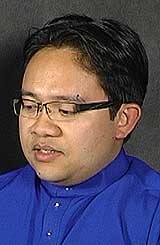 Wan Saiful
(
right
): This is why I get very upset with people like Perkasa who keep arguing that the Malays cannot compete. This has been proven...
Wan Saiful
(
right
): This is why I get very upset with people like Perkasa who keep arguing that the Malays cannot compete. This has been proven...
Akhramsyah : I must interject here. I think where the confusion stems is that all the different groups who are providing pressure, be it the non-Malay, the Malays, the foreign media; (these different groups) are feeding the confusion across the different groups.
I'll tell you why Perkasa is upset. I asked them. I was invited to join them in their discussion on the economic model. The reason they were upset was because when NEM was talked about in closed doors, some people said that it was a replacement of the NEP and NDP because those policies were a failure. To them it's very emotive, to say that these were a failure. Was it wrong then that we sought affirmative action in the ways that was done then?
Of course it was appalling to them to see that people were putting words into our PM's mouth when the NEP was formed when his father was PM. For Malays that is a betrayal.
Wan Saiful : I am not upset with the point that they are raising. I am upset with the fact that they claim to represent Malays. I am Malay and (Ibrahim Ali) does not represent me. He does not represent all Malays. Who gave him the right to represent Malays? Ultimately he is a politician who keeps jumping from one place or the other trying to find a political space for himself. He does not represent the Malays. The Malays are confident people who can compete anywhere.
Akhramsyah : The fact is when we are addressing issues with the NEP, NEM, we are not addressing people who can compete. People who can compete, from all races, will compete. What we are asking is who cannot compete? Unfortunately, of all the different ethnic groups in Malaysia, Malays still make up a large portion of that group because of where they start in life.
Wan Saiful : That is where I disagree. It is so patronising to say that there is a group of Malays who cannot compete and I am better than them.
Akhramsyah : But how do you compete when you are a son of a farmer in Ulu Mengkedu, where the son has no capital to give to the son, where the school is how many miles away, where there are seven children, and there is no place to study to get yourself to a higher level of education?
And I am not saying only the Malays have this problem. The Indians have this problem, the Chinese have this problem, the Bumiputera in Sabah and Sarawak have an even worse situation. It's just a simple tool, that the majority of these people are Malay and Bumiputera. We are not saying that Malays and Bumiputera cannot compete. That, again, is patronising and probably baffling to those facing these problems.
The NEM is saying, ‘Let's wipe out racial quotas, no more 30 percent bumiputera equity.' Is this acceptable, given your explanation?
Akhramsyah : I don't know. I never agreed with the 30 percent in the first place because in my view it does not reflect the population in Malaysia. I don't necessarily agree that it should fit the ratio in which we are divided, that if Malays make up 67 percent, then they should hold 67 percent. There should be a band that we aspire to, where we feel the middle class is happy to sit at as a proportion of society.
 Statistically, how we define that statistically will be extremely difficult, some people have tried. (Yayasan Pahang general manager Saariah Saad)...tried to quantify the real income on monthly basis, and found that in terms of monthly income Malay average income is still half of those who are Chinese and just below half of those who are Indian. It's not fair because you've got income disparity between races, but it's an attempt to have a sort of matrix.
Yeoh : We can agree that what we are talking about is not quotas. Quota is a bad word. We want a fair balance, however defined. Saiful mentioned on the outset that we should look at equal opportunities and not equal outcome. Affirmative action based on need is a good principle to work with. All of us agree that rural folk need help, and whoever needs help based on their circumstances and their background, we should help them. It is an accident of history that most of the Chinese are urban dwellers, they had advantages in that respect. We recognise that but we must move away from ethnic quotas and targets.
Akhramsyah : And we need political coalitions from both sides to talk like this.
Yeoh : Yes. Najib must know all this because he has been holding government positions since 1976, that's 34 years. He has seen all this. If he doesn't deliver, then it's a shame. Who else would have the experience?
Wan Saiful : We must applaud him for raising this possibility or this idea in public that we must stop this ethnic-based policies and that is a big move which should be recognised.
Akhramsyah : I'll be mindful of putting words into his mouth though, because I don't think that's what he said exactly. He did say that the balance must be there between the groups, but I'll be wary of putting words in his mouth.
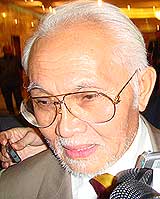 Yeoh
: I think there is a fair bit of confusion. I was in Kuching and the Sarawak Chief Minister Taib Mahmud was quoted as saying that they don't need a New Economic Model in Sarawak and they are doing fine with existing policies. That indicates that even with the ruling party there, they haven't understood or bought into it.
Yeoh
: I think there is a fair bit of confusion. I was in Kuching and the Sarawak Chief Minister Taib Mahmud was quoted as saying that they don't need a New Economic Model in Sarawak and they are doing fine with existing policies. That indicates that even with the ruling party there, they haven't understood or bought into it.
Akhramsyah : I sent out an email and asked (MAYC members) what they wanted me to say today.
So what do young people want?
Akhramsyah : They want the opportunity to try. So the idea of the government giving equal opportunity is appealing to them, but at the same time, they ask what does that mean to have equal opportunity when I coming from where I am, will the opportunity be given to me because I am from where I am? These are hopes but also concerns.
Yeoh : Bottom-line is that Najib must come up with a policy that embraces all levels of society, all groups, all gender.
And not give in to groups that favour one over others.
Akhramsyah : Yes, but at the same time still include them. It's a trick.
Tomorrow: Does Najib have the credibility for such reforms?


Are you sure you want to delete this comment?
This action cannot be undone.