




Many M'sians unfazed by traffic summonses
Motorists who flouted the road traffic law are familiar with the word 'summons'.
Drivers who commit traffic offenses can be fined or charged by the police, enforcement officers of the Road Transport Department (JPJ) and traffic wardens of the local authorities.
Motorists who flouted the road traffic law are familiar with the word 'summons'.
Drivers who commit traffic offenses can be fined or charged by the police, enforcement officers of the Road Transport Department (JPJ) and traffic wardens of the local authorities.
Without the authorities issuing the traffic summonses, the number of road crashes nationwide would catapult and the figures speak for itself.
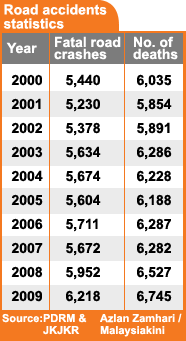 According to the police and Road Safety Department (JKJR), there were 6,218 fatal road crashes in 2009, the highest number in the space of nine years from 2000. [see charts]
According to social activist Fatimah Mansur, some Malaysian drivers could not care so much about being fined for traffic offences.
"People sometimes do not care whether they break the speed limit and other traffic rules. Some don't even care about the possibility of being fined for traffic offences. They don't even care about their own safety and that of the others.
"For some, what is RM30 or more in summonses if they can spend more than RM200 to dine in an exclusive restaurant," she said.
According to Fatimah, the attitude of motorists is another factor.
"Some Malaysians would prefer until the last minute to settle their summonses even though they have the money and time to settle the summonses earlier," she said.
‘Balik kampung’ exodus
According to the police, there were more accidents because of the higher number of vehicles in the 'balik kampung' exodus during festive seasons.
 "Therefore, the risk being involved in road crashes is higher," said a traffic police officer.
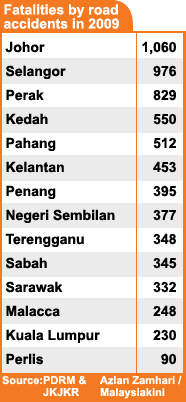
According to JKJR and police statistics, the number of road crashes and fatal accidents was highest at municipal and federal roads.
"However only 20 percent of those who died were those who 'balik kampung'. The rest were residents in the local areas," he said.
Why is this so?
"Usually local residents like those in the villages do not practice safe riding habits particularly the motorcyclists. You can see people riding without their crash helmets, young children and elderly ladies riding motorcycles. Definitely these riders do not have the licence.
"Before, if they beat the red traffic light, they did not hit anybody. But during the balik kampung season, more vehicles would be returning to the villages and the errant motorists would possibly hit somebody if they continue to disregard traffic safety and rules," he added.
- Bernama


Are you sure you want to delete this comment?
This action cannot be undone.