




No to compulsory history lessons
COMMENT Minister of Education Muhyiddin Yassin recently announced that history would be made into a compulsory subject in examinations.
This means that a student must take history as an examination subject, and pass it. Failing it would render him failing the whole exam.
COMMENT Minister of Education Muhyiddin Yassin recently announced that history would be made into a compulsory subject in examinations.
This means that a student must take history as an examination subject, and pass it. Failing it would render him failing the whole exam.
 Members of the public (as judged by the views they expressed in the Internet, e.g.
Malaysiakini
, opined that this policy is for the government to indoctrinate our young secondary level students with its own subjective view of history.
Members of the public (as judged by the views they expressed in the Internet, e.g.
Malaysiakini
, opined that this policy is for the government to indoctrinate our young secondary level students with its own subjective view of history.
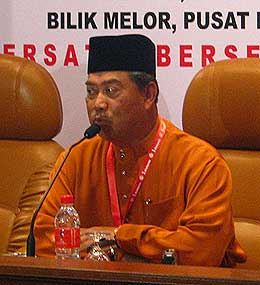
They appear upset over Muhyiddin's ( right ) new education policy and I share their concern.
Not too long ago I read through the history textbooks for Forms Four and Five students. About 10 percent (at most) of the text was for early world history. The bulk I remember was concentrated for Islamic history amply supported by an account of the history of the Malay civilisation.
There was the remaining 10 percent on glimpses of modern world history, like some sections on the Industrial Revolution and the First and Second World Wars.
The point that struck me hard was it was as though the present modern Malaysian life today has been mainly the result of the strength and achievements of the Islamic and Malay civilisations.
Distortion of the truth
This must surely be a distortion of the truth and the probable reason for the concern of parents. I was brought up with a much wider vista of world history.
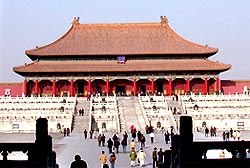 To me the world of today is the sum total of the historical, economic, political, and other contributions of the many past human civilisations: the early Phoenician-Sumerian civilisation for example, and the Indus Valley, Egyptian, European, Arabic, Indian, Chinese; or the present ‘American' civilisations, to mention just a few.
The present Malaysian civilisation is one end-result of the sum total of the generic human civilisation. A minor one at most.
It's not difficult to substantiate this quick observation. I look around me as I write this article: I see a table, chair, computer, hand phone, ceiling fan, a box of tissue, books, electricity, TV, by the corner.
These are products of the generic human ingenuity, brilliance and experience translated into modern tools and appliances. In these examples none of them are the direct products or influence of Islamic or Malay civilisation!
Looking elsewhere in my neighbourhood too would reveal very little direct Malay and Islamic influence or contributions save for the mosque some distance away and my neighbours wearing headgear or tudung .
The only direct contact I made today with the Malay ‘civilisation' is the nasi lemak I ate this morning.
So to focus mainly on Islamic and Malay history from the others would surely be a distortion and disservice to the intellectual development of our own younger generation. We would on the contrary deluding them of truth.
Educating for knowledge-based future
I am in favour of teaching our young generation anything that will prepare them for their future. This is what education is all about in any case, i.e. to prepare our young for the skill- and knowledge-based technical world of today.
I am in favour of teaching them to be knowledgeable and be confident, be skilful and profesional so as to be competitive in their adulthood.
 We have to educate them to be able to analyse, intellectualise and conceptualise i.e. to help them understand and be comfortable with the technical and scientific world.
A good understanding would enable them to develop sufficient skill and knowledge. They would be full of confidence to make better decisions and carve a brighter future for themselves. The competitive world of today is very demanding and will not settle for less.
To me therefore the future of our young lies not with their ability to memorise dates and names that history does; the who did what, when and where of events or people as the government wanted the students to perceive and appreciate.
It certainly is not dependent on that part of history the government wanted them to memorise; like Article 153 of the constitution as feared by the public, and voiced by the MCA's deputy publicity chief Loh Seng Kok.
I might be a bit too conceptual when I said all that. Let me explain it further at the expense of and with respect to knowledgeable readers.
Analysis required before understanding
To reiterate, the world of today is very technical in nature. Everything needs analysis before any understanding can be reached. Even eating can be a technical act for these days we have to watch our diet or regulate our body weight. Driving to work is quite ‘technical' too.
To analyse means the breaking up of an idea or problem into their component parts, to identify their features followed by some hypothesis or solution to explain them. All these taking place in the mind, and not necessarily with any of their physical presence; in other words, to conceptualise.
This ability to conceptualise leads to the ability to intellectualise.
To intellectualise in turn means the seeking of truth, and the ability in seeking alternatives to truth. To illustrate: Alcohol is good for the body, is this the truth? Yes, says a medical doctor, up to a point at least. So take a sip a day he says.
But no, you can't says the ulama, alcohol is forbidden by religion. Now, what therefore is truth? And who is right in this case? Who has the final say to determine who is right?
Conceptualisation and intellectualisation would reveal many other human wisdom:
- That truth is relative and not absolute. The present issue in question is a good example: forcing students to learn history is good, says the Muhyiddin. No, it is bad, says the public. It is right, says the minister. No, it is wrong says the public. Meat is delicious to some, but poison to others.
- The human mind is malleable. It is therefore important for it to be fed with objective facts and not be indoctrinated by subjective views.
- That there can be many alternatives to any one issue. To illustrate, the minister should appreciate that if his reason to force history to the young is to make them aware of Malaysian historical background, can there be no other and more palatable alternative ways of achieving this goal? Has he mulled over them?
- That change is a constant. Even a river changes as the water that runs through changes by the second. Now, the circumstances in this country has changed, inevitably so, but the government seems keen to restore the status quo. Can it be that the government is afraid of change?
The cue is that when a person is educated with the ability to distinguish between good and bad, right and wrong, that there can be many ways of looking at things, then he or she can make the better decisions in the long run. Any formal subject can teach this aspect of thinking, but why coerce the young to learn it compulsorily through history?
To me it is so much better he discovers knowledge on his own accord.
The post-modern human civilisation
I reiterate my objection to this new education policy. It centres on the observation that the post-modern human civilisation is a technical world, a world of facts and figures; of shapes, sizes and measurements.
Our young must be groomed to be skilful in this world. This technical world has the following features:
- It depends on science i.e. on understanding nature.
- Technology is the application of scientific principles made into tools.
- Understanding science depends on the scientific method of thinking.
- Thinking depends on the openness of the human mind.
- The human mind will open when it is free from encumbrances.
- There is (or should be) no compulsion in human thinking as compulsion is the enemy of freedom to think.
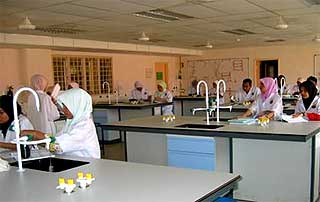 Since the world is very dependent on technical items and on science and technology, is it not more logical and sensible if we encourage our young to be more technical, scientific and technological in their mental orientation?
Since these in turn depend on mathematics and science I would welcome a ministerial education policy stating that all students must pass science and maths, as opposed to history. It makes so much more sense.
Reading for reading's sake
Finally there are enormous amounts of knowledge and reading materials available out there. The younger generation should be taught to want to know them i.e. to seek knowledge for its own sake, and not to pass an exam.
Reading about their favourite subjects would be an ideal way for them to want to learn for its own sake.
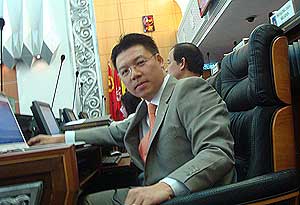 But compel them to read history and make it into a must pass exam subject and their rejection mechanism might trigger.
The proof to this possibility is simple enough: apparently about thirty percent of students failed their history according to DAP assistant treasurer Nga Kor Ming ( left ) I am not at surprised.
I conclude by saying that the education authorities should come up with a policy that encourages our students to read, on any subjects they may wish. Let the students pursue subjects more related to their personal interest. Then encourage them to excel in maths and science.
I believe this has been the formula successfully nurtured and applied by education authorities in developed countries.
AB SULAIMAN is an observer of human traits and foibles, especially within the context of religion and culture. As a liberal, he marvels at the way orthodoxy fights to maintain its credibility in a devilishly fast-changing world. He hopes to provide some understanding to the issues at hand and wherever possible, suggest some solutions. He holds a Bachelor in Social Sciences (Leicester, UK) and a Diploma in Public Administration, Universiti Malaya.


Are you sure you want to delete this comment?
This action cannot be undone.