




Wildlife reserve? Heads it is, tails it isn't
Environmental pressure group Sahabat Alam Malaysia (SAM) has urged the federal and Perak governments to clarify the confusion over the status of the Chior Wildlife Reserve in Sungai Siput.
Environmental pressure group Sahabat Alam Malaysia (SAM) has urged the federal and Perak governments to clarify the confusion over the status of the Chior Wildlife Reserve in Sungai Siput.
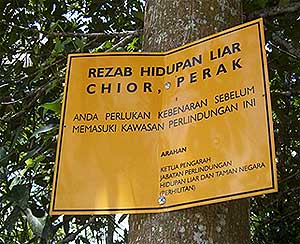 It claimed that there is danger of encroachment through agriculture and logging activities on the site, and expressed concern that economic need is being cited to justify degazetting it as a wildlife reserve.
SAM president SM Mohamad Idris said differing explanations have been received in response to queries on the status.
On Sept 27, SAM had written to Perak Menteri Besar Zambry Abd Kadir, the head of the Wildlife and National Parks Department (WNPD) and other relevant authorities.
 SAM also sounded out Natural Resources and Environment Minister Douglas Uggah Embas
(right)
on the matter during a dialogue between the ministry and environmental NGOs on Oct 4 in Putrajaya.
SAM also sounded out Natural Resources and Environment Minister Douglas Uggah Embas
(right)
on the matter during a dialogue between the ministry and environmental NGOs on Oct 4 in Putrajaya.
Based on information on the website and an explanation from the headquarters, the Chior Wildlife Reserve is still under WNPD management. It said the area is gazetted as a Permanent Forest Reserve, with overlapping status as a wildlife reserve.
Idris said this has contradicted the Forestry Department’s view that the wildlife reserve is not a Permanent Forest Reserve.
Site degazetted?
The Perak Wildlife and National Parks Department, meanwhile, said the site has been degazetted for the purpose of developing a public institute of higher learning, with state government approval having been given in 1998.
The Sungai Siput District and Land Office disputed this, maintaining that it remains a wildlife reserve.
“Did the
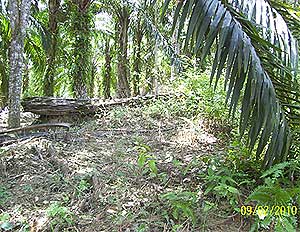 Perak government adhere to law when it approved the degazettement of the Chior Wildlife Reserve and not inform the authorities responsible for managing the wildlife reserve?” asked Idris.
The National Physical Plan and State Structure Plan indicate that the area and its surroundings, mainly the Korbu Forest Reserve, are part of a wildlife corridor in the Central Forest Spine, an environmentally sensitive area.
According to 2003 WNPD records, several endangered species which are fully protected, such as elephants, tigers and tapirs, have been found on the reserve.


Are you sure you want to delete this comment?
This action cannot be undone.