




Taiwan petrochem 'reject project' for Pengerang
A controversial petrochemical investment project that has been scrapped in Taiwan is set to be transplanted to Pengerang, Johor, according to the Taiwan media.
A controversial petrochemical investment project that has been scrapped in Taiwan is set to be transplanted to Pengerang, Johor, according to Taiwanese media.
According to Taipei Times , Economic Affairs Minister Shih Yen-shiang confirmed this to journalists yesterday.
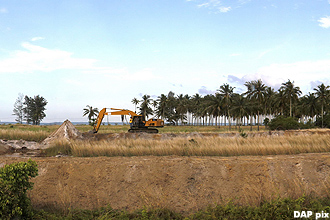 Malaysian Prime Minister Najib Abdul Razak announced last Sunday that a Taiwanese petrochemical company will invest up to RM36 billion in the Petronas Refinery and Petrochemical Integrated Development project in Pengerang, bringing to RM120 billion the total investment over the next five to six years.
Although Najib and the local authorities have not named the Taiwanese company, Shih told a legislative committee meeting that the company is Kuokuang Petrochemical Technology Co, in which state-owned oil refiner CPC Corp has a large stake.
CPC media liaison officer Jessica Tang told Taipei Times that Kuokuang may build a refinery, naphtha cracker and other plants at the site.
 However, a report by
Focus Taiwan
quotes CPC assistant general manager Chen Ming-hui as saying that Kuokuang will have to complete a feasibility assessment by next May and submit the report to the Economic Affairs Ministry for approval before the deal can be signed.
However, a report by
Focus Taiwan
quotes CPC assistant general manager Chen Ming-hui as saying that Kuokuang will have to complete a feasibility assessment by next May and submit the report to the Economic Affairs Ministry for approval before the deal can be signed.
He said Kuokuang has been looking for suitable locations abroad, ever since its proposed petrochemical investment project in western Taiwan was scrapped in 2011.
Chen said the CPC's fifth naphtha cracking plant in Taiwan will be closed in 2015. Since the equipment in the plant still has a life expectancy of 20 to 25 years, the company would consider relocating the equipment to Malaysia.
According to Shih, the people of Taiwan have come to a consensus that the domestic petrochemical industry should focus on high quality product development, and to relocate mass production of petrochemical intermediaries to sites abroad.
Choice explained
Chen also explained to Chinese Malaysian newspaper Oriental Daily News that Taiwan has run out of large sites to develop the petrochemical industry, while the strict environmental evaluation standard has made it difficult to obtain government approval.
 "Both Malaysia and Indonesia have been considered, but Malaysia is nearer to Taiwan (and has) lower transportation costs. Hence Malaysia is the preferred choice of Kuokuang," he said.
Knowing that several local groups are against the relocation of petrochemical plant, Chen pledged that Kuokuang would adhere to local laws and environmental requirements.
Incorporated in January 2006 Kuokuang had planned to build a naphtha cracking and petrochemical complex in the Dacheng Wetlands in Taiwan's Changhua County.
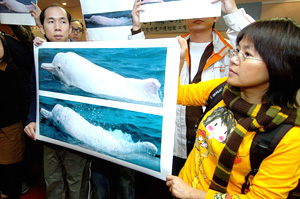 President Ma Ying-Jeou rejected the project last April, after local residents and environmental impact assessment teams raised concerns that the complex would consume too much water and generate high levels of pollution in the ecologically sensitive area, which is also the habitat of the critically endangered Taiwan pink dolphins.
Lobby begins
The confirmation from the Taiwanese authorities has set Malaysians into motion.
A netizen has opened a Facebook event , calling on Malaysians to petition Ma through a virtual letter box on his official website.
The petition, which has received support from over 1,000 Facebook users to date, calls on Ma to stop the relocation of the petrochemical plant.
Netizens have also opened another Facebook webpage dubbed 'No to Kuokuang Petrochemical plant in Malaysia' which has also attracted over 1,000 fans.
Even before the involvement of Kuokuang, the Rapid project in Pengerang had sparked protest from local residents, most of whom are fishermen.
The mega-project, which is part of the Economic Transformation Programme, aims to transform southern Johor into a refining and petrochemical centre, complementing the existing facilities on the east coast of the peninsula and in Singapore.
Rapid will eventually acquire some 22,500 acres of land, affecting up to 15 villages in Pengerang. The first phase of development, which has yet to kick off, will lead to the relocation of some 3,000 residents occupying about 1,000 houses.
In April, 578 traditional fishermen in Pengerang filed a suit seeking compensation for land reclamation work in connection with the project.
However Najib on Sunday assured locals not to worry about their livelihood as all the necessary compensation would be paid to them.
To date, a total of RM4.1 million in compensation has been given to affected fishermen.
Once completed, the project will be bigger than the facilities in Kerteh, Gebeng and Malacca, with the capacity to produce nine million tonnes of petroleum products and 4.5 million tonnes of petrochemicals a year, and will have its own regasification plant to serve Liquified Natural Gas tankers.
Apart from Petronas and Kuokuang, German chemical company BASF SE, Dutch company Royal Vopak, local company Dialog Group Bhd and the Johor government have also invested in the project.


Are you sure you want to delete this comment?
This action cannot be undone.