




Order to close stations not from police, inquiry told
There was no official directive from the police to close train stations around Dataran Merdeka shortly after tear gas was fired the Bersih 3.0 rally participants, said a senior Prasarana official.
There was no official directive from the police to close train stations around Dataran Merdeka shortly after tear gas was fired the Bersih 3.0 rally participants, said a senior Prasarana official.
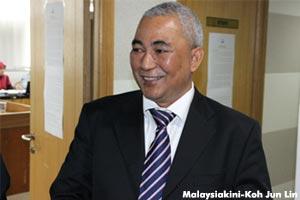 Prasarana Rail Division director Kairani Mohamed (
right
) said the decision was his alone and was made to prevent a stampede at Masjid Jamek LRT station, the nearest station to Dataran Merdeka.
Prasarana Rail Division director Kairani Mohamed (
right
) said the decision was his alone and was made to prevent a stampede at Masjid Jamek LRT station, the nearest station to Dataran Merdeka.
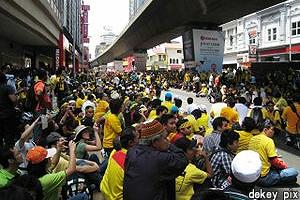
He said the carnival-like atmosphere of the rally on April 28 had turned to panic after tear gas was fired at about 3pm, threatening the safety of the passengers, staff and property at the station.
In addition, those within the station were suffering from the effects of tear gas, even after the station’s roller shutters were closed.
“If I had opened the door, there would be more news,” he said at the Human Rights Commission (Suhakam) public inquiry today, when Bersih observer Daniel Albert asked if the crowd could be allowed into the station gradually so that they could leave the area in an orderly fashion.
When station managers at other nearby stations later radioed in similar reports of chaos, he said he consented to their requests to close those stations as well.
This was unlike previous protests since the 1998 reformasi movement, he noted, where there would be coordination meetings with the police prior to any rally and there would be police officers present at the stations to act as liaison officers on when to close the stations.
Witness: Bersih committee should have conveyed their plans
When queried about Prasarana’s post-mortem meetings to discuss the handling of the rally, he said many follow-up actions were proposed to improve handling of similar incidents in the future, including establishing a special response team to deal with gas attacks. whether it is tear gas or sarin (a toxic gas).
However, he agreed that if a similar situation arises, it would be desirable to have meetings with the organisers and the police.
“They (Bersih steering committee) could have approached us actually, and tell us their plans, the expected turnout, any eventualities...,” he said.
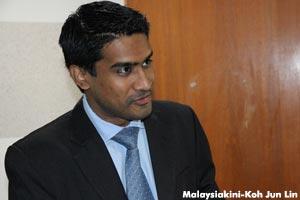 Regardless, he defended his decision to close the station despite Albert’s (
left
) repeated assertion that there may have been a way to allow protestors to escape by rail without causing a stampede.
Regardless, he defended his decision to close the station despite Albert’s (
left
) repeated assertion that there may have been a way to allow protestors to escape by rail without causing a stampede.
In addition, Kairani said all those involved in the post-mortem meeting unanimously agreed that closing the station was the best course of action.
When Albert pointed out that Prasarana subsidiary RapidKL had tweeted, “stopping an LRT service is a tough decision to be made, and of course police and us want to protect the safety of majority,” Kairani said the tweet was incorrect and was made without his knowledge.
“I feel bad about this actually... it is not entirely right,” he said, before reasserting that it was his decision alone.
Some witnesses who had testified previously before the Suhakam panel had said that they were unable to disperse despite a hail of incoming tear gas shells, because all nearby train stations were closed.
Activating 'Code Romeo'
Recalling the incident that day, he said he had arrived at the Masjid Jamek Station by rail at about 11am and found the streets flooded with people.
Observing the crowd from an overhead train platform, he said he estimated the crowd on Jalan Tun Perak alone to be numbered at about 50,000.
In preparation to handle the crowd, he said the number of staff at the stations near Dataran Merdeka was increased, which is similar to its preparations for major events such as New Year Eve celebrations and sports matches.
 He told the panel that ridership during the rally increased by 80 percent for the Ampang line, and 35 percent for Kelana Jaya line, and was happy with the business.
Kairani also said that he was not expecting trouble as he had gathered from media reports that the government has given the green-light for the rally.
However, when he saw tear gas being fired and the situation turning chaotic, he retreated below ground level and invoked an emergency procedure dubbed “Code Romeo”.
‘Romeo’ is a codeword commonly used in radio communications to refer to the alphabet ‘R’, which in this case stands for “riot and civil disturbance”.
“I saw a lady fall on her knees with a small child... elderly people shouting for help,” he said when describing the situation in the station before giving the order.
Kairani, testifying as the inquiry’s 41st witness, was obviously emotionally affected when describing the scene and had to pause to recompose himself several times.
In addition, he said the staff and passengers waiting at the station were suffering from the effects of tear gas, some of them vomiting, or nearly fainting.
When inquiry panel chairperson Khaw Lake Tee asked where did the tear gas shell landed, he said the shells were at the street-level, but its effects can be felt at the platforms.
At least two people tried to escape the gas by running on the tracks but were stopped by security personnel.
Police ordered station closed a second time
Although Code Romeo calls for a closure of the station and trains are not allowed to stop there, Kairani said after one train had passed he realised that he needed to clear the platforms, and signalled for the next few trains to stop until the station is evacuated.
The station remained closed until about 5.15pm, when the sound of "gunfire" and the smell of tear gas had subsided.
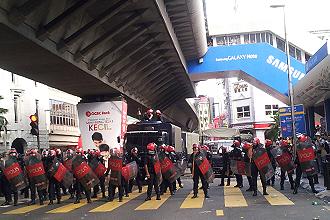
However, only about 20 people managed to get in before a group of police officers told the station to close again and the people to leave the station.
 Albert demanded to know their names and ranks, saying that Kairani should know who gave the order for accountability sake.
However, he was unable to answer, except to say that they came with riot police outside on the streets, along with their red trucks.
“If the police is in charge, the police is in charge. If they order (the station to close), I follow,” he said.
"Shots" were heard again soon after, as well as whiffs of tear gas.
The station was the last station to resume normal operations at about 7.15pm.
The inquiry, now in its 22nd day, would resume on Oct 16 with a site visit to the police General Operations Force base in Cheras.
The public inquiry started in July to investigate claims of human rights violations during the pro-electoral reform rally.
Related stories
Gov't agency registering foreign-born as voters
58,000 'M'sian-born foreigners' found on electoral roll


Are you sure you want to delete this comment?
This action cannot be undone.