




Activist: New media the only way to get level playing field
The only hope for the opposition to gain the same access to public mindshare as the ruling coalition during election campaigns is in effectively exploiting the new media and using time-tested leaflets, says an activist and new media practitioner.
The only hope for the opposition to gain the same access to public mindshare as the ruling coalition during election campaigns is in effectively exploiting the new media and using time-tested leaflets, says an activist and new media practitioner.
“Do not dream of appearing on prime-time news on TV or Malay daily Utusan Malaysia to give you a headline. Do not have this illusion.
“The mainstream media are owned by the United Malays National Organisation (Umno),” Hishamuddin Rais told an international forum on GE13 in Kuala Lumpur today.
The forum is orgnised by the office of Opposition Leader Anwar Ibrahim.
Speaking at a session discussing the role of civil society and the media in levelling the electoral playing field, Hishamuddin said he believes the new media was the only way for the opposition to distribute information on their manifesto and ideas as the BN government owned or controlled most media outlets.
Like a Third World state
“The opposition and civil society are trapped in thinking they must use mainstream media like TV3 and Utusan . This is a Third World country, the state behaves like a Third World state, they control, they suppress,” lamented the activist.
Hishamuddin warned that the opposition Pakatan Rakyat, lulled by their dream of equal and fair mainstream media access, had failed to do what is necessary to inform the public in more effective and possible ways.
Instead of dreaming the impossible dream, Hishamuddin believed that Pakatan should make use of both the latest high-tech revolutions as well as return to the more low-tech medium from which all modern revolutions stemmed from.
“They should use new media and there is one thing called A4, not C4, one piece of paper that can allow propaganda to go into houses. The pamphlets.”
He also pointed out the possibility of online radio opening up, circumventing government airwave restrictions as well as the ability to know who is listening, from where and for how long, giving the example of the ‘Punk Rock’ Radio Bangsar Utama he has set up.
New media, he believes, is the nucleus of new revolutions and societal evolutions.
‘Volunteer to be electoral monitors’
Meanwhile, fellow panellist Damaso G Magbual, an executive committee member of the Philippine electoral reform NGO National Citizens Movement for Free Elections (Namfrel), believes the main role of civil society in order to help provide a level playing field during elections is to monitor elections and help make them clean and fair.
In this, he believes that civil society should “volunteer to be electoral monitors”.
“It’s a labour of love. Love for country,” he said.
Namfrel was responsible in helping make Philippine elections cleaner and more transparent in the 80s, helping Corazon Aquino defeat then-dictator Ferdinand Marcos by identifying occurrences of systematic vote-rigging by Marcos’ thugs.
Magbual described how Namfrel volunteers observed each voting station during elections, although nine lost their lives, and one was killed by armed thugs who were trying to tamper with ballot boxes.
The electoral activist believed that one way to make elections more fair is by mobilising citizens to take an active role in the electoral process.
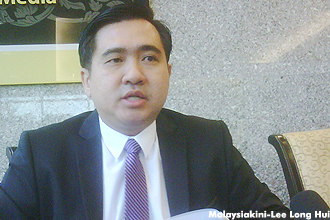 More than just helping to observe and identify electoral irregularities, Rasah parliamentarian Anthony Loke (
left
), who was also on the three-person discussion panel, believes civil society should make a bigger splash.
More than just helping to observe and identify electoral irregularities, Rasah parliamentarian Anthony Loke (
left
), who was also on the three-person discussion panel, believes civil society should make a bigger splash.
Another role of civil society in levelling the playing field in the electoral process is by putting pressure on the government, he said, using the electoral reform pressure group Bersih 2.0 as an example.
Loke credited the public rallies organised by Bersih 2.0 as well as pressure applied to the Election Commission and the government for gaining a longer campaign period during the last polls.
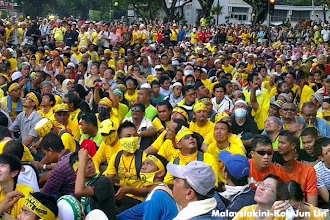 He also credited the mammoth Bersih 3.0 rally for forcing the powers-that-be to initiate reforms at the parliamentary level.
“Two hundred to three hundred thousand people gathered to demonstrate against the government and caused the government to form the parliamentary select committee for electoral reforms.”
Civil society, he argued, had done well in this regard and must help to pressure the government to initiate more reforms and also to pressure for equal access to the media.
Related stories
BR1M not vote-buying, says MACC officer
Bersih 2.0 secretariat office broken into
Can Nazri pledge a peaceful transition, asks Anwar
Over 80pct of Malaysians believe us, claims EC
Don: Rulers should put caretaker gov't on a leash
'Sponsor airfare for Sabah, S'wak voters to return'


Are you sure you want to delete this comment?
This action cannot be undone.