




Strategic abstention as an option for the Indian poor
COMMENT This is the 18th day of my hunger viratham.
In this 10th part I will be penning my thoughts on the option of strategic abstention by the Indian poor in the forthcoming general election.
COMMENT This is the 18th day of my hunger viratham.
In this 10th part I will be penning my thoughts on the option of strategic abstention by the Indian poor in the forthcoming general election.
PART 10
Today there is still a lot of residual anger against Umno among the Indian poor. Pakatan Rakyat is capitalising on this and is thinking that the votes of the Indian poor have nowhere else to go but to them.
This thinking shows in the way Pakatan has treated the Indian electorate recently, in its election manifesto flip-flops.
Pakatan believes its should get a majority of the Indian votes - not maybe as high as the last time, but still the majority. The BN, on its part, believes it can buy the Indian vote with the goodies that have been planned.
However, Hindraf’s analysis is this: the urban educated Indians will largely go for Pakatan.
Add to that the beneficiaries from the last election who have personally gained and all those who potentially stand to gain in the forthcoming election. These votes are with Pakatan.
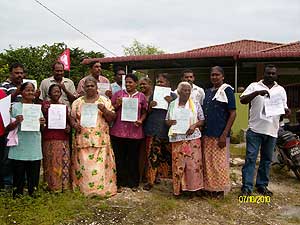 Then, on the BN side, the MIC machinery is preparing to reach out to the local warlords, and through them, to the poorest among the Indians. They will be throwing a lot of money in the process in doing this.
In our estimate, all of that will probably account for 50 percent of the Indian voters. You can argue about the accuracy of that number, but it surely is in that ballpark, give or take a few percentage points.
The leverage for the Indian poor does not come from those foregone votes. When we say leverage, we mean leverage as in getting the politicians to commit to the specific bottom-up plans laid out in our five-year blueprint for the Indian poor.
This is the key point on which the decision as to where the remaining Indian votes will go will be determined. Hindraf will make sure of that. This is the key point that BN and Pakatan should focus on.
We have a few more days left for BN and Pakatan to take their respective positions, either explicitly or by default on the question of the endorsement of the five-year blueprint.
If they remain silent or ambivalent, then we in Hindraf will project it to mean they do not support a programme of comprehensive and permanent correction to the socio-economic problems of the Indian poor - that they do not care about the Indian poor.
This therefore will form the central message from us to our base.
On the contrary, if either, and I reiterate, if either Pakatan or BN comes up and is willing to endorse the five-year blueprint in a clear and binding way, our message to the Indian poor will be to throw their support behind them - whoever they are - Pakatan or BN.
What if Pakatan and BN do not endorsed the blueprint by the time Parliament is dissolved? The message that this sends to the Indian poor is that they both do not have the interest of the Indian poor in their minds.
Blueprint proposals entirely justifiable
The proposals in the five-year blueprint are entirely justifiable. And if they do not want to adopt them and do not show the necessary commitment to implement them, then it does not really make any difference who wins in these elections.
We will make absolutely sure that this is the message that the Indian poor will hear.
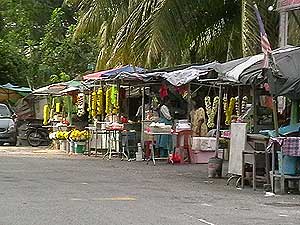 Under these circumstances, abstaining from voting for either BN or Pakatan becomes a real option for the Indian poor.
Both Pakatan and BN cannot complain on any count on the adoption of this option by the Indian poor. To the Indian poor, the logic is simple. Neither care, so neither deserves anything in return.
What will be the consequence of this move? This strategic abstention effectively means a pullback in the number of votes for both BN and Pakatan in this GE. What this means in turn is that all those seats that were won marginally will be affected. The uncertainty increases.
If you take Selangor alone, we see at least (at least) 20 state seats fall into this category - easily. The same logic and formula will apply in Kedah, Penang, Perak, Negri Sembilan, Pahang and Johor.
All seats with an Indian voter population of more than 10 percent that were marginally won in the last election come into this category.
And not all the Indian poor need to abstain. Even if 20 percent of the Indian voters abstain, the impact will be significant. Strategic abstention can prove to be quite impactful.
By this strategic abstention, the Indian poor will be determining new winners and new losers. The winners will know they won without those votes and the losers will know they lost without those votes.
To both the winner and the loser, the significance of the vote of the Indian poor would have become clearer. This adds to calculations for future elections. Will the contenders want to treat the Indian poor vote so cavalierly? Yes they can, but only at a cost. That will become plain.
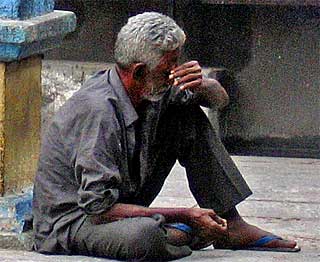 Extending this logic to the next level, strategic abstention can also be applied to individual candidates in the elections. If they will announce their stand on the blueprint, whether they support it and what specifically they will do in support of the programmes for the Indian poor and put it down formally to Hindraf.
Hindraf will then endorse some of these candidates in return. The logistics of this has to be worked out, but this is also another option.
My conclusion, therefore, is that strategic abstention does become a purposeful option for the Indian poor in this election. By this act, the Indian poor would take the opportunity to show the significance of their vote.
Whether we will issue the call for this will be determined over the next couple of weeks, depending on when Parliament is dissolved.
Our position is very clear. We do not just want to see changes in faces at the helm of our country; we also want to see real changes in the lives of the Indian poor. And we will take any position that supports our motives.
We will make our decision on what we will do soon as the dust settles for us.
P WAYTHAMOORTHY is the chairperson of Hindraf.


Are you sure you want to delete this comment?
This action cannot be undone.