




Uncertain times ahead after GE13?
ANALYSIS As the dust from the 13th general election settles, it became apparent that BN only garnered 47.38 percent of the popular vote compared to Pakatan Rakyat, which bagged 50.87 percent while 1.74 percent went to independents and other parties.
Prime Minister Najib Abdul Razak will now helm a government sustained by gerrymandering but one that does not enjoy the backing of the majority of voters can hardly claim to have the mandate of the people.
ANALYSIS As the dust from the 13th general election settles, it became apparent that BN only garnered 47.38 percent of the popular vote compared to Pakatan Rakyat, which bagged 50.87 percent while 1.74 percent went to independents and other parties.
P
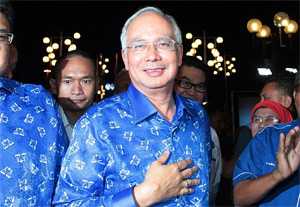 rime Minister Najib Abdul Razak will now helm a government sustained by
gerrymandering
but one that does not enjoy the backing of the majority of voters can hardly claim to have the mandate of the people.
rime Minister Najib Abdul Razak will now helm a government sustained by
gerrymandering
but one that does not enjoy the backing of the majority of voters can hardly claim to have the mandate of the people.
But a shaky government aside, even forming a government would be a hurdle as BN no longer will have any Chinese representative, since the MCA and Gerakan have said they will not join the government this time due to their abysmal performance.
However, the MIC has seen a 'mini-revival', for it now has four parliamentary seats, one up from 2008.
 Najib will need to convince the BN component parties against their decision, or alternatively appoint Chinese representatives from non-political parties as senators, who will subsequently be appointed to positions in the government, if Najib wants to ensure representativeness.
Once the government is formed, Najib will need to reconcile with the fact that the majority of voters chose Pakatan's message of anti-corruption and systemic overhauls over BN's gradual "transformation", which has seen half-hearted reforms because of his own party's refusal to support them.
PKR de facto leader Anwar Ibrahim has already fired the first salvo by going on a blitz on the international media, questioning the legitimacy of the general election and vowing the beginning of a "fierce movement to clean the country of election malpractices and fraud".
Reforms vs race rhetoric
Pakatan has said it will not try to dislodge the new government but a likely indication is that it will force the ruling coalition to agree to a wide-ranging overhaul of the electoral system, including changing from first-past-the-post system to a proportionate system.
Gerrymandering will have no effect in a proportionate system and it would have seen Pakatan come to power in this general election. However, due to gerrymandering in the current first-past-the post system, BN won only 47.38 percent of the popular vote but got 60 percent of the seats in Parliament.
However, BN is not likely to favour such reforms as its rule will effectively end in the next general election if the current voting trend persists. The issue therefore is likely to put the two coalitions on a collision cause.
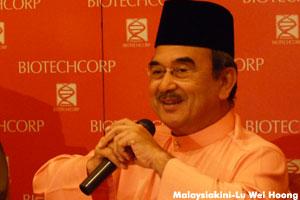 Already, the 'wasatiyyah' (moderation) image BN is trying to build has been sullied as the ruling coalition's old habits come to fore, with Umno-owned
Utusan Malaysia
's headline today screaming: "What more do the Chinese want?" and Umno's defeated former Malacca chief minister Mohd Ali Rustam (
above
) branding Chinese Malaysians as "racist" and "ungrateful".
Already, the 'wasatiyyah' (moderation) image BN is trying to build has been sullied as the ruling coalition's old habits come to fore, with Umno-owned
Utusan Malaysia
's headline today screaming: "What more do the Chinese want?" and Umno's defeated former Malacca chief minister Mohd Ali Rustam (
above
) branding Chinese Malaysians as "racist" and "ungrateful".
The BN old guards are likely to intensify their race rhetoric as they come under siege by Pakatan for genuine and wide-ranging reforms that will force it to loosen its grip on power.
This will depend on Najib's ability to rein them in, but he is also facing his own party leadership elections this year.
However, Najib's chances of political survival are brighter than that of his predecessor Abdullah Ahmad Badawi.
This is because the changes made to Umno's voting system since its last election will allow his fate to be decided by more than 100,000 members, instead of the 2,500-odd delegates to the party general assembly.
Loss of progressive voices
Another problem with the BN is the petering out of progressive voices. One such person, Umno supreme council member Saifuddin Abdullah, was defeated in Sunday's general election, while MCA vice-president Gan Ping Sieu was not given a seat to contest.
These voices have in the past been instrumental in promoting moderation within a coalition that is remains deeply grounded in race politics.
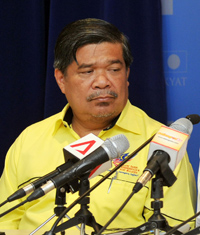 Similarly in PAS, several progressive leaders who led the charge into BN-strongholds were defeated, namely PAS deputy president Mohamad Sabu (
left
), vice-presidents Salahuddin Ayub and Husam Musa and former Kuala Selangor MP Dr Dzulkefly Ahmad.
Similarly in PAS, several progressive leaders who led the charge into BN-strongholds were defeated, namely PAS deputy president Mohamad Sabu (
left
), vice-presidents Salahuddin Ayub and Husam Musa and former Kuala Selangor MP Dr Dzulkefly Ahmad.
This will likely affect the Islamist party's own elections later this year and the balance of progressives and conservatives in the party.
Whether a calm or tumultuous journey will follow these uncertainties will depend on the sincerity of Najib and his party in engaging with the opposition coalition, which now enjoys the majority of the voters' support for genuine reforms, not for half-hearted "transformation".
Related stories
Dr M: I didn't expect Najib to do worse than Pak Lah
Disturbing questions surrounding GE13 polling
Post-GE13, knives are out for Soi Lek
Time for Umno to rally behind Najib, says Nazri


Are you sure you want to delete this comment?
This action cannot be undone.