




TI-M wants RCI to right 'lopsided' IPP deals
Transparency International-Malaysia (TI-M) has urged a royal commission of inquiry to be set up to find out if the “lopsided” power purchase agreement (PPA) may have been an abuse of power for personal gains.
Transparency International-Malaysia (TI-M) has urged a royal commission of inquiry to be set up to find out if the “lopsided” power purchase agreement (PPA) may have been an abuse of power for personal gains.
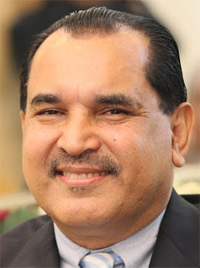 Its president Akhbar Satar (right) said this is because Tenaga Nasional Bhd (TNB) was made to pay “such a hefty price for electricity, when it could produce at one-third the price” charged by independent power producers (IPPs).
“Without knowing the truth, it is easy for the people to continue making assumptions that there was indeed an abuse of entrusted power for personal gains, in some form, taking place during the signing of the PPA,” he said in a statement today.
“No analyst would be able to explain such an unusual economic decision, especially when the decision was made by the Economic Planning Unit in the Prime Minister’s Department.”
Calling recent revelations by then TNB executive chairperson Ani Arope in his memoirs as “shocking”, Akhbar also condemned the lack of transparency in the deals which will expire on Sep 30, 2015.
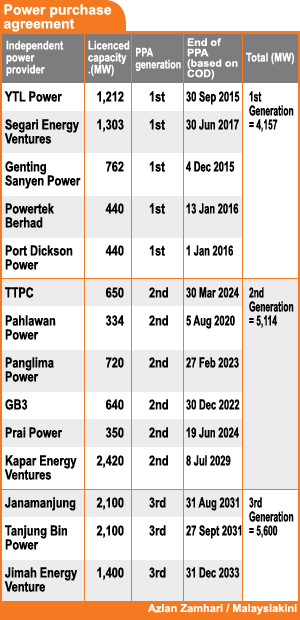 The impending expiry of the PPA, signed in 1994, also means that renegotiations should commence, he said.
He said this is especially as, after 21 years, the IPPs would have already recouped investments and would be able to reduce electricity price.
Akhbar called for re-negotiations to involve “all stakeholders” including Pakatan Rakyat, as the opposition coalition had promised to reduce electricity tariff in its election manifesto in the May 5 polls.
“They should either be invited to sit in the discussion and give input, or the government should prove that on its own, it is capable of reducing the burden of the prople already saddled by riding cost of living. TI-M and the taxpayers will be watching the development in this aspect.”
'Unreasonable pressure'
Commenting further on Ani's revelations, Akhbar said the “unreasonable pressure” which TNB appeared to have been placed under to ink the deal has led to an equally unreasonable outcome.
“There is no reason why household consumers should be forced to pay for the hefty prices of electricity, when TNB was able to produce it at 8 sen a unit (kWh), but the IPP was paid 23 sen per unit (300 percent).
“With the emergence of more IPPs, technically, the market should be more competitive, and power producers would have been forced to be more efficient.
 “Instead, we have seen prices of electricity going up several times in the past 20 years, when market forces would have caused prices to drop to a comfortable level.”
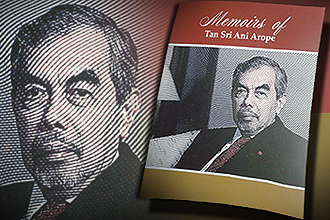
Ani in the recently released ‘Memoirs of Ani Arope’ said TNB had been blocked out of negotiations between the EPU and the IPPs and was “harassed, humiliated and talked down”.
“The EPU just gave us the terms and asked us to agree,” he said, describing the deal as “too darned generous”.
Ani resigned from his post in TNB when he refused to sign the deals which took place during the Mahathir administration.


Are you sure you want to delete this comment?
This action cannot be undone.