




Traditionally-made ‘kuih bakul’ still in high demand
Traditionally made ‘kuih bakul’ or nian gao are still in high demand from the Chinese community, a must-have delicacy for the Chinese New Year celebration.
Traditionally made ‘kuih bakul’ or nian gao are still in high demand from the Chinese community, a must-have delicacy for the Chinese New Year celebration.
This is because traditionally-made kuih bakul is more delicious and has a certain aroma from the banana leaf used to steam the sweet, sticky cake, compared to that made the modern way on a commercial scale and found in most supermarkets.
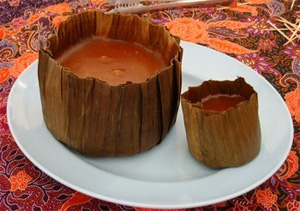 Kuih bakul maker Fong Chow Leong, 60, from Kampung Seberang Nyonya, said the traditional way of making kuih bakul involved using finely ground glutinous rice flour, sugar and water. The batter is then steamed for several hours until the cake has a nice brown colour.
“Many customers have complained that the kuih bakul they bought from the supermarkets were wrapped in plastic instead of banana leaf. So they are looking for traditionally made kuih bakul and even willing to pay a higher price for it,” he told Bernama.
Fong said some of his customers ordered his homemade kuih bakul to be sent to their children’s homes in Kuala Lumpur, so that they could enjoy the delicacy.
He said for the Chinese community, the Chinese New Year celebration would not be complete without serving the traditional cake to family members, relatives and guests.
Assisted by several workers, Fong makes about 600 kuih bakul daily to meet the orders from confectionary outlets and night markets in Alor Setar.
“Last year, I managed to earn more than RM40,000 from producing over 13,000 kuih bakul within 22 days. I sold the cakes at RM3 to RM16 each, depending on the size and weight,” he said.
He hoped the younger generation would take interest in preserving the tradional way of making kuih bakul so thay this practice as part of Chinese culture would not be lost.
- Bernama


Are you sure you want to delete this comment?
This action cannot be undone.