




Gov't to probe lack of tidal wave warnings
The government has pledged a post-mortem on why the public was not warned about tidal waves which smashed into its northern coastal areas and killed at least 66 people.
The government has pledged a post-mortem on why the public was not warned about tidal waves which smashed into its northern coastal areas and killed at least 66 people.
 "We need to re-examine if there was any way we could have saved lives that day in our assessment of how we tackled the disaster," Prime Minister Abdullah Ahmad Badawi said in comments published Thursday.
At present, there are no guidelines for authorities on how to handle a tsunami disaster, and these would be formulated, he said.
"Also we will work closely with our Asean neighbours to see how best we can cooperate to monitor any future occurrences.
"To get a clearer picture, we will communicate with Indonesia, the Philippines and Singapore to work on an early warning system," he said.
"To assume and say that tsunamis will not happen again will not be fair. Our main task now is to ensure we are prepared to handle it when it happens again and not overreact."
The Indonesian island of Sumatra, which bore the brunt of the Sunday's tidal waves sparked by a massive earthquake off its west coast, protected most of Malaysia's beaches from the full force of the tsunamis.
Although Malaysia lies closer to the quake's epicentre than many countries worse hit, it suffered just 66 of the more than 80,000 deaths so far recorded in the disaster.
No contacts
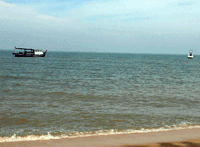
But the authorities have been criticised for failing to alert the public on the possible risk of massive tidal waves which battered the northern resort island of Penang and neighbouring Kedah state.
 The Pacific Tsunami Warning Centre and the International Tsunami Information Centre, both based in Hawaii, detected the Dec 26 earthquake off Indonesia that generated the tsunamis.
But the centres were set up to provide alerts to Pacific nations and frantic scientists said they could not raise the alarm because they had no contacts in Indian Ocean countries, where tsunamis are relatively rare.
"There was sufficient time between the time of the quake and the time of the tsunamis hitting some of the affected areas to have saved many lives if a proper warning system had been in place," US Geological Survey geophysicist Ken Hudnut said.
Australia has proposed an Indian Ocean tsunami monitoring system to provide such early warnings.


Are you sure you want to delete this comment?
This action cannot be undone.