



Ex-judge: 'States can sue' ruling is against common law principles
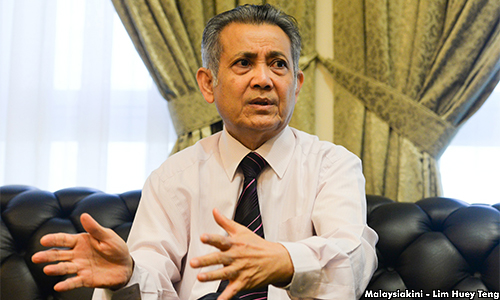
A former judge of the Court of Appeal has described the decision made by two judges in declaring that governments can sue an individual as retrogressive and going against the common law principle.
Mohd Hishamudin Mohd Yunus, who retired last September, also opined that the majority judgment written by Justice Abdul Rahman Sebli goes against the principle of good governance and hopes the matter will go to the apex court.
A former judge of the Court of Appeal has described the decision made by two judges in declaring that governments can sue an individual as retrogressive and going against the common law principle.
Mohd Hishamudin Mohd Yunus, who retired last September, also opined that the majority judgment written by Justice Abdul Rahman Sebli goes against the principle of good governance and hopes the matter will go to the apex court.
“With respect, the majority judgment is not only against the established common law principle, it is also retrogressive in nature.
“The government has no shortage of funds if it wants to sue the citizens for defamation. But the citizens, on the other hand, do not have the same resources to defend themselves.
“Thus, the people will be discouraged from criticising and questioning the government. The majority judgment, therefore, is not in consonance with the citizens’ freedom of speech and the principle of good governance,” Mohd Hishamudin stressed.
Last Thursday, the Court of Appeal made a landmark ruling in a majority judgment in a case involving the Sarawak state government, Sarawak financial authority and DAP's Bandar Kuching MP Chong Chien Jien.
It ruled governments, either state or federal, and their bodies, can sue for defamation .
Developed country only?
Mohd Hishamudin said in Malaysia, the precedent was set by the High Court in the case of Kerajaan Negeri Terengganu vs Dr Syed Azman.
This judgment by Justice Yeoh Wee Siam was affirmed by the Court of Appeal, he said.
 The former COA judge said while the majority judgment last week did take note of the Syed Azman case and the Derbyshire case, but it decided not to follow these precedents.
The Derbyshire case refers to the Derbyshire County Council vs Times Newspapers, where the House of Lords found that governments cannot sue for libel.
The House of Lords had explained explained its decision as such:
“It was of the highest public importance that a democratically-elected government body should be open to uninhibited public criticism, and since the threat of civil actions for defamation would place an undesirable fetter on the freedom to express such criticism, it would be contrary to the public for institutions of central or local government to have any right at common law to maintain an action for damages for defamation.”
Mohd Hishamudin pointed out that the majority judgment in the Derbyshire County Council case was made in a developed country, not different to ours.
“Unfortunately, the majority judgment by the Court of Appeal does not explain the above remark that it made,” he said.
Mohd Hishamudin also disagreed with majority judgment that Section 3 of the Government Proceedings Act 1956, on whether this empowers the government to sue individuals for defamation.
“In my view, Section 3 is a general and ‘neutral’ provision on government proceedings in court and is not meant to have any bearing on the common law principle of defamation. In particular, it has no bearing on the issue as to whether governments can sue for defamation,” he said.
He said the common law of defamation involving the government’s right to sue is for the courts to determine, based on established principles.
The majority judgment appears to overlook the key phrase in Section 3 - the words ‘where the government has a claim against any person’, he said.
“Thus this begs the question: does the government have a claim on defamation against the defendant based on the common law principle? Based on the established principle, the answer is in the negative,” Mohd Hishamudin said.
Conflicting decisions
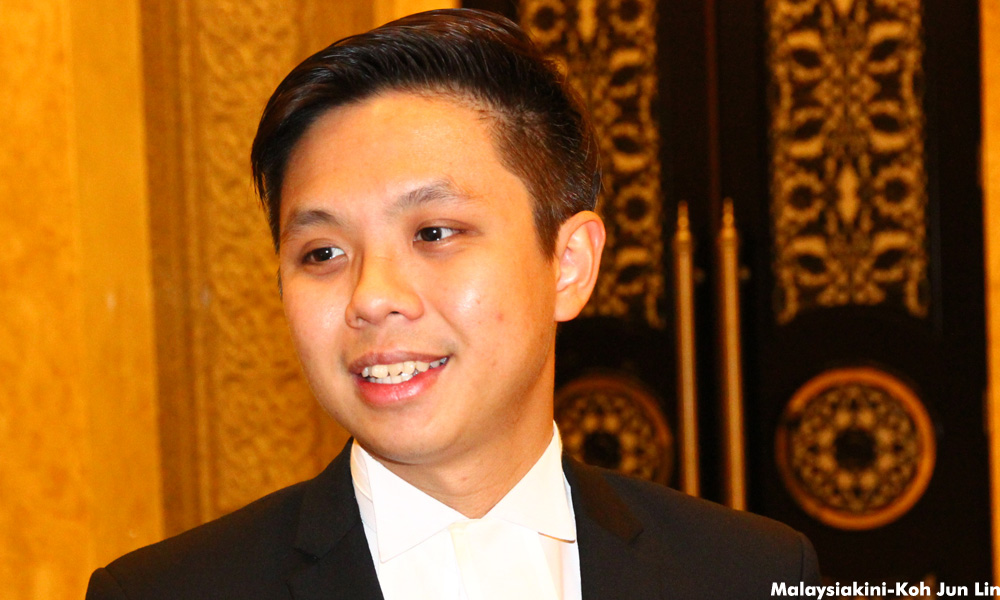 Lawyer New Sin Yew (
photo
), when contacted, is of the view that there seems to be a few conflicting decisions of the Court of Appeal regarding whether a government body or government official can maintain an action for defamation.
Lawyer New Sin Yew (
photo
), when contacted, is of the view that there seems to be a few conflicting decisions of the Court of Appeal regarding whether a government body or government official can maintain an action for defamation.
“Hopefully it will go up to the Federal Court to decide. It will be instructive in the current political and litigation landscape, where there are many such cases like this,” New said.
In last Thursday's decision, Justice David Wong Dak Wah who led the panel disagreed with the majority decision.
Justice Abdul Rahman in the majority judgment also ordered Chong to pay damages, which would be assessed by the deputy registrar of the High Court.


Are you sure you want to delete this comment?
This action cannot be undone.