



'Naughty kids punished but parties want BN rewarded for hudud motion'
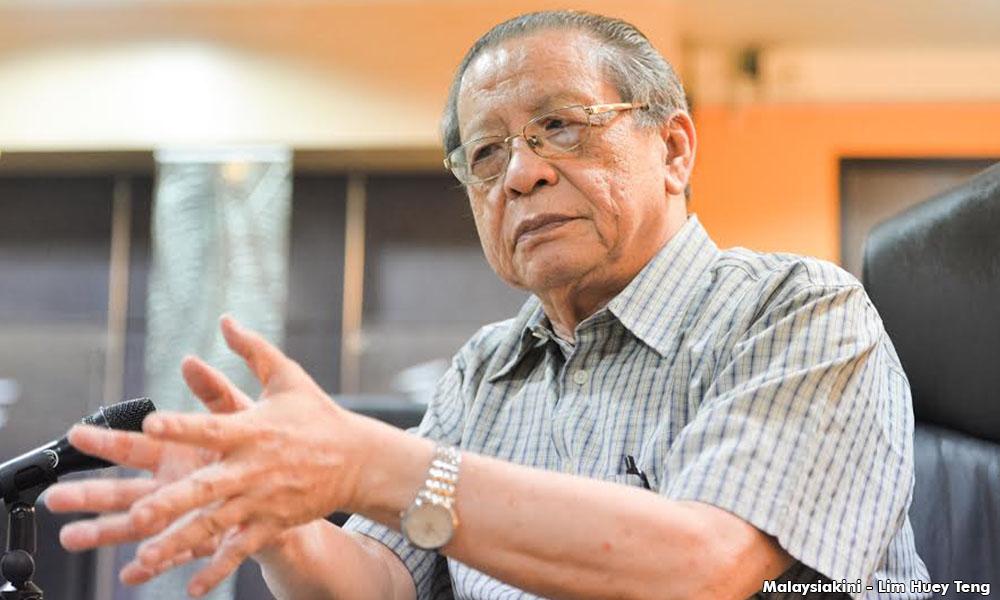
DAP parliamentary leader Lim Kit Siang said children who have made mistakes are expected to be punished but MCA and Gerakan are doing the opposite when BN has erred.
"When our children have done a wrong, they must be punished so that they will not repeat their mistakes.
"But MCA president Liow Tiong Lai and the Gerakan president Mah Siew Keong want the people in Sungai Besar by-election to reward BN for the great wrong committed in Parliament on May 26," he said in a statement today.
Lim was referring to the Umno-dominated government's move to allow PAS president Abdul Hadi Awang's private member's bill motion to go to the floor without consulting BN partners.
The bill seeks to amend the Syariah Courts (Criminal Jurisdiction) Act 1965 which will allow the partial enforcement of the hudud enactment in Kelantan.
This, Lim said, were among several examples that highlighted the difference in DNA between MCA and DAP.
"Talking about DNA, there is no doubt that the DNA of the present MCA leadership is not only different from the DNA of the DAP leadership, but have mutated and degenerated as compared to the DNA of the early MCA leadership," he said.
Lim highlighted how former MCA president Tan Siew Sin was a "straight, frank, honest and sincere" person who wouldn't even allow then prime minister Tunku Abdul Rahman to oversee the Finance Ministry in his absence.
"The DNA of Siew Sin, HS Lee, Ong Yoke Lin, like the founder of MCA Tan Cheng Lock, would not have allowed the two global scandals like the RM55 billion 1MDB scandal and the RM4.2 billion 'donation' scandal even to start off in the country – but today, none of the MCA ministers and leaders dare to stop or even question Najib about the two global financial scandals," he said.
Choice between extreme and more extreme
Lim had struck back at MCA with the DNA analogy after Liow yesterday said DAP's partner Amanah had the same DNA as PAS and voters in the Sungai Besar by-election are making a choice between "extreme" and "more extreme" if they voted for either party.
He also suggested that Amanah was a party that fought for the bigger picture instead of being confined to hudud like PAS.
Lim gave an example of the Ennahda or Renaissance Party in Tunisia, which separated religious activities from political ones but stressing that its actions are rooted in the values of ancient and modern Islam.
"It is sad that we have national leaders in government in a plural society who do not understand the struggle that is ongoing, not only in Malaysia but worldwide, between an open, broad-minded and inclusive understanding of Islamic politics and a closed, narrow-minded and exclusive exposition of Islamic politics," he said.


Are you sure you want to delete this comment?
This action cannot be undone.