



The unromantic side of your Valentine’s Day bouquet
The reality behind the farming of flowers may not seem to be as pretty as the flowers are in the bundles and bouquets that are gifted to loved ones on Valentine’s Day.
The flower industry has a significant impact on the environment of Cameron Highlands, which is where most florists in the Peninsular Malaysia source their flowers from.
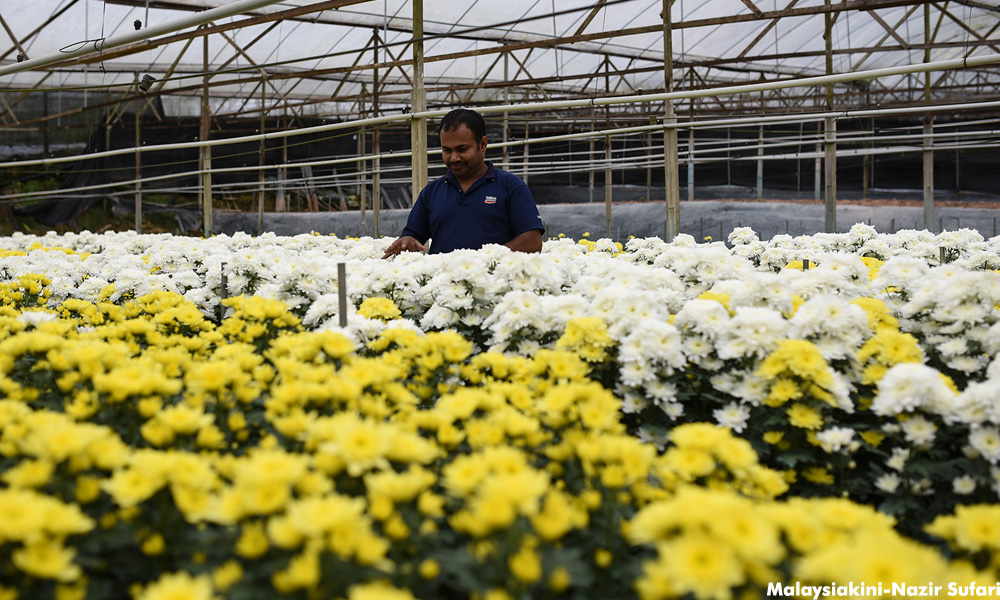
At a chrysanthemum farm in Blue Valley, workers were seen spraying pesticides on the flowers and barrels of chemicals with a pungent smell were placed on the ground.
Chrysanthemums do not usually make it on Valentine’s Day bouquets but the mode of farming is similar at the six percent (451.2ha) of Cameron Highlands farms that produce premium cut flowers like roses, carnations and gerberas.
The reality behind the farming of flowers may not seem to be as pretty as the flowers are in the bundles and bouquets that are gifted to loved ones on Valentine’s Day.
The flower industry has a significant impact on the environment of Cameron Highlands, which is where most florists in the Peninsular Malaysia source their flowers from.
At a chrysanthemum farm in Blue Valley, workers were seen spraying pesticides on the flowers and barrels of chemicals with a pungent smell were placed on the ground.
Chrysanthemums do not usually make it on Valentine’s Day bouquets but the mode of farming is similar at the six percent (451.2ha) of Cameron Highlands farms that produce premium cut flowers like roses, carnations and gerberas.
Sugumaran Periasamy who has been growing chrysanthemums for 12 years on rented land, said that it is a must to use pesticides to ensure the quality of the flowers before harvesting.
 “When the weather is cold, the flowers tend to have more diseases and when the weather is warmer, there will be more pests so that is when we have to use more pesticides,” said Sugumaran (photo).
He said that four different types of chemicals, which are pesticides for pests, plant diseases, chemical fertilisers and a chemical to stop chrysanthemum plants from growing taller, will be sprayed once a week.
But he is convinced the chemicals do not affect the environment.
“We only spray the pesticides on the plants and the pesticides would only be absorbed into the ground,” he said.
Sugumaran added that by channeling the rain water from the plastic roofs of the farm to the river nearby directly, the pesticides in the ground would not flow with the rain water into the river.
Inevitable use of pesticides
The inevitable use of pesticides is common among vegetable farmers in Blue Valley, said Parti Sosialis Malaysia secretary Suresh Kumar, who has worked on the issue of the degradation of Cameron Highlands for years.
“More than 90 percent of the farms in Cameron Highlands are conventional, that means that they don’t bother about how the land is used and they don’t bother the use or the amount of pesticides used,” said Suresh.
Vegetable farmer Velusamy Rangasamy admits that pesticides harm the environment, but said there is not enough government support from organic farming to assist farmers like him to eschew chemicals.
“I do have the choice not to use pesticides but the government should help us and encourage us to do organic farming, and do more marketing,” said Velusamy.
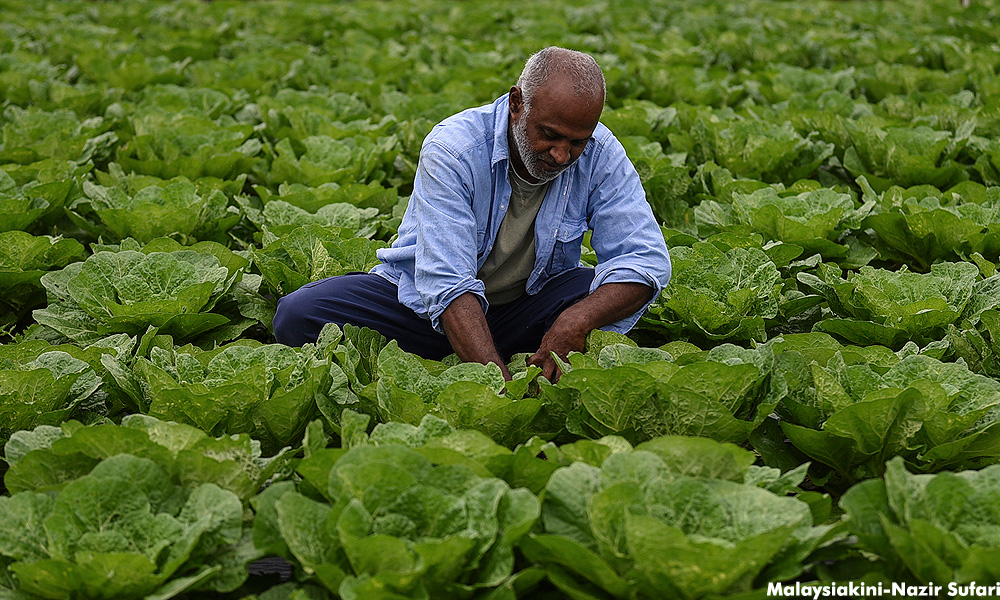 Velusamy (photo) who used to run an organic farm decided to stop organic farming as pesticides from neighbouring farms contaminate his crops.
“The wind would blow the pesticides from other farms towards my farm when the farmers spray the pesticides,” he said.
He also quit organic farming as he could not sustain the costly venture.
Fellow vegetable farmer Muniammah Kupusamy who has been farming for 42 years has decided not to go organic because the extra labour does not justify the returns.
“I don’t like organic farming because it is hard and it will bring loss to my business because the vegetables will not look good without pesticides,” said Muniammah.
Silt raising risk of flooding
The bloom of farms in Cameron Highlands is also causing landslides and floods as more land is cleared illegally for the farming industry.
According to government blueprint for Cameron Highlands 2030, about 10.5 percent of land is used for farming in the area.
Flower farmers visited by Malaysiakini said hill erosion caused by extensive farming is a common occurrence and is something they take in their stride.
 Suresh (photo) said that silt from rampant illegal land clearing in northern Cameron Highlands is increasing the chances of floods as the rivers have less capacity when they are filled with silt.
“Blue Valley, Kampung Raja and Kuala Terla are places where the river starts and the silt from those places will flow down to Brinchang, Tanah Rata and Ringlet,” said Suresh.
He added that silt that flow down to the Sultan Abu Bakar dam was what caused the flash flood in Bertam Valley in 2013 when the silt caused water levels to rise quickly during heavy rainfall.
A World Wildlife Federation (WWF) report noted that government data “revealed the poor state of river water quality in Cameron Highlands”.
“These studies among others reported alarming levels of agro-based pollutants from excessive use of fertilizers and pesticides in the farming activities, and high turbidity and suspended solids in the rivers attributed by tree-felling and hill-cutting.
“The Ringlet river is probably the most badly affected river with records of incidences where permissible levels of certain parameters such as suspended solids, agro-chemicals and sewage have been contravened.
“Severe soil erosion and sedimentation in rivers 81 percent of the land in Cameron Highlands has high erosion risk,” the WWF reported.
No incentive for better practices
Most Cameron Highland farmers renew their temporary occupation licences (TOLs) annually, leaving no security of tenure and no incentive to invest in more ecological farming practices, the WWF said.
The government blames much of the degradation on illegal farmers, and last year launched Ops Gading to clamp down on their activities in Ringlet, Sungai Mention, Kampung Raja and Lembah Bertam.
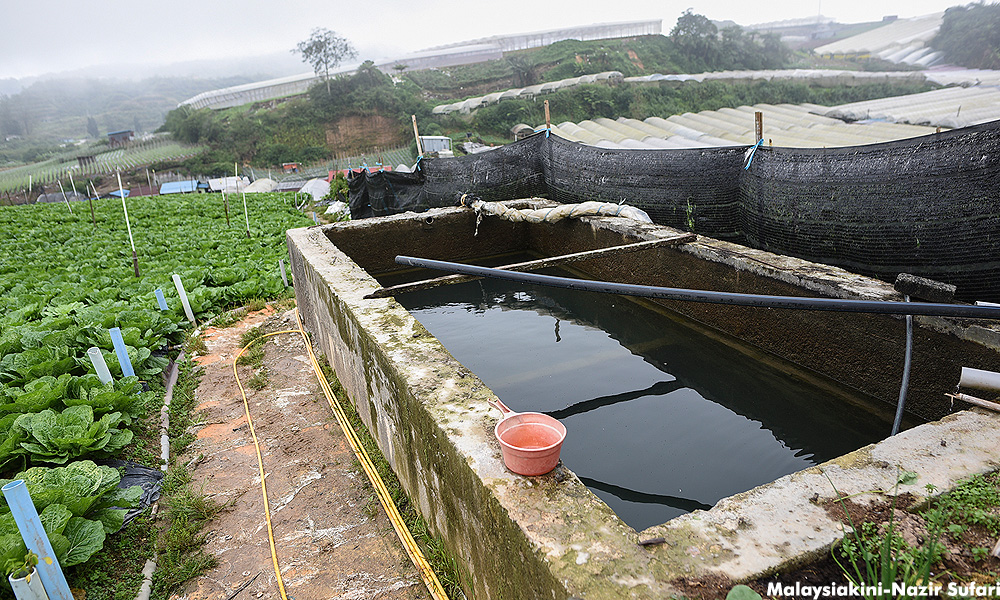 Ops Gading is just part of the activities of the government’s Cameron Highlands Rehabilitation Technical Committee chaired by National Security Council chairperson Alias Ahmad.
The committee said some 83 percent of illegal farm were destroyed in enforcement operations in 2015, but the farmers have returned.
Local environmental advocacy group Regional Environmental Awareness Cameron Highlands (Reach), however, notes that development plans in the 2030 blueprint could cause “environmental damage will be huge ranging”.
The blueprint was released January last year in response to the devastating mud floods and persistent land erosion.
The damage which could happen as a result of the development includes loss of biodiversity, slope instability, shallower waterways in an already exhausted river system that will compromise further water catchment areas, Reach said on its website.
“It will result in more landslides and flash floods, the very problems that this replacement plan seek to prevent,” it said.
The rehabilitation of Cameron Highlands is estimated to cost the government RM2.2 billion, and letting go further development will have other economic impacts.
With all these factors combined, the rehabilitation of the popular tourist destination remains a long and uphill climb.


