




Remove obstacles, restore autonomy in varsities
 special report
The only way to ensure the progress of higher education in Malaysia is to free universities of political interference, according to academics who feel that this has reached "worrying levels".
special report
The only way to ensure the progress of higher education in Malaysia is to free universities of political interference, according to academics who feel that this has reached "worrying levels".
"If we want to save our universities, they must have meaningful autonomy," said former University Malaya (UM) economics professor Dr KS Jomo, when addressing a forum on higher education in Kuala Lumpur recently.
From interviews on this issue, it is clear that autonomous public universities would be able to regain their role and reputation as engines of critical thinking and moulders of young leaders.
Such an environment would prove conducive for intellectual stimulation which, in turn, would build the prestige of the public universities as institutions of scholastic excellence.
 special report
The only way to ensure the progress of higher education in Malaysia is to free universities of political interference, according to academics who feel that this has reached "worrying levels".
special report
The only way to ensure the progress of higher education in Malaysia is to free universities of political interference, according to academics who feel that this has reached "worrying levels".
"If we want to save our universities, they must have meaningful autonomy," said former University Malaya (UM) economics professor Dr KS Jomo, when addressing a forum on higher education in Kuala Lumpur recently.
From interviews on this issue, it is clear that autonomous public universities would be able to regain their role and reputation as engines of critical thinking and moulders of young leaders.
Such an environment would prove conducive for intellectual stimulation which, in turn, would build the prestige of the public universities as institutions of scholastic excellence.
Beyond the need to bar political interference in the administration of universities, there is the parallel need to restore basic democracy and human rights to those in universities.
In the debacle surrounding the resignation of UM economics associate professor Dr Edmund Terence Gomez, Prime Minister Abdullah Ahmad Badawi was quoted as encouraging him to continue to speak the truth.
The unavoidable question is whether this is possible under a system which imposes legal restrictions on free expression and association among academic staff and students.
Concrete steps
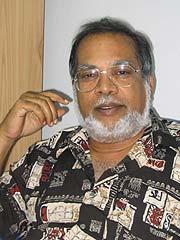 Asked to suggest ways of restoring autonomy, Universiti Kebangsaan Malaysia political science lecturer Prof R Ramasamy countered: "Can you reform universities without removing the larger political structure of the country? That is the question."
However, he agreed that concrete steps should be put in place to improve the quality of universities in the interim.
"Some of the structured obstacles like the Universities and University Colleges Act 1971 could be removed, as this would ensure a higher degree of autonomy for varsities," he said.
Elaborating, the lecturer of 24 years said every university should determine its academic matters.
"This is for academic and promotion matters, hiring of lecturers and introduction of courses. Everything is now controlled by the (higher education) ministry and bureaucrats," he said.
Academics from other universities revealed that approval of applications to attend regional and international conferences is now the ministry's prerogative.
"This is a recent regulation. Why do we need to get permission? Where is the autonomy of the university?" asked an academic.
Renewed leadership
The academics also argued that the foremost reform should target the system of appointing vice-chancellors (VCs).
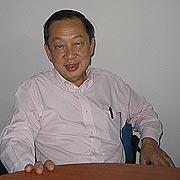 "In order to produce academic leadership, they must be people who are renowned and of substance in their field of work," said former UKM lecturer and currently Penang state executive councilor Dr Toh Kin Woon.
Toh, who oversees the state's economic planning, education and human resources development committee, emphasised that selecting the VC should be left strictly to an independent academic committee.
"They should search for Malaysians irrespective of race and identify the best. They should also look for people abroad," he said in an interview.
Echoing this, Ramasamy said a VC should not only be an academic, but also a world class intellectual leader in order to head a university.
"Leadership is important in terms of whether a university is doing well or not. VCs are currently appointed by politicians, so they do not have the power and ability to move beyond decisions determined by the ministry," he said.
Jomo stressed the urgent need for professionalism in the appointment of VCs, saying that a university commission should be set up for this purpose.
"Academics should be chosen by an independent board," he said.
This would go some way to overcoming suspicions of racial discrimination and favouritism that have marred academic recruitment and promotion exercises, and inject transparency into the process.
Balanced policy
While some argued for affirmative action to achieve social equality, they also said that this should be based on need and not ethnicity.
Toh said the government has to look into the social equity perspective along ethnic lines, but urged balance in the policy, in tandem with "the need to be efficient and to attain a high standard at all levels so that our capacity to compete is continuously enhanced".
"I think that, since some social balance has been achieved, it is time for us to repeal it," he said.
Ramasamy stressed that "the most important thing is to do away with racial criteria" in promotion exercises.
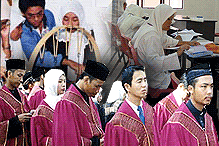 "We cannot do it overnight, but we should at least be seen as doing it. Racial criteria should be gradually phased out in terms of student intake, appointment and promotion of lecturers and those in administrative positions," he said.
Some academics also suggested setting up a commission of higher education to scrutinise the system periodically.
Ultimately, however, the question is how comprehensive reform will be implemented.
A lecturer from International Islamic University had this to say at the forum: "We should not be waiting for wahyu (revelation) to help us. We academics should start doing something."
Part 1: Politics of promotion in UM
Part 2: A pervasive culture of fear
Part 3: Stranglehold over undergrads
Monday (Special column): Reconstructing the culture of our public universities


Are you sure you want to delete this comment?
This action cannot be undone.