




Guan Eng 'first and only' to cling on despite graft charges, claims BN
Penang Chief Minister Lim Guan Eng has made history by being the "first and only" state leader refusing to step down despite facing graft charges, the BN strategic communications team claimed today.
"It is unfair to the people of Penang that their chief minister continues to make history as the first and only leader of a state who is clinging to his office despite facing multiple corruption charges," its deputy director Eric See-To said in a statement.
He said this in response to the first anniversary of Lim being charged with alleged graft offences.
On June 30 last year, Lim was charged under Section 23 of the Malaysian Anti-Corruption Commission (MACC) Act for allegedly abusing his power in the re-zoning of a plot of land.
He also faced another charge under Section 165 of the Penal Code for allegedly obtaining a bungalow without adequate consideration.
Lim had maintained the charges were politically motivated...
Penang Chief Minister Lim Guan Eng has made history by being the "first and only" state leader refusing to step down despite facing graft charges, the BN strategic communications team claimed today.
"It is unfair to the people of Penang that their chief minister continues to make history as the first and only leader of a state who is clinging to his office despite facing multiple corruption charges," its deputy director Eric See-To said in a statement.
He said this in response to the first anniversary of Lim being charged with alleged graft offences.
On June 30 last year, Lim was charged under Section 23 of the Malaysian Anti-Corruption Commission (MACC) Act for allegedly abusing his power in the re-zoning of a plot of land.
He also faced another charge under Section 165 of the Penal Code for allegedly obtaining a bungalow without adequate consideration.
Lim had maintained the charges were politically motivated.
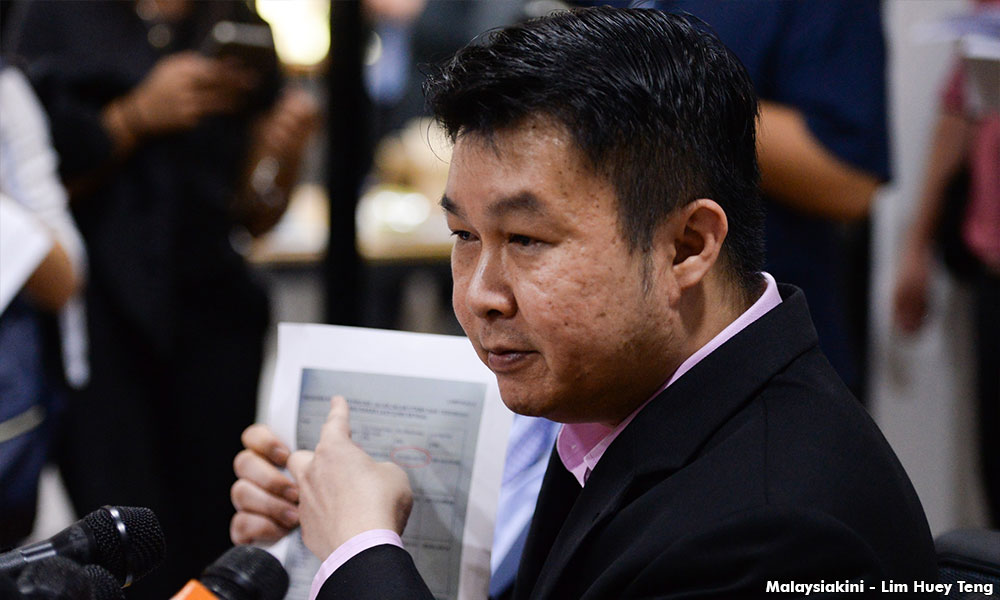 See-To (photo) in his statement today accused Lim of delaying tactics as his case had yet to go to trial after a year.
"Since Guan Eng maintains that he is innocent of the corruption charges, then he should allow the court case to proceed and have his say in court instead of continually challenging the MACC Act as unconstitutional, which only serves to delay his court case.
"It is Guan Eng's own delay tactics that are depriving himself of the chance for him to prove his innocence," he added.
See-To claimed that this is also depriving the people of an opportunity to hear the details of the case on whether the charges against him are trumped up or with merits.
Lim's trial, together with businesswoman Phang Li Koon, was to start on March 27 but was postponed pending a constitutionality question.
He is challenging the constitutionality of Section 62 of the MACC Act which states that pursuant to Section 51A of the Criminal Procedure Code, the accused must deliver a defence statement and a copy of any document which would be tendered as part of the evidence to the prosecution before the trial starts.
Lim's lawyers argued that it was unconstitutional for the chief minister to be compelled to submit his evidence of defence to the prosecution before the trial starts while the prosecution does not need to do the same.


Are you sure you want to delete this comment?
This action cannot be undone.